
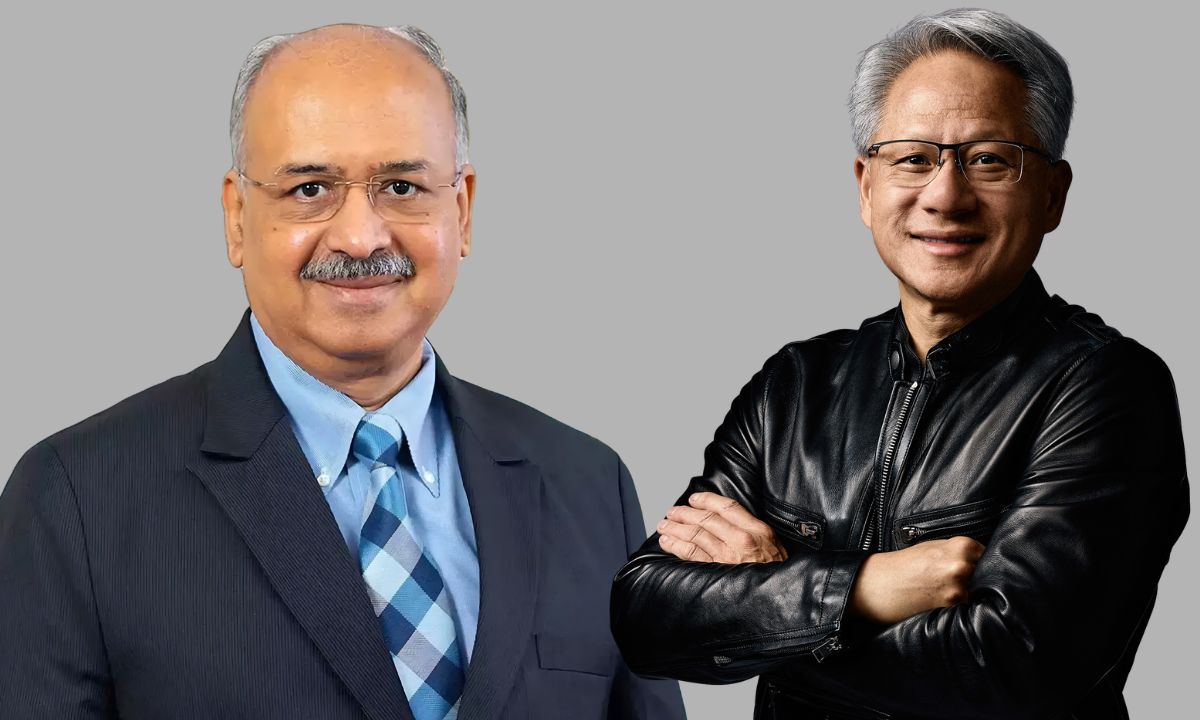
Dilip Shanghvi and Jensen Huang: Two Visionary Leaders Who Built Global Business Empires
Dilip Shanghvi and Jensen Huang run very different companies. One built India’s largest pharmaceutical business. The other turned a graphics chip startup into the engine of modern artificial intelligence.
Yet their stories share a pattern: small beginnings, patient bets, and a refusal to chase quick wins. This article compares their journeys and pulls out lessons you can use in your own business.
Quick Answer: Dilip Shanghvi is the founder of Sun Pharma, India’s largest pharmaceutical company. Jensen Huang is the co-founder and CEO of NVIDIA, the leader in AI computing chips. They work in different industries but share a long-term, capability-first approach to building global companies.
At-a-Glance Summary
| Feature | Dilip Shanghvi | Jensen Huang |
| Company | Sun Pharmaceutical Industries | NVIDIA |
| Role | Founder and Managing Director | Co-founder, President and CEO |
| Industry | Pharmaceuticals and healthcare | Semiconductors and AI computing |
| Home Base | Mumbai, India | Santa Clara, California, USA |
| Company Founded | 1983 | 1993 |
| Born | 1955, Gujarat, India | 1963, Tainan, Taiwan |
Who Is Dilip Shanghvi?
Dilip Shanghvi is an Indian industrialist and the founder of Sun Pharma. He is widely seen as one of India’s most private and disciplined business leaders. He rarely gives interviews and lets results speak for him.
Early Life and Entrepreneurial Beginning
Shanghvi was born in 1955 in Gujarat and grew up in a business family. His father ran a pharmaceutical distribution business in Kolkata. That gave him early exposure to how medicines move from manufacturer to patient.
He studied commerce and then joined the family trade. In 1983, he started making medicines himself, backed by a small loan from his father. The first products were niche psychiatric drugs, an area that larger companies had largely ignored.
That choice mattered. Instead of competing head-on in crowded categories, he picked a gap and served it well.
Building Sun Pharma
Sun Pharma grew steadily through the 1990s, went public in 1994, and began looking overseas. Its growth came from a mix of organic expansion and smart acquisitions.
| Milestone | What It Meant |
| 1983 | Launch with a handful of products in Vapi, Gujarat |
| 1994 | Initial public offering |
| Late 1990s | Entry into the US market through acquisition |
| 2014 | Merger with Ranbaxy, a major consolidation in Indian pharma |
| 2010s onward | Push into specialty medicines, especially dermatology |
The Ranbaxy deal is the best-known example of his willingness to take on complexity. It reshaped Indian pharma and pushed Sun Pharma into the global top tier of specialty generics.
Also Read This Celebrity Richard Peery and Akio Toyoda
Who Is Jensen Huang?
Jensen Huang is a Taiwanese-American engineer and the co-founder and CEO of NVIDIA. He is known for his black leather jacket, his long tenure as CEO, and his habit of speaking directly to engineers and investors alike.
From Engineering to Entrepreneurship
Huang was born in Tainan, Taiwan, in 1963 and moved to the United States as a child. He earned an electrical engineering degree at Oregon State University and a master’s at Stanford.
He then worked at chip companies AMD and LSI Logic. That hands-on experience taught him how semiconductors are designed, sold, and scaled. In 1993, he co-founded NVIDIA with Chris Malachowsky and Curtis Priem. The story goes that the plan took shape over meals at a Denny’s diner.
NVIDIA and the AI Revolution
NVIDIA first became famous for graphics processing units (GPUs) used in gaming. Its 1999 GeForce 256 helped define the GPU category.
The bigger bet came later. Huang pushed NVIDIA to make GPUs useful for general computing through CUDA, a software platform launched in 2006. At the time, many investors saw little return in it.
Then deep learning took off. Researchers found that GPUs were ideal for training neural networks, and NVIDIA was already there with hardware, software, and a developer community.
| Milestone | What It Meant |
| 1993 | NVIDIA is founded |
| 1999 | GeForce 256 and the IPO |
| 2006 | CUDA opens GPUs to general-purpose computing |
| 2012 onward | Deep learning adopts GPUs at scale |
| 2020s | Data center and AI chips become the core business |
Dilip Shanghvi and Jensen Huang: Different Industries, Similar Vision
On the surface, a drug maker and a chip designer have little in common. Look closer and the parallels are strong.
Healthcare vs. Technology
| Factor | Pharma (Shanghvi) | Technology (Huang) |
| Product cycle | Long R&D, regulatory approvals | Fast hardware and software cycles |
| Main barrier | Regulation, patents, quality standards | Engineering talent, ecosystem lock-in |
| Key asset | Manufacturing quality and drug pipeline | Chip architecture and software stack |
| Customer | Patients, doctors, hospitals | Developers, cloud firms, enterprises |
| Growth lever | Specialty drugs, acquisitions | AI demand, platform expansion |
Both industries reward deep expertise and punish shortcuts. A weak drug batch or a flawed chip design can be costly.
Long-Term Business Thinking
Both leaders invested years before seeing big returns. Shanghvi moved from generics into specialty medicines, which take longer to build but offer better margins. Huang funded CUDA long before AI demand arrived.
Neither man treated the next quarter as the main goal. Both treated the next decade as the real scoreboard.
Also Read This celebrity Marillyn Hewson and Igor Olenicoff
Leadership Styles of Dilip Shanghvi and Jensen Huang
Shanghvi’s Strategic Approach
Shanghvi is known as calm, analytical, and low-profile. His decisions tend to follow a few themes:
- Patience: He waits for the right deal at the right price.
- Turnaround skill: He buys troubled assets and fixes them, as with Ranbaxy.
- Focus on specialty: He shifts the mix toward higher-value medicines.
- Financial discipline: He avoids unnecessary risk and unnecessary publicity.
Huang’s Technology-Focused Leadership
Huang leads very differently in public style but similarly in substance. He stays close to the technology and the people building it.
- Technical depth: He understands the architecture, not just the P&L.
- Big platform bets: He builds ecosystems, not just products.
- Direct communication: He speaks plainly about strategy and risk.
- Long tenure: He has led NVIDIA since founding, giving the company rare continuity.
| Trait | Shanghvi | Huang |
| Public profile | Private, reserved | Highly visible |
| Decision style | Analytical, cautious | Bold, vision-driven |
| Growth method | Acquisitions plus R&D | Platform building plus R&D |
| Core belief | Build strength before scale | Build the platform before the market |
What Entrepreneurs Can Learn From Their Careers
Focus on the Long Term
Both leaders accepted short-term discomfort for long-term gain. If you run a small business, ask which investments will matter in five years, not just this month.
Adapt to Changing Markets
Shanghvi moved from domestic generics to global specialty drugs. Huang moved from gaming graphics to AI infrastructure. Neither stayed loyal to yesterday’s business model.
Build Strong Capabilities
Their success rests on real strengths: quality manufacturing in one case, chip design and software in the other. Marketing helps, but core capability is what lasts.
| Lesson | How Shanghvi Applied It | How Huang Applied It |
| Think long term | Specialty pipeline | CUDA and AI bets |
| Adapt | Global expansion | Gaming to data centers |
| Build capability | Manufacturing and compliance | Chip design and software |
Do’s and Don’ts for Entrepreneurs
| Do | Don’t |
| Pick a niche and serve it well | Copy crowded markets without an edge |
| Invest in core skills before scaling | Chase trends you cannot support |
| Take calculated risks with clear logic | Gamble the whole company on one bet |
| Stay close to your product | Delegate all product understanding |
| Build for years, not quarters | Sacrifice long-term strength for short-term optics |
Why Dilip Shanghvi and Jensen Huang Remain Important Business Examples
They show that global companies can start almost anywhere: a small unit in Gujarat, or a diner table in California. They also show two valid leadership styles. One is quiet and financially disciplined. The other is public and visionary.
Both prove that staying power beats hype. Their companies are still growing because they kept building fundamentals while others chased headlines.
Frequently Asked Questions
Who is Dilip Shanghvi?
Dilip Shanghvi is the founder of Sun Pharma and one of India’s most respected industrialists. He began the company in 1983 and grew it into a leading global specialty pharmaceutical firm.
Who is Jensen Huang?
Jensen Huang is the co-founder and CEO of NVIDIA. He co-founded the company in 1993 and has led it as it moved from gaming graphics into AI computing.
Are Dilip Shanghvi and Jensen Huang in the same industry?
No. Shanghvi works in pharmaceuticals and healthcare, while Huang works in semiconductors and AI technology. Their industries differ, but their long-term strategies are similar.
What is the biggest similarity between these two leaders?
Both play the long game. They invested in capabilities years before the payoff and adjusted their businesses as markets changed.
Why is Jensen Huang important to artificial intelligence?
Huang steered NVIDIA toward GPUs and the CUDA software platform, which became foundational for training and running AI models. That gave NVIDIA a central role in the AI boom.
What can entrepreneurs learn from their careers?
Focus on the long term, adapt when markets shift, and build real capabilities. Avoid chasing hype without substance.
Conclusion
Dilip Shanghvi and Jensen Huang built two of the most influential companies of their eras. One did it through careful acquisitions and specialty medicines. The other did it through platform bets on computing.
Their shared lesson is simple: pick a direction, build real strength, and stay patient. Whether you are starting a clinic, a software firm, or a factory, that approach still works.

Shoaib Ahmad is a language-focused content writer and researcher at magazinesolo.com, where he explains the meaning of words, phrases, and text in a clear and reader-friendly way. His work focuses on simplifying language, uncovering context, and helping readers understand text with confidence and clarity.






One Comment