How AI-Generated Videos Can Transform Technical Training Into Clearer Visual Learning Experiences

Technical training often fails not because the information is too difficult, but because explaining complex processes through written instructions alone can be challenging. Employees may understand individual steps but struggle to see how those steps connect during an actual task. This problem is particularly common in manufacturing, equipment maintenance, workplace safety, software training, and professional education. Visual learning can bridge this gap by turning abstract instructions into sequences that people can observe, understand, and remember. With developments such as Seedance 2.5, organisations have new opportunities to explore how generated video content can support practical demonstrations and make specialised knowledge easier to communicate.
A well-designed training video does more than show someone performing an activity. It explains why each action matters, identifies potential mistakes, demonstrates the consequences of incorrect decisions, and presents the correct procedure in a logical sequence. This requires careful instructional planning rather than simply producing attractive footage. When visual content is designed around genuine learning objectives, it can help reduce confusion, improve knowledge retention, and make training materials more accessible to people with different levels of experience.
Why Traditional Training Materials Sometimes Fail to Explain Complex Procedures
Written manuals remain valuable because they provide detailed instructions, technical specifications, and information that employees can revisit whenever necessary. However, they cannot always communicate movement, timing, spatial relationships, or changes that occur during a procedure. A technician reading instructions about replacing a mechanical component may understand the written description but still struggle to identify the correct position, direction, or sequence of movements.
Traditional classroom demonstrations also have limitations. Instructors may need to repeat the same explanation for different groups, while participants can miss important details if they are standing far from the demonstration area. Some procedures are too dangerous, expensive, or complicated to demonstrate repeatedly in a real working environment. These limitations create a need for learning resources that can present important information visually without requiring every training session to begin from the beginning.
Another difficulty is the difference between knowing a rule and applying it under pressure. Employees might remember safety instructions during a classroom session but fail to recognise a dangerous situation when they encounter it independently. Training materials should therefore help learners understand practical situations, not simply memorise isolated instructions. Visual demonstrations can make these situations easier to recognise by showing the relationship between decisions, actions, and outcomes.
Turning Complicated Instructions Into Observable Learning Steps
The first stage of creating effective visual training material is identifying the exact skill that learners need to develop. A broad objective such as teaching equipment maintenance is not sufficiently specific. A more useful objective might involve identifying a faulty component, isolating a power source, removing a protective cover, and completing a basic inspection safely. Each action represents a separate learning requirement that can be demonstrated and evaluated.
Once the objective is established, the procedure should be divided into manageable stages. Each stage needs a clear purpose, an observable action, and an explanation of its importance. For example, a maintenance demonstration should not simply show a worker turning off a machine. It should explain why the equipment must be isolated, how the correct isolation point is identified, and what checks should be completed before maintenance begins.
This structure prevents training videos from becoming collections of disconnected scenes. Learners need to understand how one action prepares the conditions for the next. When a demonstration follows the actual order of a task, viewers can develop a mental model of the entire process instead of remembering unrelated visual details. It also becomes easier for instructors to identify which stage requires additional explanation.
Showing the Consequences of Incorrect Decisions
One of the most valuable uses of visual training is demonstrating mistakes that would be difficult or unsafe to reproduce in real working environments. Employees can read that an incorrect procedure may damage equipment, create safety hazards, or reduce product quality. However, seeing how a mistake develops can make the risk much easier to understand.
A training sequence might show how using an unsuitable tool affects a component, how skipping an inspection creates a hidden problem, or how incorrect handling changes the final result. The objective should not be to create dramatic scenes. Instead, the demonstration should establish a clear relationship between an incorrect decision and its practical consequence.
It is equally important to show the correct response. A mistake without an explanation of how to prevent or resolve it may leave learners uncertain. Effective instructional content presents the problem, explains the underlying cause, demonstrates the appropriate action, and reinforces the principle that should guide future decisions.
Designing Visual Explanations for Different Learning Levels
Not every employee begins training with the same background knowledge. A new worker may need basic explanations of equipment components, workplace terminology, and safety procedures. An experienced professional may already understand these fundamentals but require guidance on a new process or specialised technique.
Training content should therefore be organised according to learner requirements. Introductory material can focus on identifying tools, understanding terminology, and recognising essential safety conditions. Intermediate demonstrations can explain complete procedures, while advanced lessons can examine troubleshooting, unusual situations, and decision-making.
Visual complexity should also match the learner’s experience. Showing several technical actions simultaneously may overwhelm beginners, even when the demonstration is accurate. A better approach is to isolate important movements, introduce technical details gradually, and connect each new concept with information that has already been explained.
Organisations can also create shorter supporting lessons for specific tasks rather than forcing employees to watch an entire training programme whenever they need clarification. A searchable collection of focused demonstrations makes it easier to revisit a particular procedure during daily work.
Using AI Video Generation to Develop Training Prototypes
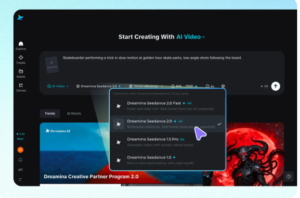
Producing technical training videos traditionally involves instructors, cameras, equipment access, recording locations, editing resources, and repeated filming sessions. These requirements can make it difficult for smaller organisations to create visual explanations for every procedure. Generative technology introduces another way to explore early concepts before committing to a complete production.
An AI video generator can help content teams experiment with visual sequences, demonstrate general scenarios, and develop preliminary versions of instructional concepts. This can be useful when a company wants to explain an idea to stakeholders, compare alternative teaching approaches, or prepare a visual outline before arranging a professional recording.
However, generated footage should not automatically be treated as verified technical evidence. A video showing machinery, medical equipment, electrical systems, or specialised tools may contain visual details that look convincing but do not represent real operating procedures. Incorrect component placement, unrealistic movements, missing safety features, or inaccurate equipment behaviour can undermine the entire training objective.
For this reason, organisations should distinguish between conceptual visuals and verified demonstrations. Generated scenes may help explain general ideas, but procedures involving safety, engineering, regulated activities, or specialised equipment should be checked against authoritative documentation and reviewed by qualified professionals. Where exact technical accuracy is essential, real demonstrations and approved visual references should remain the foundation of the material.
Building a Reliable Review Process Before Publishing
A training video should pass through several levels of review before employees are expected to rely on it. The first review should examine instructional clarity. Reviewers should ask whether the learning objective is obvious, whether the steps appear in the correct order, and whether the explanation provides enough information for the intended audience.
The second review should focus on technical accuracy. A subject matter expert should verify the equipment, terminology, actions, measurements, and safety requirements. Even a small visual mistake can create confusion when learners are expected to follow a precise procedure. Technical review is especially important when generated imagery is included because visual realism does not guarantee factual correctness.
A third review should examine accessibility and presentation. Text labels should remain readable, narration should be understandable, and important information should not depend entirely on sound or colour. Subtitles, clear diagrams, consistent terminology, and an appropriate speaking pace can make the same training material more useful to a wider audience.
Finally, the organisation should test the video with a small group of actual learners. Their questions and mistakes can reveal weaknesses that may not be obvious to the production team. If several people misunderstand the same instruction, the problem may be the explanation rather than the learner. Revising that section before wider distribution can prevent repeated confusion later.
Measuring Whether Visual Training Improves Performance
Video views and completion rates provide useful information about engagement, but they do not prove that employees have learned a procedure. A person can watch an entire demonstration without understanding how to apply its instructions. Training effectiveness should therefore be measured through practical outcomes.
One method is to compare performance before and after training. Employees can complete a supervised task, answer scenario-based questions, or identify errors in a simulated procedure. Their performance can then be evaluated against clearly defined criteria, including accuracy, completion time, safety compliance, and the number of mistakes.
Organisations should also monitor recurring operational problems. If a particular procedure continues to produce errors after training, the material may need additional explanation or a different teaching approach. Feedback from supervisors can help identify whether employees are struggling with terminology, equipment recognition, decision-making, or the order of operations.
Training should be treated as an ongoing process rather than a one-time publishing activity. Equipment changes, revised regulations, updated software, and new workplace procedures can make older videos inaccurate. Assigning responsibility for reviewing and updating instructional content helps ensure that employees are not following outdated guidance.
Conclusion
AI-generated video technology creates new possibilities for explaining complex information, developing training concepts, and making educational resources easier to produce. Its greatest value comes from supporting a carefully planned learning experience rather than replacing technical expertise or instructional design.
Organisations should begin with clear learning objectives, divide procedures into understandable stages, demonstrate the consequences of mistakes, and adapt explanations to different experience levels. They should also verify technical details, involve qualified reviewers, and measure whether employees can apply what they have learned.
When these principles guide production, visual training becomes more than an attractive communication format. It becomes a practical way to transfer knowledge, improve workplace understanding, and help people perform specialised tasks with greater confidence.

Sam Kuran is a passionate content writer and researcher who specializes in creating informative, engaging, and SEO-friendly articles. With a strong interest in technology, business, lifestyle, entertainment, and trending topics, Sam focuses on delivering accurate, well-researched, and easy-to-understand content. His goal is to help readers discover useful information, explore new ideas, and make informed decisions through high-quality, people-first content.