Rug Vs. Rag: How Are These Different? When To Use Them?
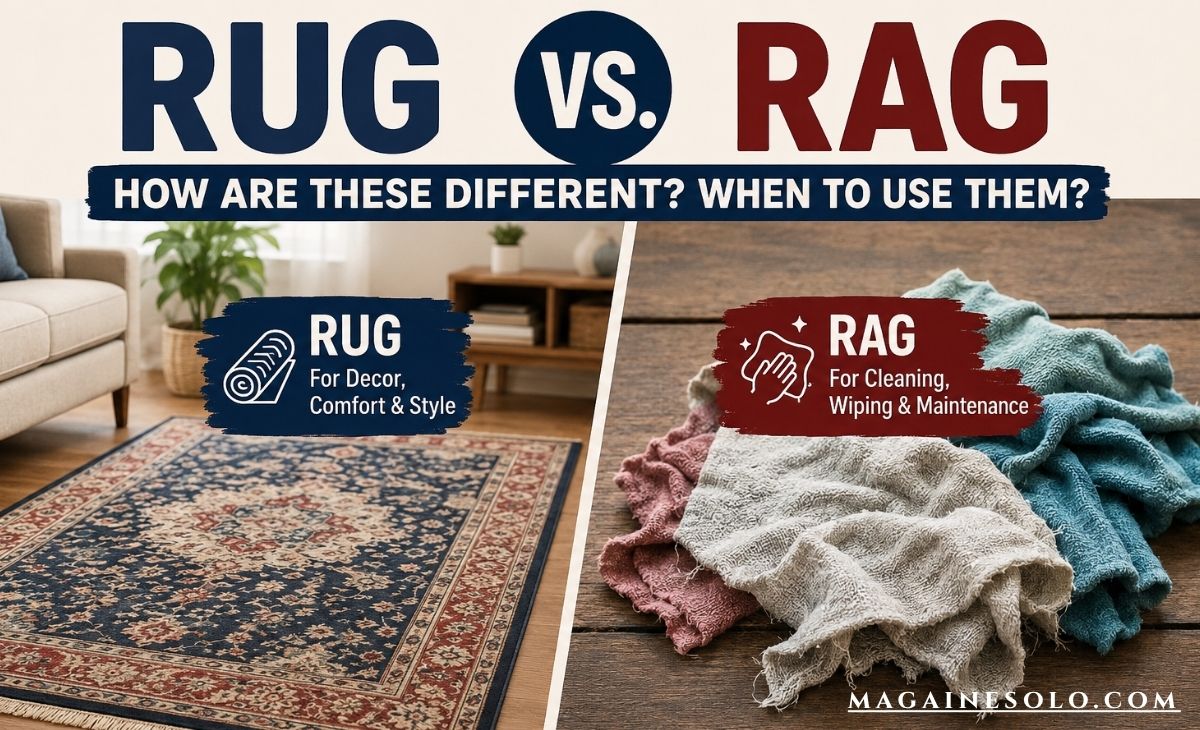
When you hear the words “rug” and “rag,” they might sound somewhat similar, especially in casual speech or fast conversation. However, these two terms refer to completely different things in everyday life. One belongs to home décor and flooring, while the other is commonly associated with cleaning and fabric scraps.
Understanding the difference between rug vs rag is not only useful for improving vocabulary but also helps avoid confusion in writing, speaking, and even shopping for household items. In this guide, we’ll break down their meanings, origins, usage, and real-life examples in a simple yet detailed way.
Origin of the Phrase: Rug vs Rag
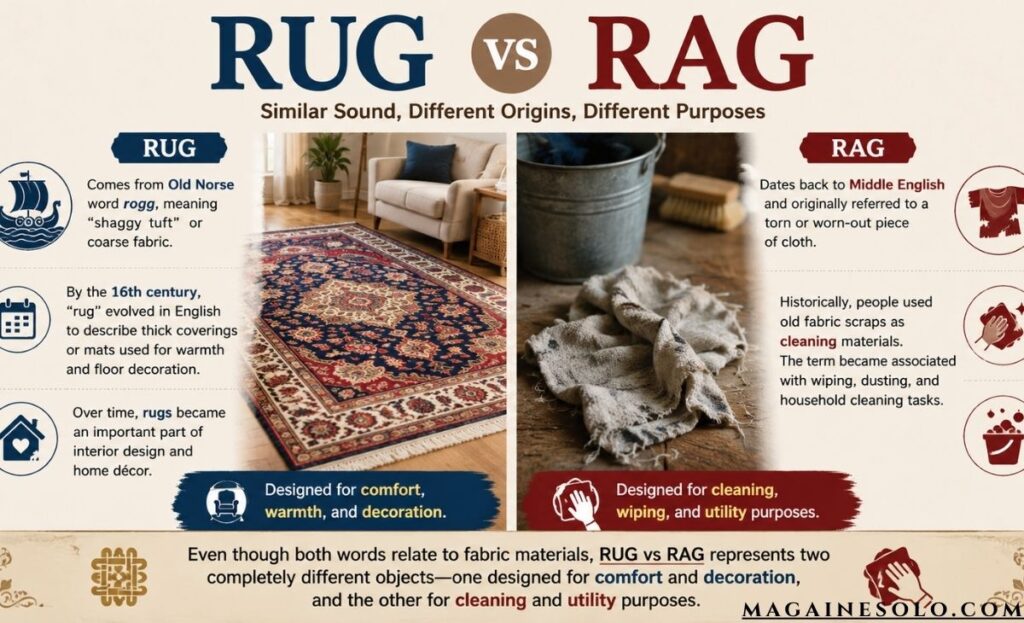
The words rug and rag come from different linguistic roots, even though they sound somewhat alike.
The word “rag” has been used in English since the early medieval period and originally referred to a torn piece of cloth or scrap fabric. Over time, its meaning expanded to include worn-out clothing, cleaning cloths, or any rough fabric used for wiping or polishing.
On the other hand, the word “rug” is believed to have originated from Old Norse or early Scandinavian languages, where similar terms referred to thick coverings or coarse fabric materials. By the 16th–17th centuries, “rug” in English evolved to mean a floor covering used for warmth, comfort, or decoration.
Despite their different origins, both words have remained common in modern English, but with very distinct meanings.
How People Use Them
Understanding how each word is used in daily life makes the distinction crystal clear.
How People Use the Word “Rug”
A rug is a thick, woven textile placed on the floor for decoration, comfort, or practical protection of the surface beneath. Unlike a carpet, which covers a floor wall to wall, a rug covers only part of a floor and can be moved, rolled up, or replaced without any installation.
People use the word “rug” in the following contexts:
Home décor: “I need a new rug for the living room.”
Comfort and warmth: “The bedroom rug makes the mornings feel less cold.”
Floor protection: “Put a rug under the dining table so the chairs don’t scratch the hardwood.”
Defining spaces: “We used a large area rug to separate the lounge from the reading nook.”
The word also appears in a few well-known idioms. “Sweeping something under the rug” means hiding a problem rather than dealing with it. “Pulling the rug out from under someone” means removing support suddenly and unexpectedly.
How People Use the Word “Rag”
A rag, by contrast, is a piece of worn, torn, or old cloth typically used for cleaning, wiping, or handling dirty tasks. It has no decorative function, its job is purely practical.
People use the word “rag” in these contexts:
Cleaning: “Use a damp rag to wipe down the countertop.”
DIY and repairs: “He used an old rag to apply wood stain to the shelf.”
Polishing: “Buff the furniture with a clean rag for a better shine.”
Catching spills: “Grab a rag — the paint is dripping.”
In informal speech, “rags” can also mean old, worn-out clothing. Someone described as being “dressed in rags” is wearing tattered or poverty-level clothing.
Quick Comparison: Rug vs. Rag
| Feature | Rug | Rag |
| Primary purpose | Decoration, floor covering, comfort | Cleaning, wiping, polishing |
| Condition | Intentionally made, well-crafted | Worn out, torn, or leftover |
| Placement | On the floor | In your hand, under the sink, in a bucket |
| Value | Can be expensive or handmade | Low-cost or repurposed from old cloth |
| Common materials | Wool, silk, cotton, jute, synthetic fibers | Any fabric: old t-shirts, towels, cut cloth |
| Typical lifespan | Years to decades | Until it falls apart |
More About Rugs
A rug is more than just a piece of fabric on the floor, it plays an important role in interior design and comfort. Rugs are widely used across cultures and homes worldwide, and they come in various styles, materials, and sizes.
Rugs help define spaces within a room, especially in open-plan homes. For example, a rug under a coffee table can visually separate the seating area from the dining space. They also provide insulation, making floors warmer during cold seasons.
In modern interior design, rugs are considered essential décor elements that bring color, texture, and personality into a space.
Functions of Rugs
Add warmth and comfort underfoot
Enhance room aesthetics
Reduce noise in large spaces
Protect flooring from scratches and wear
Define specific areas within a room
Unlike rags, rugs are intentionally designed and often considered long-term household investments.
Types of Rugs
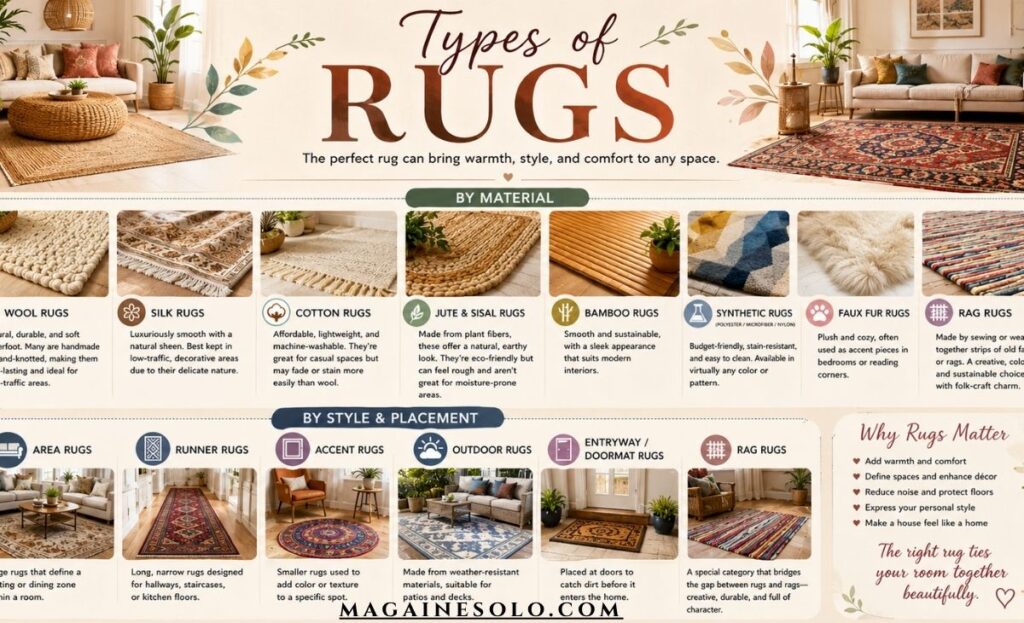
Rugs come in a wide variety of materials, styles, and constructions. Here’s an overview of the most common types:
By Material:
Wool rugs : Natural, durable, and soft underfoot. Many are handmade or hand-knotted, making them long-lasting and ideal for high-traffic areas.
Silk rugs : Luxuriously smooth with a natural sheen. Best kept in low-traffic, decorative areas due to their delicate nature.
Cotton rugs : Affordable, lightweight, and machine-washable. They’re great for casual spaces but may fade or stain more easily than wool.
Jute and sisal rugs : Made from plant fibers, these offer a natural, earthy look. They’re eco-friendly but can feel rough and aren’t great for moisture-prone areas.
Bamboo rugs : Smooth and sustainable, with a sleek appearance that suits modern interiors.
Synthetic rugs (polyester/microfiber/nylon) : Budget-friendly, stain-resistant, and easy to clean. Available in virtually any color or pattern.
Faux fur rugs : Plush and cozy, often used as accent pieces in bedrooms or reading corners.
By Style and Placement:
Area rugs: Large rugs that define a seating or dining zone within a room.
Runner rugs: Long, narrow rugs designed for hallways, staircases, or kitchen floors.
Accent rugs: Smaller rugs used to add color or texture to a specific spot.
Outdoor rugs: Made from weather-resistant materials, suitable for patios and decks.
Entryway/doormat rugs: Placed at doors to catch dirt before it enters the home.
Rag rugs: A special category that actually bridges the gap between rugs and rags: they’re made by sewing or weaving together strips of old fabric or rags into a functional, often colorful floor covering. These have been popular in folk crafts for centuries and remain a creative DIY project today.
Examples In A Sentence
Seeing both words used in real sentences helps cement the difference between them.
Using “rug” in a sentence:
She rolled out a hand-knotted Persian rug in the center of the dining room.
The children’s bedroom has a soft, colorful rug that’s easy to clean.
He pulled the rug out from under her plans by canceling the budget at the last minute.
Don’t try to sweep this problem under the rug, it needs to be addressed.
A thick wool rug by the fireplace makes the whole room feel warmer and more inviting.
Using “rag” in a sentence:
She grabbed an old rag from under the sink to wipe up the spilled oil.
His work clothes were so worn out they were little more than rags.
Use a clean rag to apply the wood stain evenly across the surface.
The mechanic kept a pile of rags in the garage for wiping down engine parts.
She started from nothing, from rags to running a successful business in ten years.
Sentences that contrast both words:
“The rug in the hallway looks elegant; the rag under the sink gets the dirty work done.”
“She bought a beautiful rug for the living room, but used an old rag to clean it.”
“A rag rug combines both: strips of old rags woven into a decorative floor covering.”
Why People Confuse Rug and Rag
Even though they are completely different in meaning, people sometimes confuse these words because:
They sound similar when spoken quickly
Both refer to fabric materials
They are commonly used in household contexts
Spelling differs by only one letter
However, remembering their function helps eliminate confusion. Rugs are decorative and structural, while rags are functional and disposable or reusable cleaning tools.
Rug vs Rag in Everyday Life
In daily routines, both rugs and rags play important but very different roles.
A rug enhances the beauty and comfort of your home, while a rag supports cleanliness and maintenance. One improves appearance, the other improves hygiene.
For example:
You walk on a rug barefoot for comfort
You use a rag to clean the floor before placing the rug
This shows how both can even complement each other in household use.
FAQ’s
Can a rug and a rag be used interchangeably?
No. A rug is a decorative floor covering, while a rag is a scrap cloth used for cleaning. They serve completely different purposes.
What is a rag rug?
A rag rug is a type of handmade floor covering created by weaving or stitching strips of old fabric together. It combines recycled rags into a functional rug.
Is a rug the same as a carpet?
No. A rug covers a specific area of the floor and is movable, while a carpet usually covers the entire floor and is fixed in place.
What are rags usually made from?
Rags are typically made from old clothing, worn-out towels, bed sheets, or other fabric that is no longer usable in its original form.
What type of rug is best for a high-traffic area?
Durable materials like wool and synthetic fibers (such as nylon or polypropylene) are best for high-traffic areas because they resist wear and are easy to clean.
Where does the word “rug” originally come from?
The word “rug” is believed to come from Old Norse rogg, meaning “shaggy tuft,” and later evolved in English to refer to floor coverings.
Can old rags be turned into rugs?
Yes. Rag rugs are a traditional craft where old fabric strips are braided, woven, or sewn into decorative and functional floor coverings.
What is the main difference between a rug and a rag?
A rug is used for flooring and decoration, while a rag is used for cleaning and wiping surfaces.
Is a rag always a piece of old cloth?
Mostly yes. Rags are usually made from old or recycled fabric used for cleaning tasks.
Where are rugs commonly used?
Rugs are commonly used in living rooms, bedrooms, hallways, offices, and other indoor spaces for comfort and decoration.
Can a rag be reused?
Yes, many rags can be washed and reused depending on their condition and purpose.
Are rugs and carpets the same thing?
No. Rugs are smaller, movable floor coverings, while carpets are typically installed wall-to-wall.
Why do people confuse rug and rag?
They sound similar and both relate to fabric, but their uses are completely different, one is decorative, the other is functional for cleaning.
Conclusion
The difference between a rug and a rag comes down to purpose, craftsmanship, and context. A rug is a designed, woven textile meant to decorate, protect, and add comfort to a floor. A rag is a worn, torn, or repurposed scrap of cloth used for cleaning, wiping, and handling messy tasks. Though they look similar on paper, and may even share ancient linguistic roots, they live in completely different corners of your home and your vocabulary.
When you’re shopping for home décor, the word you want is rug. When you’re reaching for something to clean up a spill or polish a surface, you want a rag. Knowing the difference helps you communicate clearly, shop confidently, and appreciate two simple words that carry centuries of history behind them.

Shoaib Ahmad is a language-focused content writer and researcher at magazinesolo.com, where he explains the meaning of words, phrases, and text in a clear and reader-friendly way. His work focuses on simplifying language, uncovering context, and helping readers understand text with confidence and clarity.