Indulgent vs Sober: Deciding Between Similar Terms
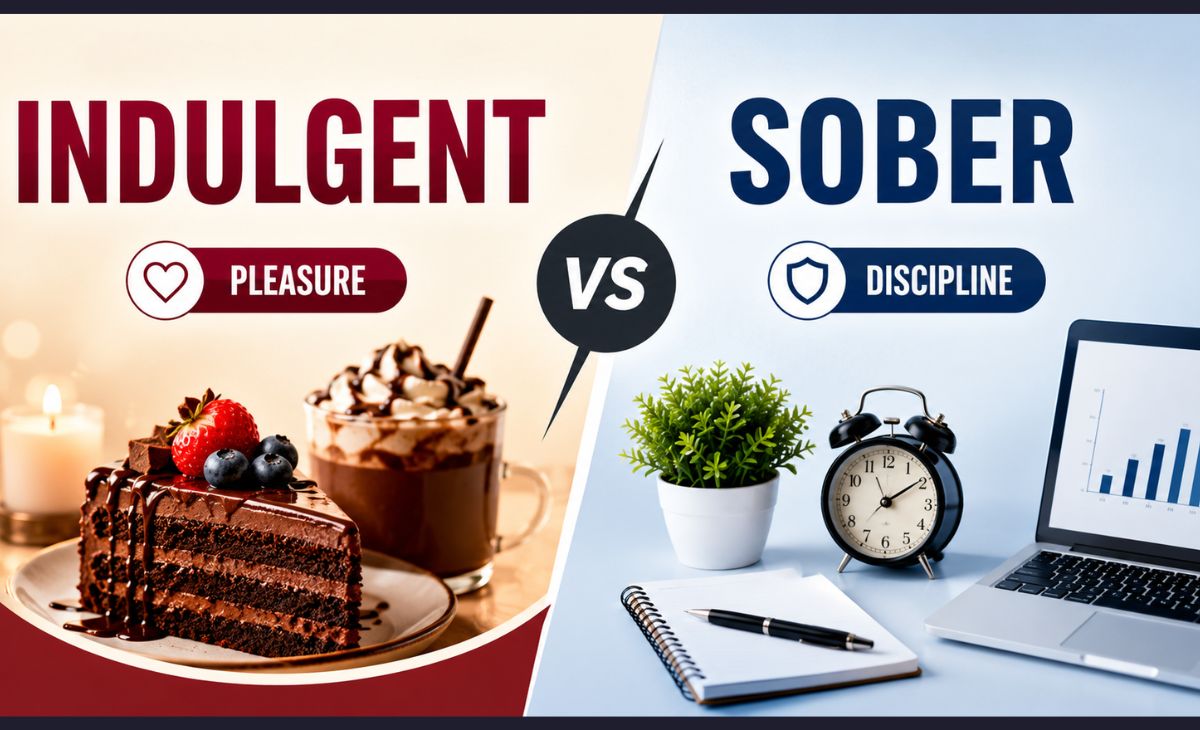
Choosing the right word can completely change the meaning and tone of your sentence. Two words that often create confusion are indulgent and sober. While they may seem like opposites in some situations, each has a unique meaning and usage.
Understanding indulgent vs sober is important for clear communication, whether you’re writing professionally, speaking casually, or improving your English vocabulary. In this guide, you’ll learn the meaning of each word, how to use them correctly, common mistakes to avoid, practical examples, and exercises to test your understanding.
What Do “Indulgent” and “Sober” Actually Mean?
Before we dive into examples and exercises, let us get the definitions right.
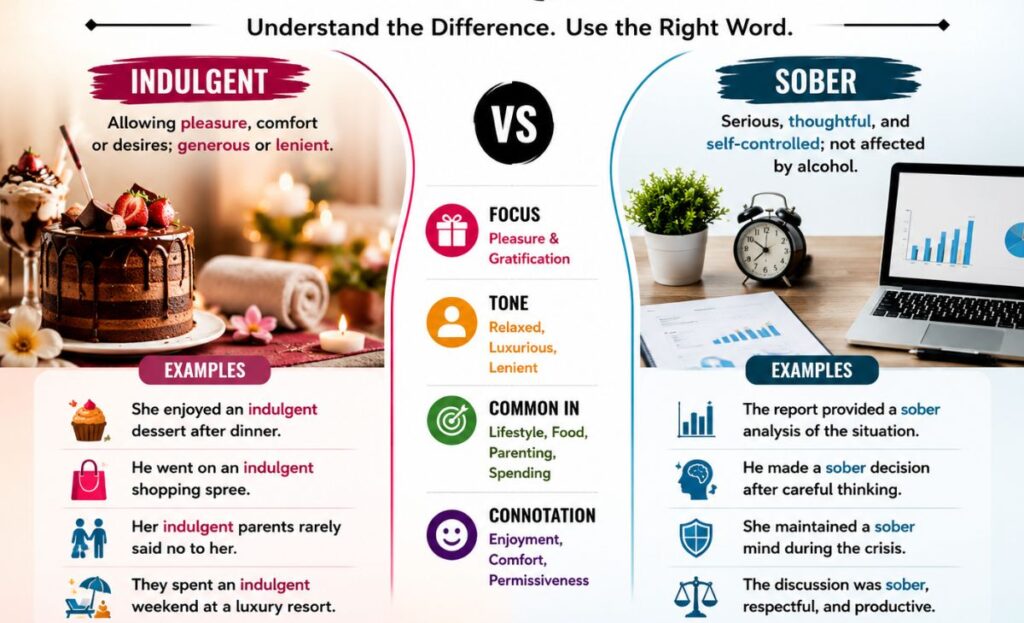
Indulgent is an adjective that describes someone, or something, that freely allows or encourages pleasure, comfort, or desire. It suggests a tendency to give in to cravings, luxuries, or leniency. An indulgent person may treat themselves to expensive experiences, allow others to bend the rules, or simply enjoy life without too many restrictions. The word carries a warm, generous tone in casual contexts, but can hint at a lack of discipline when overused.
Sober, on the other hand, has two layers of meaning. The most familiar meaning refers to not being under the influence of alcohol or drugs, someone who is clear-headed and unimpaired. But sober also describes a broader attitude: serious, measured, restrained, and rational. A sober decision is a thoughtful one. A sober tone is calm and controlled. Neither definition involves excess.
Here is a quick comparison to make the difference crystal clear:
| Feature | Indulgent | Sober |
| Core meaning | Pleasure-focused, lenient, generous | Restrained, serious, clear-headed |
| Emotional tone | Warm, luxurious, sometimes excessive | Calm, disciplined, rational |
| Common contexts | Food, lifestyle, parenting, leisure | Alcohol, mindset, writing, decisions |
| Opposite of | Restrained, strict | Drunk, indulgent, reckless |
| Positive connotation | Generosity, enjoyment | Clarity, responsibility |
| Negative connotation | Lack of discipline, overindulgence | Cold, overly serious |
How To Properly Use The Words In A Sentence
Knowing what a word means is only half the battle. The real skill is knowing when and how to use it. Let us look at both words in action.
Using “Indulgent” Correctly
Use indulgent when the sentence involves enjoyment, pampering, leniency, or allowing someone to satisfy a desire, whether that is food, leisure, or lifestyle choices.
Tips for using indulgent:
- Make sure the context involves pleasure or gratification, not discipline.
- It can describe a person, a behavior, a meal, or an experience.
- Avoid using it in formal, academic, or professional writing where seriousness is expected.
Sentence examples with “indulgent”:
- “She spent an indulgent afternoon at the spa, ignoring her to-do list completely.”
- “The bakery is known for its indulgent chocolate lava cakes dripping with warm caramel.”
- “His grandmother was indulgent with the children, always slipping them extra candy before dinner.”
- “After months of strict dieting, she treated herself to an indulgent cheat day.”
- “The movie was a bit indulgent in its three-hour runtime, but the visuals were stunning.”
Notice how each sentence connects the word to some form of pleasure, leniency, or excess, that is the sweet spot for indulgent.
Using “Sober” Correctly
Use sober when you want to describe someone who is not intoxicated, or when you want to convey a serious, measured, or restrained tone. It fits formal writing, behavioral descriptions, and situations involving clear-headed thinking.
Tips for using sober:
- It works both literally (not drunk) and figuratively (calm, serious, controlled).
- Use it in professional, academic, or reflective contexts.
- Do not use it to describe food, luxury, or enjoyment, that is indulgent territory.
Sentence examples with “sober”:
- “He made the decision to stay sober at the party so he could drive everyone home safely.”
- “The general gave a sober assessment of the risks before sending troops into the field.”
- “After the initial excitement faded, she took a sober look at the financial numbers.”
- “She preferred a sober, minimalist wardrobe, no patterns, no bright colors.”
- “His sober demeanor during the meeting made everyone take his proposal seriously.”
Each sentence reflects the core of sober: control, clarity, and restraint.
More Examples Of Indulgent & Sober Used In Sentences
Let us expand our pool of examples to cover real-life situations, relationships, parenting, food, work, and personal growth. Seeing both words in diverse contexts helps the meaning stick.
Indulgent, More Real-Life Sentences
- “The resort offered an indulgent all-inclusive experience with private pools and on-call chefs.”
- “Her parenting style was loving but indulgent, the kids rarely heard the word no.”
- “He wrote an indulgent travel memoir, dedicating entire chapters to single meals.”
- “The fashion brand’s new collection felt delightfully indulgent, full of velvet and silk textures.”
- “She allowed herself one indulgent purchase a month as a personal reward system.”
- “The film’s indulgent pacing lost the audience by the second act.”
- “Being indulgent with yourself during recovery is not weakness, it is self-compassion.”
Sober, More Real-Life Sentences
- “Two years sober, Jake finally felt like himself again.”
- “The analyst delivered a sober forecast for the tech sector heading into Q3.”
- “His apartment reflected a sober aesthetic, white walls, clean lines, no clutter.”
- “The letter she wrote was sober and measured, with no emotional outbursts.”
- “A sober second thought made her reconsider quitting her job so impulsively.”
- “She had always admired his sober approach to conflict, never reactive, always thoughtful.”
- “The documentary offered a sober look at the consequences of unchecked consumerism.”
Context Matters
Here is where it gets really interesting. The words indulgent and sober do not always behave the same way in every sentence. Context shapes meaning, and sometimes even flips it.
The Same Situation, Two Different Words
Consider breakfast:
- “He had a sober breakfast.”, This suggests a plain, sensible meal. Oatmeal. Maybe black coffee. Nothing exciting.
- “He had an indulgent breakfast.”, This paints a picture of eggs benedict, pastries, fresh orange juice, and maybe a side of pancakes.
Neither breakfast is wrong. But the word you choose tells the reader something about the person, the mood, and the story you are telling.
Figurative Uses That Bend the Rules
Language loves exceptions. Both words occasionally appear in figurative or idiomatic contexts that shift their usual meanings:
- “Sober reflection” does not mean someone quit drinking before thinking, it means careful, thoughtful consideration.
- “Indulgent imagination” does not mean someone is being reckless, it suggests a playful, creative mind that allows itself to roam freely.
- “A sober reminder” is a serious wake-up call, not a reference to alcohol at all.
- “An indulgent smile” from a parent watching a child’s play suggests fond, lenient warmth, not luxury.
When Tone Determines the Right Word
In creative writing, tone is everything. If you are writing a cozy lifestyle blog, indulgent fits naturally. If you are writing a business report or a political analysis, sober is your ally.
Here is a quick guide:
| Writing Context | Better Choice | Why |
| Food/lifestyle blog | Indulgent | Warm, pleasure-forward tone |
| Business report | Sober | Signals professionalism and restraint |
| Parenting advice | Either | Depends on the approach being described |
| Addiction/recovery writing | Sober | Literal and figurative clarity |
| Literary fiction | Either | Depends on character or scene intention |
| Academic essay | Sober | Formal register required |
Cultural Differences in Word Perception
It is also worth noting that these words land differently across cultures. In some contexts, calling someone indulgent is a compliment, it means they are generous, warm-hearted, and know how to enjoy life. In more conservative or discipline-focused cultures, the same word might carry a subtle criticism, implying that the person lacks self-control.
Similarly, sober in professional British English carries significant prestige. It implies maturity and trustworthiness. In more casual American conversational settings, calling someone “very sober” might raise an eyebrow unless the context is clear.
The lesson? Always read the room, and the culture, before you choose.
Practice Exercises: Indulgent vs Sober
Reading examples is great. But real understanding comes from practice. Try filling in the blanks below and check your reasoning afterward.
Exercise 1, Fill in the Blank
- After a long week, Maria enjoyed an _______ spa day with every treatment on the menu.
- The CEO gave a _______ warning about the company’s declining revenue during the board meeting.
- His grandmother had always been _______ with him, letting him eat cake before dinner.
- She stayed _______ at the wedding reception so she could remember every detail of the night.
- The dessert menu was pure _______ heaven, truffles, gold-flaked cakes, and champagne sorbet.
(Answers: 1. indulgent, 2. sober, 3. indulgent, 4. sober, 5. indulgent)
Exercise 2, Write Your Own
Try writing one original sentence for each word in a different context than the examples above. Challenge yourself to use indulgent in a professional setting and sober in a personal one, that is where writers really test their vocabulary depth.
Exercise 3, Spot the Mistake
Each sentence below uses the wrong word. Can you identify and fix it?
- “He gave a very indulgent analysis of the economic data, noting every risk clearly.”
- “She had a completely sober birthday party with a giant chocolate fountain and a candy buffet.”
(Fix 1: Replace “indulgent” with “sober.”
Fix 2: Replace “sober” with “indulgent.”)
Quick Reference Summary
| Question | Indulgent | Sober |
| Describes pleasure or luxury? | ✅ Yes | ❌ No |
| Describes alcohol-free behavior? | ❌ No | ✅ Yes |
| Works in formal writing? | ❌ Rarely | ✅ Yes |
| Can describe parenting style? | ✅ Yes (lenient) | ✅ Yes (strict/measured) |
| Suggests lack of restraint? | Sometimes | Never |
| Positive spin possible? | ✅ Yes (generous, warm) | ✅ Yes (responsible, clear) |
FAQ’s
What is the main difference between indulgent and sober?
Indulgent describes pleasure-seeking, lenient, or luxurious behavior, while sober describes restraint, seriousness, or being free from alcohol influence. They are near-opposites in tone and meaning.
Can a person be both indulgent and sober at the same time?
Yes, someone can be sober (not drinking alcohol) while also being indulgent (enjoying a luxurious meal or pampering themselves). The words describe different dimensions of behavior.
Is “indulgent” always negative?
No. Indulgent can be a positive word, suggesting warmth, generosity, and the healthy enjoyment of life’s pleasures. It only carries a negative tone when it implies excessive or irresponsible behavior.
Can “sober” mean something other than not drinking?
Absolutely. Sober frequently describes a serious, measured, or restrained attitude, a sober tone, a sober analysis, or a sober reminder, none of which involve alcohol at all.
When should I use “sober” in writing?
Use sober in professional, academic, or formal writing when you want to convey clarity, restraint, or serious intent. It signals maturity and credibility to your reader.
What are good synonyms for “indulgent”?
Common synonyms include lenient, permissive, lavish, luxurious, self-gratifying, extravagant, and pampering, depending on the context.
What are good synonyms for “sober”?
Good synonyms for sober include temperate, restrained, composed, clear-headed, serious, measured, and solemn, again, depending on whether you mean literal sobriety or a tone of seriousness.
Conclusion
Understanding indulgent vs sober is essential for choosing the right word in the right situation. While indulgent emphasizes pleasure, luxury, generosity, and gratification, sober highlights discipline, seriousness, moderation, and clear thinking.
A simple way to remember the difference is:
- Indulgent = Enjoyment and comfort
- Sober = Responsibility and restraint
When you understand the context, selecting the correct term becomes easy. Whether you’re describing a decadent dessert, a thoughtful business decision, a parenting style, or a personal lifestyle, knowing when to use indulgent or sober will make your writing clearer, more natural, and more effective.

Shoaib Ahmad is a language-focused content writer and researcher at magazinesolo.com, where he explains the meaning of words, phrases, and text in a clear and reader-friendly way. His work focuses on simplifying language, uncovering context, and helping readers understand text with confidence and clarity.