How to Organize a Small Entryway Without a Closet
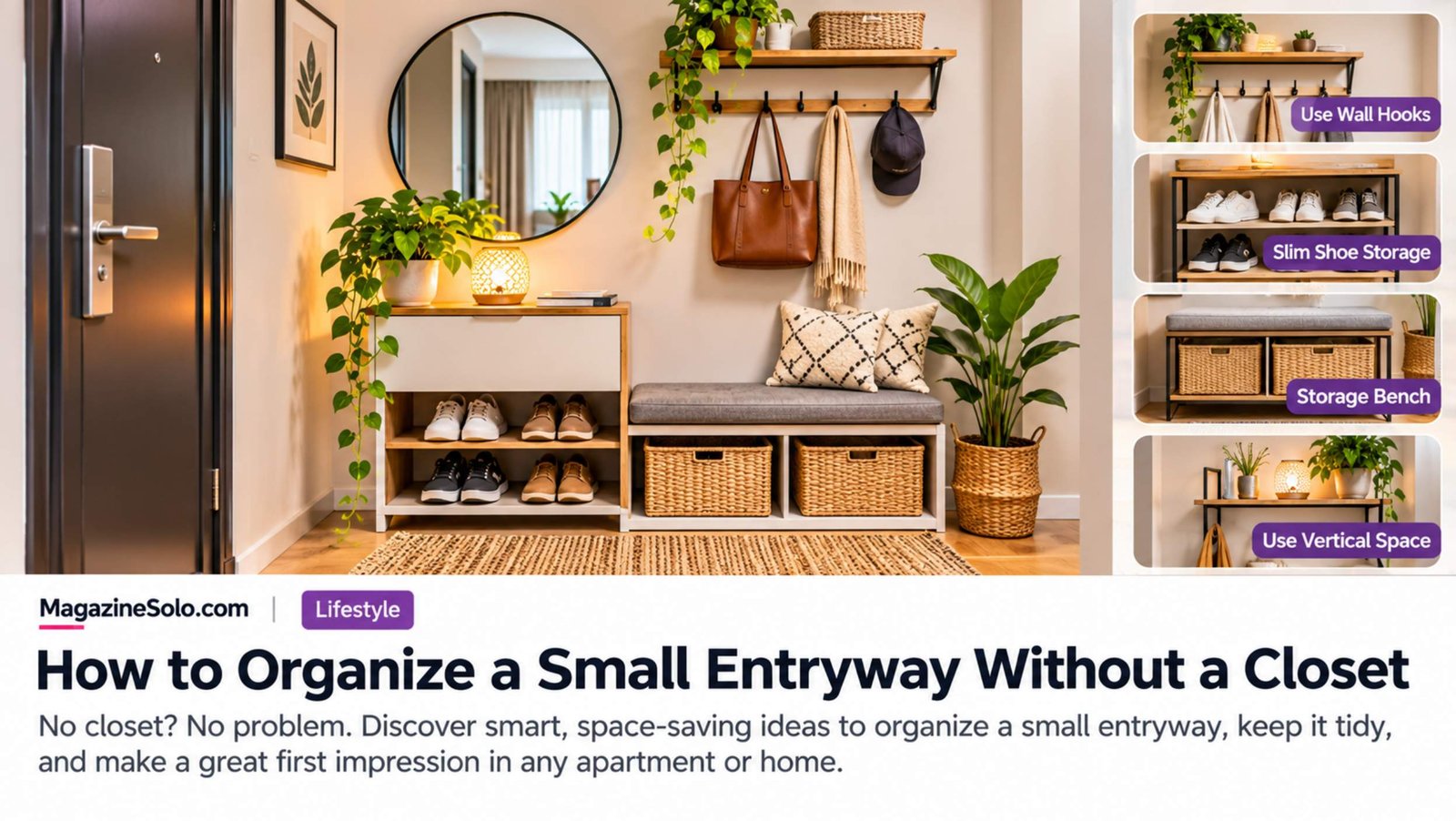
Your entryway is the first space you see when you walk into your home. Unfortunately, in a small apartment, it can quickly become a collection of shoes, jackets, backpacks, keys, and shopping bags.
Without a dedicated coat closet, keeping everything organized may feel impossible.
However, small entryway organization without a closet doesn’t require expensive furniture or a complete renovation.
With a few space-saving storage ideas, you can turn even a narrow entrance into a functional and welcoming area.
Here are 12 practical ways to organize a small entryway without a closet while keeping your apartment comfortable and clutter-free.
Why Is a Small Entryway So Difficult to Organize?
Small entryways often have limited floor space and very little built-in storage.
In some apartments, the front door opens directly into the living room.
This creates several challenges:
- Shoes collect near the doorway.
- Jackets and bags end up on furniture.
- Keys and small accessories get misplaced.
- Large storage furniture blocks walking space.
- Seasonal items take up valuable room.
The solution is to create designated storage areas while keeping the entrance easy to navigate.
1. Install Wall Hooks for Coats and Bags
Wall hooks are one of the simplest ways to organize an entryway without a closet.
They use vertical space instead of taking up valuable floor area.
You can use hooks for:
- Everyday jackets
- Backpacks
- Handbags
- Hats
- Reusable shopping bags
- Lightweight accessories
How to Arrange Entryway Hooks
Install hooks at heights suitable for the people using them.
For families with children, lower hooks may make it easier for kids to hang their own belongings.
Avoid overloading hooks or mounting heavy items without suitable hardware.
If you’re renting, check your lease before drilling holes.
Removable hooks may be suitable for lightweight items when installed according to their weight limits and surface requirements.
For more home organization inspiration, explore IKEA’s storage and organization ideas.
2. Choose a Slim Shoe Rack
Shoes are often the biggest source of entryway clutter.
A slim shoe rack can keep footwear organized without occupying too much floor space.
Look for a design that fits the available depth and doesn’t interfere with the door.
Best Shoe Storage Options for Small Spaces
| Storage Type | Best For | Main Advantage |
|---|---|---|
| Slim shoe rack | Narrow entrances | Compact footprint |
| Shoe cabinet | Concealed storage | Hides visual clutter |
| Stackable rack | Small households | Adjustable capacity |
| Under-bench storage | Multiuse spaces | Combines seating and storage |
| Wall-mounted shoe storage | Limited floor area | Uses vertical space |
Choose a rack based on the number of shoes you use regularly.
Store off-season footwear elsewhere when possible.
3. Add a Narrow Entryway Bench With Storage
A small bench can make your entryway more practical.
It provides a place to sit while putting on shoes.
Some benches also include shelves, drawers, or baskets underneath.
What to Look For
Choose a bench that:
- Fits the available space
- Has a suitable weight capacity
- Provides useful storage
- Doesn’t block the doorway
- Is stable on your flooring
A storage bench can be particularly helpful in apartments where every piece of furniture needs to serve more than one purpose.
4. Use Floating Shelves for Everyday Essentials
Floating shelves can provide storage without using floor space.
A small shelf near the entrance can hold frequently used items such as keys, sunglasses, and mail.
How to Keep Entryway Shelves Organized
Use a small tray or container for keys.
Avoid stacking unnecessary objects.
Keep heavier items off shelves that aren’t designed to support them.
Install shelves using suitable hardware and follow the manufacturer’s instructions.
If you’re renting, consider a narrow freestanding alternative.
5. Create a Dedicated Key Station
Losing your keys when you’re already running late is frustrating.
A dedicated key station can prevent this problem.
You can use:
- A small wall-mounted key holder
- A decorative tray
- A compact shelf
- A drawer organizer
- A labeled container
Place the key station somewhere convenient but avoid displaying spare keys or identifying information where they are easily accessible to strangers.
The goal is to make putting away your keys an automatic habit.
6. Use Baskets to Hide Small Clutter
Baskets are useful for organizing items that don’t have an obvious storage location.
For example, you can use separate baskets for:
- Gloves and scarves
- Reusable shopping bags
- Pet walking accessories
- Seasonal items
- Small everyday accessories
Choose baskets that fit neatly on shelves or beneath a bench.
Labels can help family members find items without searching through every container.
For more ideas about maintaining an organized apartment, read our guide on how to keep a small apartment smelling fresh without candles.
7. Add a Mirror to Make the Entryway Feel Larger
Mirrors can make a narrow entryway feel more open by reflecting light and surrounding space.
A mirror also provides a convenient place for a final appearance check before leaving home.
Mirror Placement Tips
Position the mirror where it won’t interfere with the door.
Choose a size that complements the wall.
Secure it properly using suitable mounting hardware.
Avoid placing fragile mirrors where they may be struck by bags or frequently opened doors.
A mirror won’t create additional storage, but it can improve the overall appearance of a compact entrance.
8. Use Vertical Storage Instead of Large Furniture
When floor space is limited, vertical storage can be particularly useful.
Consider combining wall hooks, narrow shelves, and a small shoe organizer.
Example Vertical Storage Layout
Upper section: A shelf for infrequently used lightweight accessories.
Middle section: Hooks for everyday coats and bags.
Lower section: A compact shoe rack or storage bench.
This arrangement creates separate storage zones without requiring a traditional closet.
Make sure tall furniture is secured against tipping where appropriate.
The U.S. Consumer Product Safety Commission’s Anchor It! initiative provides information about furniture tip-over prevention.
9. Keep Only Everyday Shoes Near the Door
An entryway becomes cluttered when every pair of shoes is stored near the entrance.
Instead, keep only frequently used footwear there.
Move seasonal or occasional shoes to another storage area.
A Simple Shoe Organization Method
- Gather all shoes currently near the entrance.
- Separate everyday pairs from occasional footwear.
- Clean and dry shoes before storing them.
- Keep frequently used pairs accessible.
- Move the remaining shoes to another suitable location.
This approach reduces visual clutter without requiring additional furniture.
10. Choose Furniture With Multiple Functions
Multifunctional furniture is especially useful in small apartments.
A narrow console table may provide storage for keys and mail.
A bench can combine seating with shoe storage.
A wall-mounted shelf may hold everyday accessories without taking up floor space.
Before buying furniture, measure the available area carefully.
Remember to account for door clearance and walking space.
For additional compact living ideas, our upcoming article on how to make a small bedroom look bigger without renovating explores similar space-saving principles.
11. Create a Small Drop Zone
A drop zone is a designated place for items you use when entering or leaving home.
Without one, keys, mail, bags, and accessories may end up scattered throughout the apartment.
What Should an Entryway Drop Zone Include?
A practical drop zone may contain:
- A key tray
- A mail organizer
- A hook for a daily bag
- A shoe mat
- A small basket for accessories
Keep the drop zone simple.
Too many containers can make a small entrance feel crowded.
12. Follow a Five-Minute Entryway Reset Routine
Even the best storage system won’t stay organized without regular maintenance.
A short daily reset can help prevent clutter from building up.
Five-Minute Entryway Routine
Minute 1: Put shoes back on the rack.
Minute 2: Hang jackets and bags.
Minute 3: Return keys and accessories to their designated places.
Minute 4: Remove unnecessary mail or packaging.
Minute 5: Straighten the mat and check the floor for dirt.
This simple habit can make your entrance feel more welcoming every day.
Best Small Entryway Organization Ideas for Renters
Renters may have restrictions on drilling, painting, or installing permanent fixtures.
Fortunately, many entryway organization solutions don’t require major modifications.
Consider:
- Freestanding shoe racks
- Narrow storage benches
- Removable hooks used within their weight limits
- Decorative trays
- Stackable baskets
- Small freestanding shelves
Always follow your lease requirements and product installation instructions.
How to Organize an Entryway That Opens Directly Into the Living Room
Some apartments don’t have a separate hallway or foyer.
Instead, the front door opens directly into the main living area.
In this situation, the goal is to create a visual entryway without making the room feel smaller.
Use a Small Rug
A washable rug or mat can visually define the entrance.
Choose a nonslip option that doesn’t interfere with the door.
Add a Narrow Console
A compact console can provide a place for keys and small accessories.
Keep Storage Consistent
Choose storage furniture that matches the living room’s colors and materials.
Avoid Oversized Furniture
Large cabinets can make the entrance feel crowded.
For inspiration, explore Apartment Therapy’s organizing ideas.
Common Small Entryway Organization Mistakes
Buying Furniture Before Measuring
A shoe cabinet may look compact online but block your door once installed.
Measure carefully before purchasing.
Installing Too Many Hooks
Too many hanging coats and bags can create visual clutter.
Keep only frequently used items near the entrance.
Ignoring Vertical Space
Walls can provide useful storage opportunities when floor space is limited.
Keeping Every Pair of Shoes by the Door
Store seasonal footwear elsewhere to reduce clutter.
Forgetting Safety and Accessibility
Avoid blocking doors, walkways, or emergency exits.
Storage should make your home easier to use, not harder to navigate.
Small Entryway Organization on a Budget
You don’t need expensive furniture to create a functional entrance.
Start by using storage items you already own.
Budget-Friendly Ideas
| Organization Idea | Budget Approach |
|---|---|
| Key storage | Reuse a small tray |
| Shoe organization | Repurpose an existing rack |
| Accessory storage | Use baskets already at home |
| Coat storage | Install suitable hooks |
| Mail organization | Reuse a file organizer |
| Entryway decoration | Reposition an existing mirror |
Prioritize functionality before decoration.
A simple system that works every day is better than an elaborate setup that’s difficult to maintain.
How to Keep Your Entryway Clean and Fresh
Entryways collect dirt, moisture, and outdoor debris.
Regular cleaning helps maintain the space.
Try these habits:
- Use a washable doormat.
- Clean wet shoes before storing them.
- Sweep or vacuum the floor regularly.
- Allow damp coats to dry.
- Clean shoe racks and storage baskets when necessary.
If your apartment develops unpleasant odors, our article on keeping a small apartment smelling fresh without candles provides additional cleaning and ventilation tips.
Frequently Asked Questions
How do you organize a small entryway without a closet?
Use wall hooks, a slim shoe rack, a narrow storage bench, and small containers for keys and accessories. Keep only frequently used items near the door.
What can I use instead of an entryway closet?
Wall-mounted hooks, freestanding coat racks, shoe cabinets, shelves, and storage benches can provide alternatives.
How do you organize shoes in a narrow entryway?
Choose a slim shoe rack or cabinet and move infrequently used footwear to another storage area.
How can I make a small entryway look bigger?
Reduce clutter, choose compact furniture, use light colors, and consider adding a securely mounted mirror.
How do renters organize entryways without drilling?
Freestanding storage, suitable removable hooks, baskets, and narrow benches can provide practical options.
What should every small entryway have?
Most small entryways benefit from a place for shoes, a location for keys, and storage for everyday bags or coats.
How do I keep my entryway from getting cluttered?
Create designated storage zones and follow a short daily reset routine.
Final Thoughts
Learning how to organize a small entryway without a closet is about making better use of the space you already have.
Wall hooks, slim shoe racks, storage benches, and simple drop zones can help create a more functional entrance.
Focus on keeping everyday essentials accessible while storing unnecessary items elsewhere.
With a thoughtful layout and a few consistent habits, even a very small apartment entryway can feel organized, comfortable, and welcoming.