How to Make a Small Bedroom Look Bigger Without Renovating
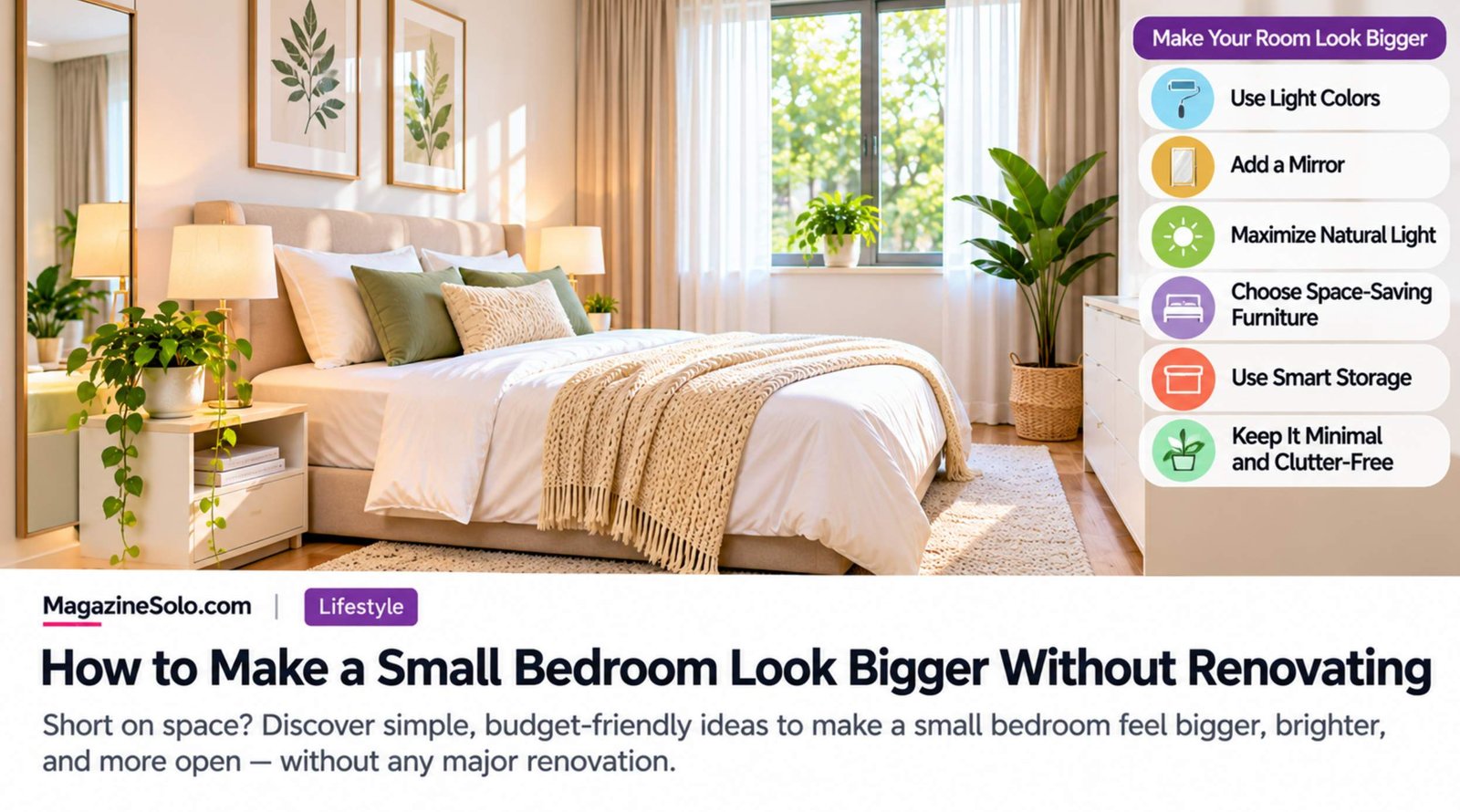
A small bedroom can feel cramped, especially when you need to fit a bed, dresser, nightstand, and everyday belongings into a limited space.
However, making a bedroom feel larger doesn’t always require removing walls, replacing furniture, or spending thousands of dollars on renovations.
If you’re wondering how to make a small bedroom look bigger, the answer often comes down to better furniture placement, thoughtful lighting, smart storage, and reducing visual clutter.
Even small changes can make a noticeable difference in how spacious your room feels.
Here are 15 practical, renter-friendly ideas to help your bedroom look brighter, more organized, and more open without major renovations.
Why Do Small Bedrooms Feel So Cramped?
A bedroom may feel smaller than its actual dimensions because of how furniture, lighting, and decorative elements are arranged.
Common problems include:
- Oversized furniture
- Limited natural light
- Dark or visually heavy decor
- Too many exposed belongings
- Poor furniture placement
- Cluttered floors
- Heavy window coverings
- Insufficient storage
The goal isn’t to physically increase the room’s square footage.
Instead, you want to create a more open visual appearance while improving how the available space functions.
1. Use Light Colors to Make the Room Feel Open
Light colors can help a bedroom feel brighter by reflecting more available light.
White, cream, soft beige, pale gray, and other light neutral shades are popular choices for compact spaces.
Best Colors for Small Bedrooms
| Color | Visual Effect |
|---|---|
| Soft White | Bright and clean |
| Warm Beige | Cozy and open |
| Light Gray | Calm and modern |
| Pale Blue | Airy and relaxing |
| Soft Sage | Natural and understated |
| Cream | Warm and welcoming |
You don’t necessarily need to repaint your walls.
If you’re renting, try light-colored bedding, curtains, rugs, or decorative accessories.
For additional interior design inspiration, explore Architectural Digest’s decorating resources.
2. Add a Mirror to Reflect Light
Mirrors can make a room feel more open by reflecting light and surrounding space.
A large mirror may create the impression of additional depth.
Where to Place a Mirror
Consider positioning a mirror:
- Opposite or near a window
- Above a dresser
- On an available wall
- Beside a wardrobe
- Near an area that receives natural light
Avoid placing mirrors where they create uncomfortable glare.
Secure large mirrors according to the manufacturer’s installation instructions.
A mirror can improve the visual appearance of a room without requiring structural changes.
3. Choose Furniture With Slim Profiles
Large, bulky furniture can make a small bedroom feel crowded.
Furniture with slimmer frames and simpler designs may help maintain a more open appearance.
Furniture Features to Consider
- Narrow nightstands
- Compact dressers
- Simple bed frames
- Wall-mounted shelves where permitted
- Furniture with visible legs
- Pieces with multiple functions
Before purchasing furniture, measure the room and check how much walking space will remain.
4. Keep the Floor as Clear as Possible
Visible floor space can make a bedroom feel less crowded.
When shoes, laundry baskets, storage boxes, and other belongings cover the floor, the room may appear smaller.
Simple Floor Organization Tips
Keep dirty laundry in a designated hamper.
Store shoes in a suitable location.
Avoid leaving shopping bags and boxes beside the bed.
Use existing storage before purchasing additional organizers.
If your home has limited closet space, our guide on how to organize a small entryway without a closet provides related storage ideas.
5. Use Under-Bed Storage
The space beneath your bed may offer useful storage opportunities.
Depending on your bed frame, you may be able to store seasonal clothing, spare bedding, or other infrequently used belongings.
Under-Bed Storage Ideas
- Low-profile storage bins
- Fabric storage bags
- Rolling containers
- Built-in bed drawers
- Vacuum storage bags for suitable textiles
Avoid overfilling the space.
Make sure stored items don’t interfere with the bed frame or ventilation requirements.
If your bedroom has carpet, remember to clean underneath the bed regularly.
Our article on how to reduce dust in a bedroom with carpet explains how to manage dust in difficult-to-reach areas.
6. Choose a Bed That Fits the Room
The bed is usually the largest piece of furniture in a bedroom.
An oversized bed can leave very little room for movement.
Common U.S. Mattress Sizes
| Mattress Size | Standard Dimensions |
|---|---|
| Twin | 38 × 75 inches |
| Full | 54 × 75 inches |
| Queen | 60 × 80 inches |
| King | 76 × 80 inches |
These are common nominal mattress dimensions.
The complete bed frame may occupy more space.
Before choosing a bed, measure the available area and account for doors, drawers, and walking paths.
For more information about mattress dimensions, visit the Sleep Foundation.
7. Maximize Natural Light
Natural light can make a bedroom feel brighter and more inviting.
Heavy curtains or furniture positioned in front of windows may reduce available daylight.
Ways to Improve Natural Light
- Keep windows unobstructed.
- Use lighter window coverings.
- Clean window glass when necessary.
- Position large furniture away from windows when practical.
- Use mirrors to reflect available light.
If privacy is a concern, consider sheer curtains combined with suitable blinds or shades.
8. Hang Curtains Higher
Curtain placement can influence how tall a room appears.
Hanging curtains closer to the ceiling may create the visual impression of greater wall height.
Choose curtains that fit the window and room proportions.
Avoid excessively bulky fabric if you prefer a light, open appearance.
Renters should check lease restrictions before installing curtain hardware.
9. Use Wall-Mounted Storage
Wall-mounted shelves can provide storage without occupying additional floor space.
They may be useful for books, decorative objects, and lightweight accessories.
Wall Storage Ideas
Consider:
- Floating shelves
- Wall-mounted organizers
- Small bedside shelves
- Hanging storage pockets
- Suitable pegboards
Install shelves according to their weight ratings and mounting requirements.
If you cannot drill into the walls, consider narrow freestanding alternatives.
10. Choose Multifunctional Furniture
Furniture that serves more than one purpose can help reduce the number of pieces needed in a room.
For example:
Storage bed: Combines sleeping space with drawers or compartments.
Compact desk: May also function as a vanity.
Storage bench: Provides seating and hidden storage.
Nightstand with drawers: Holds everyday essentials while reducing clutter.
Before buying multifunctional furniture, consider whether each feature will genuinely be useful.
11. Keep Bedding Simple and Coordinated
Bedding occupies a large visual area in most bedrooms.
A coordinated bedding arrangement can create a cleaner appearance.
Consider using:
- A simple duvet cover
- Matching pillowcases
- A limited color palette
- A lightweight throw
- Fewer decorative pillows
You don’t need to eliminate color or personality.
The goal is to create a balanced appearance rather than an overly busy one.
If your fitted sheets frequently come loose, our guide on how to stop bed sheets from sliding off the mattress offers practical solutions.
12. Reduce Visual Clutter on Furniture
Dressers and nightstands often collect small belongings.
Books, chargers, cosmetics, accessories, and miscellaneous objects can quickly make surfaces appear crowded.
How to Organize Bedroom Surfaces
Keep only frequently used items visible.
Store smaller belongings in drawers or containers.
Use trays to group related objects.
Remove items that belong in another room.
A cleaner visual arrangement can help the bedroom feel more organized.
13. Use Layered Lighting
A single ceiling light may not provide comfortable illumination throughout the room.
Layered lighting combines different light sources for different purposes.
Types of Bedroom Lighting
| Lighting Type | Purpose |
|---|---|
| Ceiling Light | General illumination |
| Bedside Lamp | Reading and relaxation |
| Wall Light | Saves nightstand space |
| Accent Light | Adds visual interest |
| Natural Light | Daytime brightness |
Choose lighting appropriate for the room’s size and your daily activities.
For energy-efficient lighting guidance, explore the U.S. Department of Energy’s lighting resources.
14. Create a Consistent Color Palette
Too many unrelated colors and patterns can make a compact bedroom feel visually busy.
A consistent color palette may create a more unified appearance.
Simple Three-Color Approach
Choose:
Primary color: Used for the largest surfaces and bedding.
Secondary color: Used for furniture and curtains.
Accent color: Used sparingly for pillows, artwork, or decorative objects.
For example, you might combine warm white, natural wood, and muted green.
This approach allows you to create a coordinated look without replacing everything in the room.
15. Declutter Regularly
Even a thoughtfully designed bedroom can begin to feel cramped when unnecessary belongings accumulate.
A short weekly organization routine can help maintain a more open appearance.
Five-Minute Bedroom Reset
- Put away loose clothing.
- Clear the nightstand.
- Return shoes to storage.
- Straighten bedding.
- Remove unnecessary packaging and clutter.
If you’re maintaining a compact apartment, our article on how to keep a small apartment smelling fresh without candles provides additional everyday home maintenance tips.
Best Furniture Layout for a Small Bedroom
Furniture placement can influence how comfortable a room feels.
There is no single layout that works for every bedroom, but several principles are useful.
Position the Bed Thoughtfully
Consider placing the bed against a suitable wall while preserving access to doors and windows.
Avoid Blocking Walkways
Leave enough space to move safely around furniture.
Keep Storage Accessible
Make sure drawers and cabinet doors can open properly.
Avoid Oversized Nightstands
Choose compact bedside furniture when space is limited.
Use Vertical Space
Shelves and tall storage furniture may reduce the need for additional floor-level pieces.
Secure tall furniture where appropriate to reduce tip-over risks.
The U.S. Consumer Product Safety Commission’s Anchor It! program provides information about furniture safety.
How to Make a Small Bedroom Look Bigger on a Budget
You don’t need expensive furniture or professional interior design services.
Start with changes that cost little or nothing.
| Budget-Friendly Change | Potential Benefit |
|---|---|
| Rearrange furniture | Improves layout |
| Remove clutter | Creates visual openness |
| Reposition a mirror | Reflects more light |
| Use existing storage bins | Organizes belongings |
| Change bedding colors | Creates a lighter appearance |
| Open curtains during the day | Improves natural light |
| Remove unnecessary furniture | Frees floor space |
Focus on the changes that address your room’s biggest problems.
How to Make a Small Bedroom Look Bigger Without Painting
If your lease doesn’t allow painting, you can still change how the room feels.
Try using light-colored bedding and curtains.
Choose a coordinated color palette.
Add a mirror where it reflects useful light.
Reduce clutter and reorganize furniture.
These adjustments can create a brighter appearance without changing the walls.
How to Make a Small Bedroom Feel Cozy Without Looking Crowded
A room doesn’t need to feel empty to appear spacious.
You can create a comfortable atmosphere using soft textures, warm lighting, and a few carefully selected decorative items.
Cozy Small Bedroom Ideas
Use a soft throw blanket.
Choose comfortable bedding.
Add a small plant if lighting conditions are suitable.
Use warm bedside lighting.
Keep decorative accessories limited and intentional.
The goal is to balance comfort with functionality.
Common Small Bedroom Decorating Mistakes
Buying Oversized Furniture
Large furniture can dominate a compact room.
Measure carefully before purchasing.
Blocking Natural Light
Heavy window coverings or poorly placed furniture may make the room feel darker.
Using Too Many Decorative Items
Excessive decoration can create visual clutter.
Ignoring Vertical Storage
Unused wall space may provide additional organization opportunities.
Choosing Furniture Without Considering Door Clearance
Always account for doors, drawers, and walking paths.
Neglecting Regular Cleaning
Dust and clutter can make a room feel less comfortable.
Frequently Asked Questions
What colors make a small bedroom look bigger?
Light neutrals such as white, cream, beige, and pale gray can help create a brighter appearance. However, lighting and furniture placement also matter.
Do mirrors make small bedrooms look larger?
Mirrors can create the impression of additional depth and reflect light, which may make a room feel more open.
How can I make my bedroom look bigger without spending money?
Rearrange furniture, remove clutter, improve natural light, and organize existing belongings.
Should I use a large or small bed in a small bedroom?
Choose a bed that meets your comfort needs while allowing sufficient room for movement and storage access.
Does dark furniture make a room look smaller?
Dark furniture can create a visually heavier appearance in some spaces, but thoughtful lighting and layout can balance the effect.
How do I make a small bedroom look luxurious?
Use coordinated bedding, balanced lighting, simple decorative accents, and an organized layout.
Can curtains make a bedroom look taller?
Curtains hung higher may create the visual impression of greater wall height.
Is minimalism necessary for a small bedroom?
No. You can include personal decorations and comfortable furnishings while maintaining an organized space.
Final Thoughts
Learning how to make a small bedroom look bigger doesn’t require major renovations or expensive furniture.
Start by improving the layout, reducing unnecessary clutter, and making better use of natural light.
Choose furniture that fits the room, use storage thoughtfully, and create a consistent color palette.
Small changes can work together to make a bedroom feel brighter, more comfortable, and more spacious.
With practical organization and thoughtful decorating, even a compact bedroom can become a welcoming and functional retreat.