How to Stop Bed Sheets From Sliding Off the Mattress
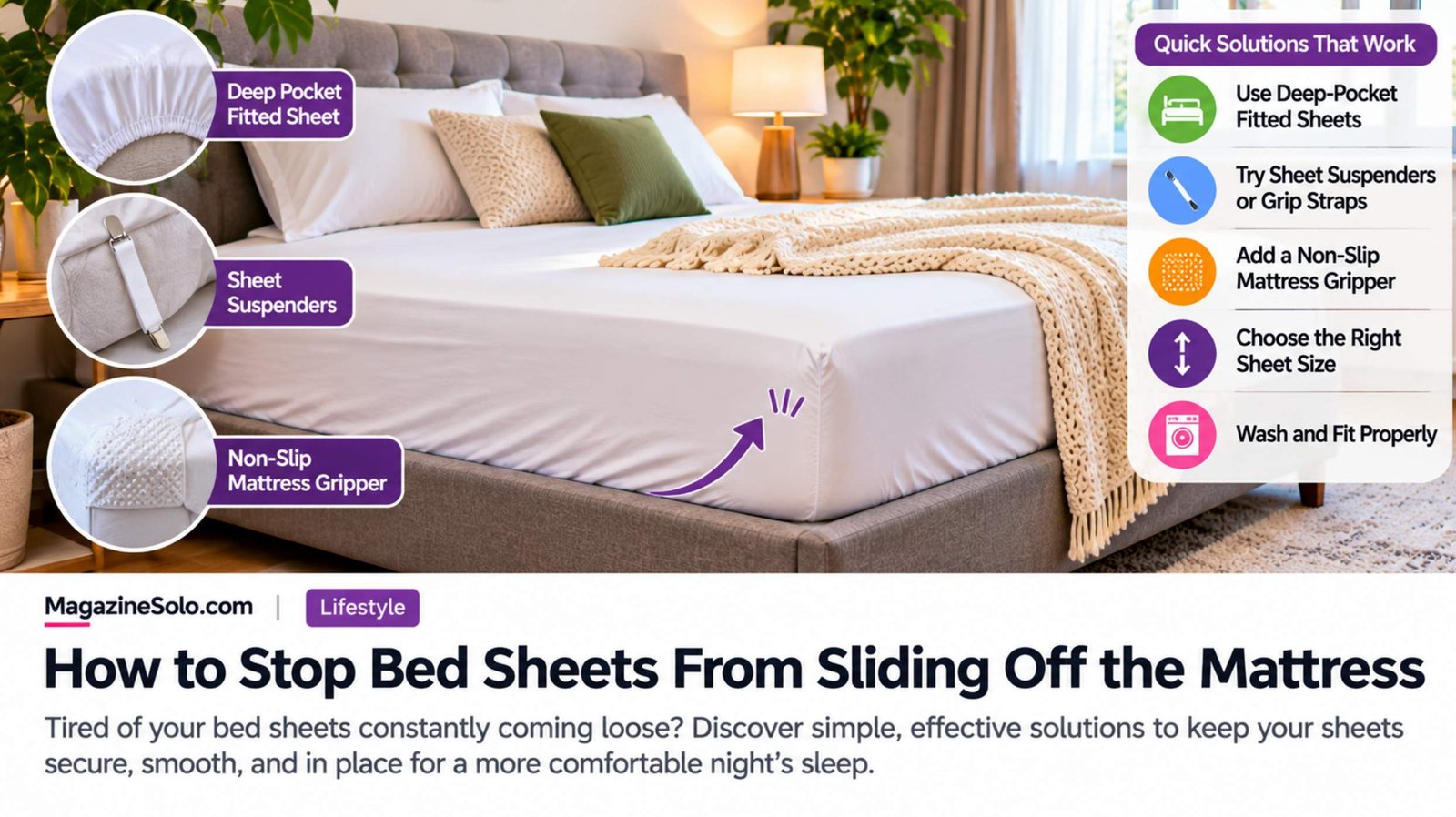
You make your bed in the morning, carefully tucking the fitted sheet around every corner. But by the next morning, one side has slipped off, the fabric is bunched up, and you’re sleeping directly against the mattress protector.
If this happens regularly, you’re probably wondering how to stop bed sheets from sliding off the mattress.
Loose sheets can be frustrating, especially when you have a thick mattress, a mattress topper, or bedding that doesn’t fit correctly.
Fortunately, you don’t necessarily need to replace your entire bedding set.
From choosing the right fitted sheet to using simple sheet straps, these 10 practical solutions can help keep your sheets securely in place.
Why Do Bed Sheets Keep Sliding Off?
Bed sheets may slip off for several reasons.
The most common include:
- Incorrect fitted sheet dimensions
- Shallow sheet pockets
- Weak or worn elastic
- Thick mattress toppers
- Slippery bedding materials
- Excess fabric around the corners
- Frequent movement during sleep
- Improper sheet installation
Before purchasing new bedding accessories, identify which issue is causing the problem.
1. Choose the Correct Fitted Sheet Size
One of the most common reasons fitted sheets slip off is an incorrect size.
A sheet that is too small may not stretch securely around the mattress.
A sheet that is too large may develop loose corners and excess fabric.
Common U.S. Mattress Sizes
| Mattress Size | Standard Dimensions |
|---|---|
| Twin | 38 × 75 inches |
| Twin XL | 38 × 80 inches |
| Full | 54 × 75 inches |
| Queen | 60 × 80 inches |
| King | 76 × 80 inches |
| California King | 72 × 84 inches |
These are common nominal dimensions. Actual mattress measurements may vary slightly.
Measure your mattress before buying new sheets.
For bedding and mattress sizing guidance, explore the Sleep Foundation’s mattress resources.
2. Measure Your Mattress Depth
Mattress depth is just as important as length and width.
A thick mattress may require a fitted sheet with deeper pockets.
For example, a fitted sheet designed for a relatively thin mattress may struggle to stay attached to a much thicker mattress.
How to Measure Mattress Depth
- Remove your bedding.
- Measure from the top surface to the bottom edge of the mattress.
- Include any mattress topper that remains on the bed.
- Compare the measurement with the sheet manufacturer’s stated pocket-depth compatibility.
Remember that a sheet labeled “deep pocket” may fit a different depth range depending on the brand.
Always check the actual measurements.
3. Use Deep-Pocket Fitted Sheets
Deep-pocket sheets are designed for thicker mattresses.
They may be useful if your mattress includes a pillow top or an additional topper.
When Deep-Pocket Sheets Help
Consider them if:
- Your mattress is unusually thick.
- Your current sheet cannot reach underneath the corners.
- The elastic repeatedly pulls upward.
- You use a substantial mattress topper.
However, deeper pockets are not automatically better.
If your mattress is relatively thin, an oversized fitted sheet may become loose.
Choose a pocket depth appropriate for your mattress.
4. Try Sheet Suspenders or Corner Straps
Sheet suspenders are accessories designed to hold fitted sheets in place.
They typically attach to the sheet edges beneath the mattress.
Some products connect two nearby edges, while others use longer straps.
How to Use Sheet Suspenders
- Remove the fitted sheet.
- Attach the suspenders according to the product instructions.
- Position the sheet over the mattress.
- Secure the remaining corners.
- Adjust the straps if the design allows it.
Avoid excessive tension that could damage the fabric.
Make sure clips and straps don’t create discomfort or damage the mattress.
5. Use a Non-Slip Mattress Gripper
Some bedding accessories use friction to reduce movement between layers.
A suitable non-slip gripper may help when bedding shifts against a smooth mattress protector or topper.
However, effectiveness varies by product and fabric.
Before Using a Mattress Gripper
Check that the material is compatible with your mattress and protector.
Avoid products that could trap moisture or damage delicate surfaces.
Follow the manufacturer’s instructions carefully.
A gripper may help reduce movement, but it cannot correct a fitted sheet that is fundamentally the wrong size.
6. Replace Sheets With Worn-Out Elastic
Fitted sheets depend on elastic to maintain tension around the mattress.
Over time, elastic may lose its ability to stretch and recover.
Signs Your Sheet Elastic Is Worn Out
- Corners feel loose even when properly fitted.
- The sheet repeatedly slips off one side.
- Elastic edges appear stretched or distorted.
- The fabric no longer fits as securely as it once did.
If the elastic is damaged, replacing the sheet may be more practical than repeatedly adjusting it.
7. Check Your Mattress Topper
Mattress toppers can make a bed more comfortable, but they also increase its overall height.
A fitted sheet that previously fit perfectly may become too shallow after adding a topper.
How to Fix This Problem
Measure the mattress and topper together.
Choose a fitted sheet designed for the combined depth.
Make sure the topper is positioned correctly.
If the topper itself moves, check whether it includes suitable securing straps.
Avoid stacking multiple loose layers without considering how they affect sheet fit.
8. Choose Bedding Fabrics That Fit Securely
Different bedding fabrics have different textures, stretch characteristics, and finishes.
Some smooth materials may shift more easily than others.
However, fabric alone is rarely the only reason sheets slip off.
Common Bedding Materials
| Material | Typical Characteristics |
|---|---|
| Cotton Percale | Crisp, breathable feel |
| Cotton Sateen | Smooth, softer finish |
| Jersey Knit | Stretchy, T-shirt-like texture |
| Linen | Textured, breathable fabric |
| Polyester Blends | Varying degrees of smoothness and stretch |
A properly sized fitted sheet with strong elastic is generally more important than choosing a particular fabric.
If you prefer stretchy bedding, jersey-knit sheets may be worth considering.
9. Install Your Fitted Sheet Correctly
Even a well-sized sheet can come loose if it isn’t installed properly.
How to Put On a Fitted Sheet
- Identify the sheet’s longer and shorter sides.
- Match the corners to the mattress.
- Secure one upper corner.
- Secure the opposite upper corner.
- Pull the remaining corners underneath the mattress.
- Check that the elastic sits beneath all four corners.
- Smooth the fabric across the surface.
Avoid pulling one corner excessively tight while leaving the others loose.
The goal is even tension.
10. Wash and Dry Sheets According to Their Care Labels
Improper laundering can affect fabric fit and elastic performance.
Excessive heat may damage certain elastic materials.
Always follow the manufacturer’s washing and drying instructions.
Better Sheet Care Habits
- Follow the fabric care label.
- Avoid excessive dryer heat when inappropriate for the material.
- Don’t overload the washing machine.
- Inspect elastic edges after laundering.
- Store clean sheets in a dry location.
If your bedroom also collects dust, our related article on how to reduce dust in a bedroom with carpet explains practical cleaning habits for a more comfortable sleeping environment.
Best Solutions for Different Sheet Problems
| Problem | Best Starting Solution |
|---|---|
| Sheet too small | Correct mattress dimensions |
| Corners won’t stay underneath | Check pocket depth |
| Sheet is loose | Choose better-fitting bedding |
| Elastic is worn out | Replace fitted sheet |
| Thick mattress topper | Measure combined depth |
| Sheet shifts during sleep | Test sheet suspenders |
| Smooth bedding layers move | Consider a compatible gripper |
| Corners installed unevenly | Refit the sheet carefully |
How to Keep Fitted Sheets on a Thick Mattress
Thick mattresses can be particularly challenging when using standard fitted sheets.
The main issue is usually insufficient pocket depth.
Step-by-Step Solution
First, measure your mattress from top to bottom.
Next, include any topper or additional layer that sits beneath the fitted sheet.
Then compare the total depth with the sheet manufacturer’s compatibility range.
Choose a fitted sheet that accommodates the full depth without excessive loose fabric.
If necessary, consider compatible sheet suspenders.
How to Stop Sheets From Slipping Off a Mattress Topper
Mattress toppers introduce another layer between the sheet and mattress.
If the topper moves, the sheet may shift with it.
To reduce movement:
- Use a properly sized fitted sheet.
- Secure the topper according to its instructions.
- Avoid incompatible slippery layers.
- Check whether the topper has built-in straps.
- Consider suitable bedding accessories if needed.
Don’t use adhesive products directly on mattress materials unless the manufacturer specifically permits them.
Are Sheet Suspenders Worth It?
Sheet suspenders can be a practical option when your fitted sheet is otherwise the correct size.
They may be particularly helpful for:
- Thick mattresses
- Adjustable beds, where compatible
- Sheets with corners that occasionally slip
- Households that prefer not to replace existing bedding
However, they are not a substitute for proper sizing.
Choose a design compatible with your mattress and follow the installation instructions.
How to Keep Bed Sheets From Sliding on an Adjustable Bed
Adjustable beds move between different positions.
This movement can place additional tension on fitted sheets.
If your sheets repeatedly come loose, check whether the bedding is designed for adjustable mattresses.
Some fitted sheets include stronger elastic or additional securing features.
Make sure any straps or accessories do not interfere with the bed’s moving components.
Consult your adjustable bed manufacturer’s guidance before installing accessories beneath the mattress.
Common Mistakes That Make Fitted Sheets Slip Off
Buying Sheets Without Measuring
Mattress labels don’t always tell you the full depth.
Measure before purchasing.
Choosing Pockets That Are Too Shallow
Insufficient pocket depth can prevent the sheet from wrapping securely underneath the mattress.
Ignoring Worn Elastic
Old elastic may no longer hold the sheet in place.
Pulling Corners Too Tightly
Uneven tension can cause one corner to slip when another is adjusted.
Using Incompatible Accessories
Certain clips or grippers may damage delicate bedding materials.
Forgetting the Mattress Topper
An additional topper can change the total depth significantly.
How to Make Your Bed Look Neater Every Day
Keeping fitted sheets secure is only one part of maintaining a comfortable bedroom.
A simple routine can help your bedding stay organized.
- Smooth the fitted sheet each morning.
- Check that all corners remain secure.
- Straighten the top sheet or duvet.
- Arrange pillows neatly.
- Remove unnecessary items from the bed.
If you’re working with limited bedroom space, our upcoming guide on how to make a small bedroom look bigger without renovating offers practical layout and organization ideas.
You can also explore our guide on how to keep a small apartment smelling fresh without candles for everyday home maintenance tips.
Frequently Asked Questions
Why do my fitted sheets keep popping off?
Common causes include incorrect sheet dimensions, shallow pockets, worn elastic, thick mattress toppers, or uneven installation.
How do I keep fitted sheets on a deep mattress?
Measure the full mattress depth and choose fitted sheets designed for that measurement. Sheet suspenders may provide additional support.
Do sheet straps actually work?
They can help keep properly sized fitted sheets in place, although results depend on the strap design and bedding material.
Can I use deep-pocket sheets on a regular mattress?
You can, but sheets with excessively deep pockets may fit loosely on thinner mattresses.
What type of sheets stay on the bed best?
Sheets with appropriate dimensions, sufficient pocket depth, and durable elastic are generally the most reliable.
How can I keep sheets from slipping without buying anything?
Start by reinstalling the sheet correctly, checking its orientation, and making sure the elastic sits securely beneath every corner.
Do mattress toppers make sheets slip?
They can contribute if they increase mattress depth beyond the sheet’s intended fit or shift during use.
Should I replace my fitted sheet if it keeps coming off?
Consider replacement if the sheet is incorrectly sized, damaged, or has worn-out elastic.
Final Thoughts
Learning how to stop bed sheets from sliding off begins with identifying why the bedding doesn’t stay secure.
For most situations, checking mattress dimensions, pocket depth, and elastic condition is the best starting point.
If your sheets fit correctly but still shift, suitable sheet suspenders or other compatible accessories may help.
With the right fit and a few simple adjustments, you can spend less time fixing loose corners and more time enjoying a comfortable, neatly made bed.