A Lot vs Allot vs Alot: Which Is Correct?

A lot vs allot vs alot comes down to three verdicts, and only two of the three forms are real. A lot is two words and means a large amount, or, after a verb, very much or often. Allot is a verb: to hand out shares of time, money, seats or tasks.
Alot is not a word at all, in any dictionary checked for this page. It is a misspelling of a lot, and the sections below prove each verdict in turn. Nothing here needs memorizing, because two short tests do the deciding for you.
All three forms are pronounced the same way, uh-LOT, so your ear cannot help you. What helps is the lot test for the amount phrase and the verb test for the allocation verb. Run them in order, and the right spelling follows every time.
The Quick Answer: Three Forms, Three Verdicts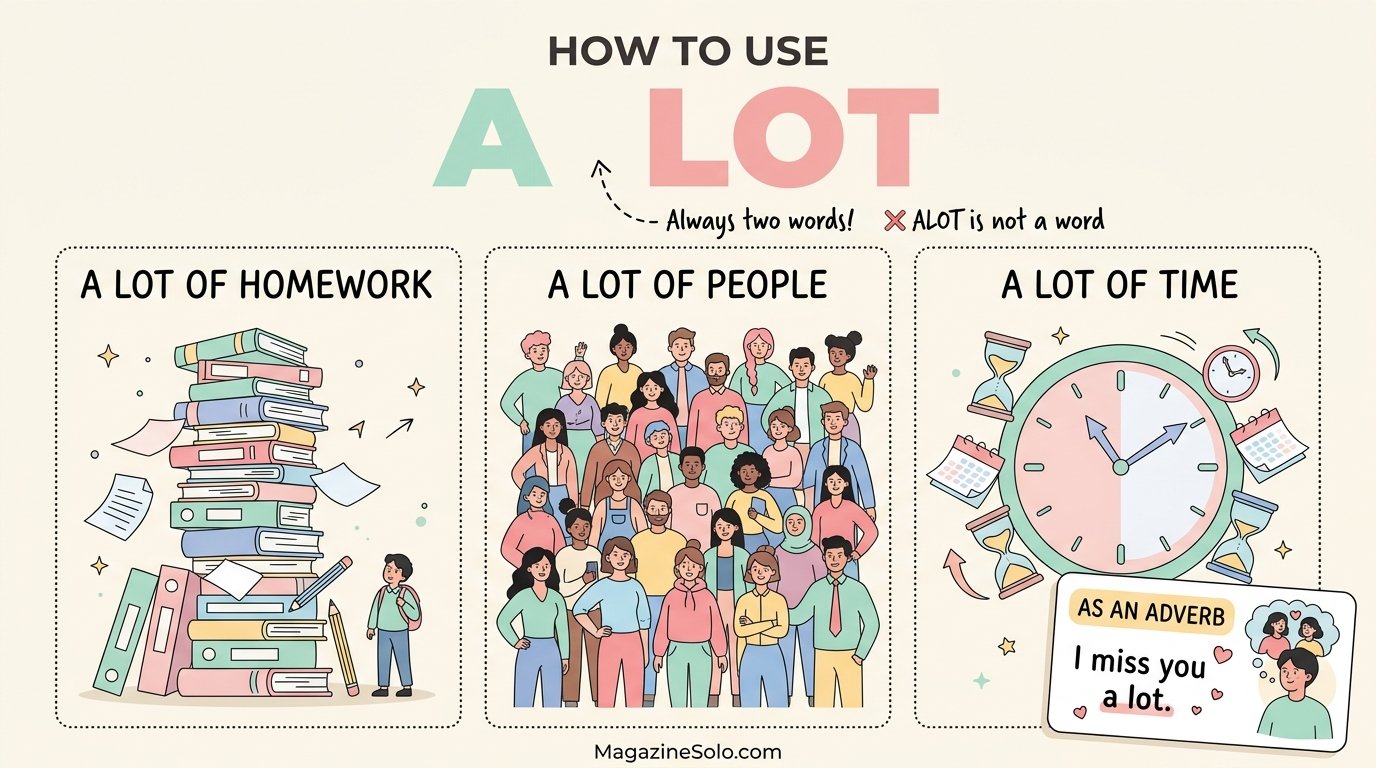
Start with the verdicts, because the verdict is what most readers came for. The table below is the whole page in three lines: form, word class, meaning, and the check that proves it.
|
Form |
Word class |
Meaning |
Verdict and test |
|---|---|---|---|
|
A lot |
Phrase: article a plus noun lot |
A large amount or number; very much, often |
Two words. Passes the lot test |
|
Allot |
Transitive verb |
To assign or distribute shares |
One word, a verb. Passes the verb test |
|
Alot |
None |
None |
Not a word. Always an error |
Two of these forms are tools; the third is a trap. Keep the table in mind while the next sections teach the two tests behind it. Every example that follows is graded against these three lines.
A Lot: The Amount Phrase
A lot is the indefinite article a standing in front of the noun lot, and that structure explains everything about it. Because lot is a real noun, the phrase can do a noun’s jobs, and it can also work as an adverb after a verb.
A Lot of Plus a Noun
The commonest job is quantifying a noun: a lot of homework, a lot of people, a lot of rain. Cambridge’s entry for a lot (of) treats the phrase as a core quantifier for countable and uncountable nouns alike. It is the first quantity language most learners meet.
The of phrase belongs to this noun use. A lot of time measures time; a lot of seats counts seats. If you can point at the thing being measured, you are in the noun phrase, and the spelling is two words.
A Lot Standing Alone: The Pronoun Use
A lot can also stand in for an amount already mentioned: I offered him ten and he took a lot. A lot was lost in the fire works the same way. Usage guides classify this as the pronoun use, and it explains why the phrase feels like a single word doing a single job.
Feeling like one word is not the same as being one word. The pronoun still contains the article and the noun inside it, which the lot test below proves. Scribbr’s explainer singles this use out because learners meet it early and fuse it first.
A Lot as an Adverb: Very Much and Often
After a verb, with no of, a lot works as an adverb meaning very much or often. Thanks a lot, I miss you a lot, and it helps a lot all carry this sense. The spelling does not change when the job changes: the adverb is still two words.
This adverb use is the error’s favorite home. Thanks alot is probably the most typed version of the mistake anywhere. If the words mean very much, they are the adverb phrase, and the space stays.
Lots Of: The More Informal Variant
Lots of means the same as a lot of, with one register step down. Cambridge’s grammar pages state plainly that lots is even more informal than a lot. Lots and lots of homework is fine in speech and casual writing, and out of place in a formal report.
Too Informal for Formal Writing: The Swap Table
Dictionaries label a lot informal, and edited writing often swaps it out. The right replacement depends on the noun: many for countable nouns, much for uncountable ones. The table below gives the formal swap system in one place.
|
You wrote |
The noun is |
Formal swap |
Example |
|---|---|---|---|
|
A lot of students |
Countable |
Many |
Many students applied |
|
A lot of evidence |
Uncountable |
Much |
Much evidence supports it |
|
A lot of support |
Uncountable, phrase needed |
A great deal of |
A great deal of support |
|
A lot of reasons |
Countable, formal tone |
Numerous, a large number of |
Numerous reasons exist |
|
It helped a lot |
Adverb |
Greatly, considerably |
It helped greatly |
The swaps do a second job: none of them can fuse into one word, so formal writing never produces the alot error. Register is not snobbery here; it is error prevention.
The Lot Test: How to Prove the Space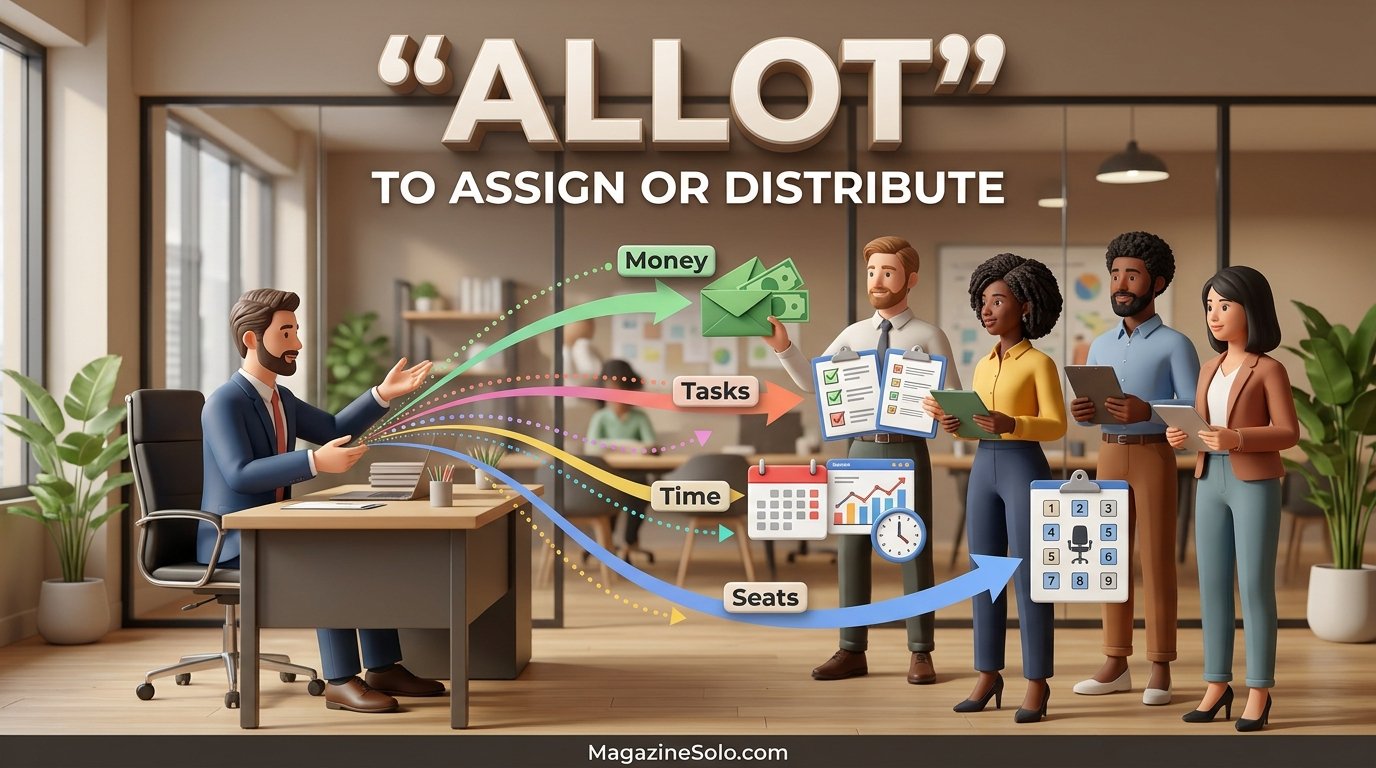
The lot test works because lot is a free standing noun. A noun can accept words in front of it, so you can stretch the phrase: a whole lot. If whole fits between a and lot, the two words are separate, and the spelling is a lot.
- Find the phrase in your sentence and try inserting whole: a whole lot of trouble.
- If the sentence still reads naturally, the form is a lot, two words.
- Confirm with the swap test: replace the phrase with many or much. If the swap keeps the meaning, you had the amount phrase.
Merriam-Webster’s usage page makes the same point with a whole lot of trouble: whole slips between the article and the noun, proving they are two words. The Blue Book of Grammar’s ruling on a lot, alot and allot uses a twin device, inserting large: think I have a large lot of video games.
Both wrong forms fail the test. You cannot say a whole alot, because alot contains no noun to stretch. You cannot say a whole allot either, because allot is a verb. Only the real phrase opens up to accept the extra word.
Allot: The Allocation Verb
Allot is a transitive verb: to give someone a share of something available. The Oxford Advanced American Dictionary’s entry for allot defines it as giving time, money, tasks or resources to someone as their share. If nobody is handing anything out, allot is the wrong word.
Allot Forms: Allots, Allotted, Allotting
A verb has forms, and allot’s forms are where the second spelling trap hides. The table gives all four, following Oxford’s verb table. Learn the set once, and the doubled t stops looking like a choice.
|
Form |
Spelling |
Example |
|---|---|---|
|
Base |
Allot |
They allot seats every morning |
|
Third person |
Allots |
She allots the tasks on Mondays |
|
Past and past participle |
Allotted |
The funds were allotted in March |
|
Ing form |
Allotting |
He is allotting the remaining time |
Why Allotted Doubles the T
Allot is stressed on its second syllable, uh-LOT, and ends in a single vowel plus a single consonant. English doubles that consonant before ed and ing: allotted, allotting. Admitted and occurred follow the same rule, and alloted with one t is simply a misspelling.
What Gets Allotted: Time, Money, Seats, Land, Tasks
Allot lives in allocation contexts: anywhere a limited supply is divided on purpose. Committees allot funds, teachers allot time, organizers allot seats, managers allot tasks, and governments have allotted land and shares. If the sentence involves a supply and a decision, suspect the verb.
|
What is allotted |
Typical sentence |
|---|---|
|
Time |
Each speaker was allotted ten minutes |
|
Money |
The board allotted funds to each school |
|
Seats |
The ushers allotted seats to latecomers |
|
Tasks |
She allotted the tasks among the team |
|
Land and shares |
Plots were allotted to settlers; shares went to investors |
Notice the pattern in every row: a giver, a supply, and a receiver. That three part shape is the verb’s fingerprint. Amount sentences have only the supply, which is why they take a lot instead.
Allotted: The Passive Pattern
Allot appears most often in the passive voice, because reports care about the share, not the giver. Was allotted and the allotted time are the forms readers meet most: finish within the allotted time. In that phrase allotted works as an adjective in front of the noun, and it is never written a lot time.
Allotment: The Share, and the British Garden
Allotment is the noun built on the verb, and it names the share itself: each department received its allotment of the budget. Vocabulary.com’s entry for allot walks through the verb’s family, allotment included, in its commonly confused words notes. The noun is the verb’s paperwork: what was allotted becomes an allotment.
One labelled strand: in British English, an allotment is also a small plot of rented public land for growing vegetables. American readers meet the word almost only in the share sense. Same spelling, two homes; this page keeps the senses separate.
The Verb Test: How to Prove the Verb
The verb test asks two questions about the word in your sentence. First, is someone handing something out? Second, can the word take an object and a past tense? Two yes answers mean allot; two no answers mean a lot.
- Name the giver. If a person, committee or plan is doing the assigning, you have a verb.
- Name the object. Allot takes one directly: allot time, allot seats, allot funds.
- Move the sentence into the past. If allotted fits, the verb is confirmed.
The trio’s best teaching sentence runs both tests at once: remember to allot a lot of time for revision. Allot passes the verb test, object and past tense included. A lot passes the lot test, because a whole lot of time works too. One sentence, both correct forms, no overlap.
Keep the mnemonic beside the test: allot is close in meaning to allocate, and allocate also has two Ls. Merriam-Webster’s usage writers offer that link as the memory hook. Amounts take the phrase; allocations take the verb.
Alot: The Verdict
Alot is not a word. No standard dictionary checked for this page lists it as a headword: not Merriam-Webster, not Cambridge, not Oxford, not Collins. Usage guides call it a misspelling, and spellcheckers flag it, because there is no such entry for them to match.
That verdict has no register exception. Alright has defenders in informal writing; alot has none in any guide checked. In a quick message nobody grades you, but in an essay, an exam or an email to an employer, alot marks the writer down.
Why Alot Feels Like a Word: The Fusion Story
The error feels natural because English fuses article plus noun whenever a phrase starts acting like one idea. Another fused from an other; awhile fused from a while. Already and altogether fused the same way beside their all phrases, which is why this site keeps a spacing verdict on atleast or at least as well.
Paul Brians, in Common Errors in English Usage at Washington State University, suggests the error may have begun because allot exists: a real one word lookalike pulls the phrase toward one word. The pull is understandable. It is still an error, and the dictionaries have not moved.
Will Alot Ever Become a Word?
Possibly, one day, and the sources say so honestly. Dictionary.com’s article on the trio floats the idea that alot may appear in dictionaries in the future, the way alright is slowly gaining ground. ThoughtCo’s usage notes quote the same observation: fusion is a normal process, so alot may be standard in the future.
Future is the load bearing word in that strand. Writers are graded on the standard that exists now, not the one that may exist later. This page’s verdict stands until a major dictionary lists alot as a headword, and the strand above is speculation, attributed, never permission.
The Alot Creature: A Cultural Strand, Labelled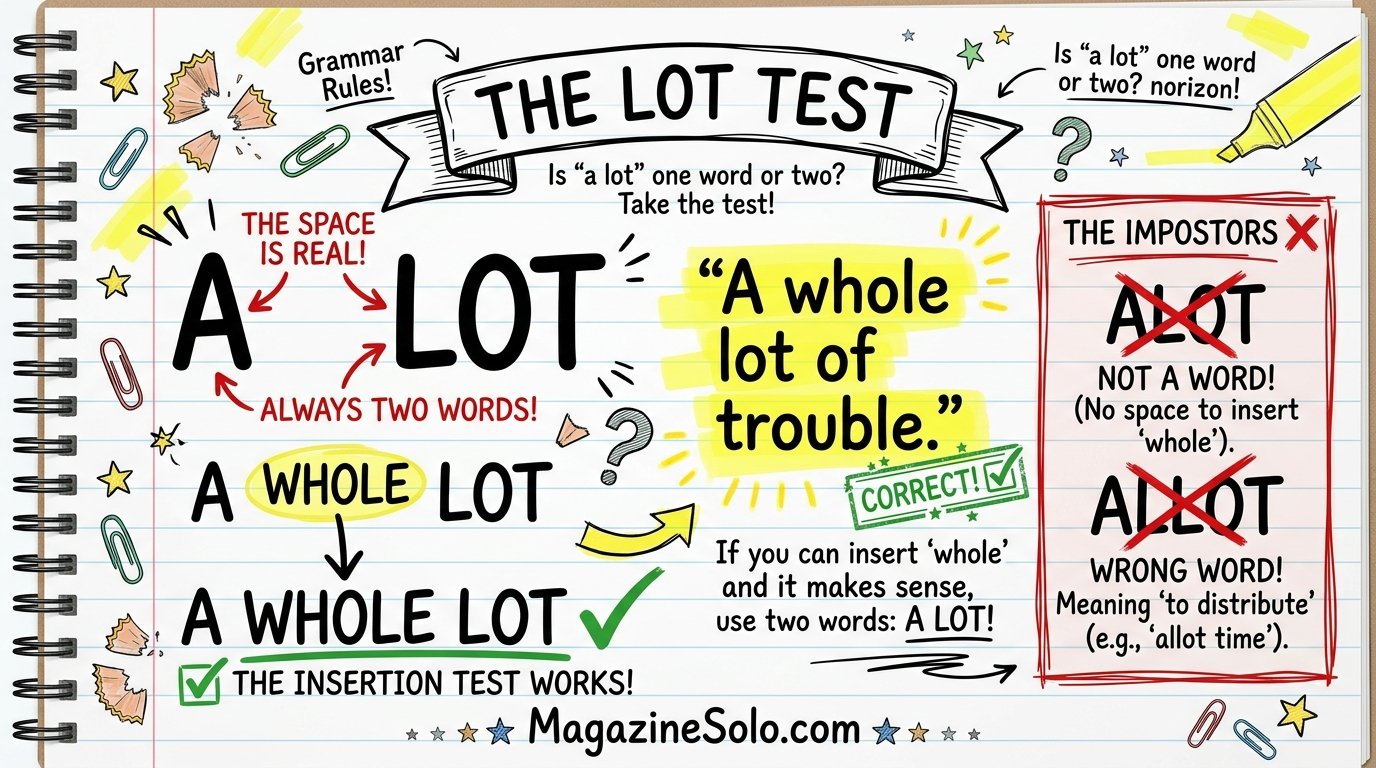
One cultural footnote, labelled as culture and not authority. In April 2010, writer and artist Allie Brosh invented the Alot in her webcomic Hyperbole and a Half, in a post titled The Alot is Better Than You at Everything. Know Your Meme’s record of Hyperbole and a Half documents the post, dated April 13, 2010, and how far the joke travelled.
Brosh pictured the Alot as a large furry animal, part bear, part yak, part pug in her description, standing beside every fused sentence. When someone writes I like this alot, she imagines them liking the creature. Teachers still use the picture because it works: imagine the animal, keep the space.
The Errors, Graded
Four error shapes cover nearly every mistake with this trio. They are graded below by what each one costs: some are caught by software, and one is invisible to it. That difference is the real lesson of this section.
Alot for A Lot
The headline error swaps the phrase for the nonword: thanks alot, alot of homework, I care alot. It costs the least because every spellchecker flags it and suggests a lot. Fix it with the lot test, and run a find and replace audit for the string alot in any finished draft.
Allot for A Lot, and the Allot Of Construction
The expensive error uses a real word wrongly: allot of people were there. Allot is a verb and cannot quantify a noun, so allot of is a structure English does not allow. LanguageTool’s explainer grades this shape with worked wrong examples, because it is the one most pages skip.
Autocorrect creates this error: allot sits one letter away and is a dictionary word, so some editors substitute it after words like will or to. YourDictionary’s page traces the reverse path too: writers type allot, sense it is wrong, delete an l, and land on alot, which is also wrong.
A Lot for Allot: The Missing Verb
The quietest error deletes the verb: they will a lot time to each speaker. The sentence needs an action, and only allot supplies it. MasterClass’s explainer grades this shape in its incorrect examples. Run the verb test whenever a sentence about handing out feels like it is missing its engine.
Why Your Spellchecker Catches One Error and Misses the Other
Spellcheckers match words against a dictionary list. Alot is on no list, so it is flagged every time. Allot is on every list, so allot of people passes silently, even though the grammar is impossible. Tools catch the nonword; only the two tests catch the wrong real word.
Where the Words Came From: One Root
The confusion has a shape because the two correct forms share a root. Allot is historically built on lot: to allot was originally to distribute by lot, by share or by chance portion. The amount word and the allocation verb grew from the same soil.
Oxford’s dictionaries give the origin as late 15th century, from Old French aloter, built from a-, from Latin ad meaning to, plus loter, divide into lots. On this strand, the verb arrived in English already carrying the lot inside it.
Merriam-Webster traces a parallel path: Middle English alotten, borrowed from Anglo-French aloter, from a- plus a verbal derivative of lot. The two strands differ in wording, not in substance, and this page prints them side by side rather than merging them.
Lot itself still carries the old range: a plot of land, a batch at auction, a share, and one’s fate, as in drawing lots and his lot in life. Cambridge’s entry for lot separates the land, group, sale and life senses. The quantity phrase grew from the share side of that family.
Same Pattern, Other Pairs
This trio belongs to a family of fused forms and lookalikes, and each pair gets its own tests. All ready vs already is the closest cousin: already is all ready fused, exactly the pattern alot is attempting. The alltogether error beside all together is the same shape again; that pair’s page is in preparation on this site.
- Adapt vs adopt sorts adjusting something from taking it as your own.
- Adverse vs averse separates hostile conditions from personal reluctance.
- Passed vs past keeps the verb form apart from the time and place word.
- Affect vs effect divides the usual verb from the usual noun.
Work one pair at a time and test, do not guess. The lot test and the verb test belong to this page alone, but the habit transfers: find the check the dictionaries support, run it, and move on.
Frequently Asked Questions
Is alot a word?
No. No standard dictionary checked lists alot as a headword. Merriam-Webster’s usage page says most usage experts consider it an error, Dictionary.com says the two word spelling a lot is the recognized standard, and QuillBot states the spelling is not listed in the dictionary. Alot is a misspelling, full stop.
What is the difference between a lot and allot?
A lot is a phrase: the article a plus the noun lot, meaning a large amount or number, and adverbially very much or often. Allot is a verb meaning to assign or distribute shares. Merriam-Webster’s mnemonic: the verb is close to allocate, which also has two Ls.
Why is alot wrong if everyone understands it?
Because standard spelling is set by dictionaries and edited usage, not by frequency alone. The fusion feels natural because English has fused article plus noun before, in another and awhile. For now alot remains an error in print, in exams and in professional writing.
What does a lot mean?
Two jobs. As a noun phrase it means a large number, quantity or amount: that is a lot of cheese; a lot was lost. As an adverb it means very much or often: I love you a lot; she practices a lot. Cambridge labels the phrase informal and beginner level.
What does allot mean?
Allot is a transitive verb: to give time, money, tasks, land or resources to someone as a share of what is available, per the Oxford Advanced American Dictionary. The committee allotted funds to each school. If nobody is handing anything out, allot is the wrong word.
How does the lot test work for a lot?
Lot is a real noun, so the article can be stretched: if you can say a whole lot, the form is a lot, two words. Merriam-Webster uses a whole lot of trouble: whole slips between a and lot, proving they are separate words. Alot and allot both fail this test.
How does the verb test work for allot?
Ask whether someone is doing the handing out, and whether the word can take an object and a past tense. Allot time, allot seats, allot funds all name an action with an object, and all become allotted in the past. Pass both checks and it is the verb.
Is it thanks alot or thanks a lot?
Thanks a lot. The phrase is the adverb use of a lot, meaning very much, and it is always two words. Thanks alot is the single most visible home of the error, which is why it leads so many search queries. No dictionary or usage guide accepts the one word form.
Can a lot ever be written as one word?
Not in standard English. Dictionary.com floats the possibility that alot may appear in dictionaries one day, the way alright is slowly gaining ground, but states plainly that right now a lot is the recognized standard spelling. Until a major dictionary lists alot, treat it as a misspelling.
What is the past tense of allot?
Allotted, with a doubled t. Oxford’s verb forms give: allots in the third person, allotted as past simple and past participle, and allotting as the ing form. The doubling follows the rule for verbs stressed on the final syllable. Alloted with one t is a misspelling.
Why does allotted have two Ts?
Because allot is stressed on its second syllable, uh-LOT, and ends in a single vowel plus a single consonant, so the consonant doubles before ed and ing: allotted, allotting. Admitted and occurred follow the same rule. Writing alloted breaks the rule and is marked wrong everywhere.
What does allotment mean?
Allotment is the noun built on allot, with two senses. First, the act of allotting, or the share itself: each department received its allotment of the budget. Second, in British English, a small plot of rented public land for growing vegetables, treated on this page as a labelled British strand.
Is an allotment a garden?
In British English, yes: an allotment is a small area of land rented from a local council or association for growing food, and allotment gardening is a long standing British institution. In American English the word almost always means a share or portion. Same spelling, two homes; the senses stay separate.
Is a lot too informal for essays and reports?
Often, yes. Scribbr and QuillBot both flag a lot as informal and advise replacing it in academic and formal writing: many for countable nouns, much for uncountable, a great deal where a phrase is needed. Brians adds that formal writers usually choose those alternatives.
What is the difference between a lot of and lots of?
Meaning, almost none: both quantify a large amount, with countable and uncountable nouns alike. Register is the difference. Cambridge’s grammar pages state that lots is even more informal than a lot, and Dictionary.com says the same. In formal writing, prefer many or much over both.
Is it I miss you a lot or I miss you alot?
A lot. Missing someone very much is the adverb use, and the adverb phrase is two words. The sentence is also the Alot creature’s home ground: Allie Brosh built the joke on sentences like I care about this alot. In edited writing, only the two word form survives.
Can allot mean a large amount?
No. Allot is only a verb in standard dictionaries; it never names an amount. Sentences like allot of people were there are errors, usually autocorrect or an overcorrection by a writer who knows allot exists. The amount word is a lot; allot enters only when shares are handed out.
Is allot of people ever correct?
No. Allot cannot be followed by of plus a noun as a quantifier, because it is a verb and needs a subject doing the allotting and an object being allotted. The committee allotted seats to people is correct; allot of people is not a structure English allows.
What does allot a lot of time mean?
It is the trio’s perfect demonstration sentence: allot is the verb, hand out or assign, and a lot is the amount phrase, a large quantity of time. Remember to allot a lot of time for revision uses both correct forms side by side, which is why teachers quote it.
Are a lot and allot pronounced the same?
Yes. Both are pronounced uh-LOT, with the stress on the second syllable, which makes them homophones and explains the confusion: nothing in speech separates them. Oxford gives allot the transcription /əˈlɑt/ in American English. The checks on this page are spelling and grammar tests, not listening tests.
Why do so many people write alot?
Three pressures combine. The phrase functions as one idea, so writers fuse it; real fused words like another, awhile, already and altogether show the pattern is natural; and allot exists as a lookalike, pulling writers toward one word. Brians suggests the error began precisely because allot exists. No fetched source publishes an error rate.
Will alot ever become a real word?
Possibly, and the sources say so honestly. Dictionary.com notes alot may appear in dictionaries one day; ThoughtCo quotes the observation that fusion is a normal phenomenon and alot may be standard in the future. The verdict for today stands: not yet. Writers are graded on the standard that exists now.
What is the Alot creature?
The Alot is an imaginary animal invented by writer and artist Allie Brosh in her webcomic Hyperbole and a Half, in the post The Alot is Better Than You at Everything, published April 13, 2010. Brosh imagined the creature, part bear, part yak, part pug in her description, to cope with her urge to correct the misspelling.
Who created the Alot, and why do teachers use it?
Allie Brosh, in the April 2010 Hyperbole and a Half post. Know Your Meme documents the post and its spread, and Brosh explained the invention in a Lightspeed Magazine interview. Teachers use it because a picture beats a rule: students who imagine the creature beside the sentence remember the space.
Is a lot a noun or an adverb?
Both, by position. Followed by of plus a noun, or standing in for an amount, it works as a noun phrase or pronoun: a lot of money; a lot was lost. After a verb, with no of, it works as an adverb: it rained a lot; thanks a lot. The spelling never changes.
Can a lot stand on its own as a pronoun?
Yes. A lot can replace a whole amount phrase: I offered him ten and he took a lot; a lot has changed since then. Scribbr classifies this as the pronoun use. It is one reason writers feel a lot is a single word: it does a single word’s job while remaining two words.
What should I write instead of a lot in formal writing?
Match the noun. Many for countable plurals, as in many studies; much for uncountables, as in much evidence; a great deal of for a formal phrase; numerous, substantial or a large number of where tone allows. Scribbr names many and a great deal; Cambridge’s quantifier grammar gives the same system.
Does a spellchecker catch alot?
Yes. Mainstream spellcheckers flag alot as unknown and suggest a lot, because alot is in no dictionary wordlist they ship. The dangerous error is the other one: allot is a real word, so no spellchecker flags allot of people, and autocorrect can even create it. Only the verb test catches the wrong real word.
Why does my phone change a lot to allot?
Autocorrect predicts from frequency and shape, and allot is a dictionary word one letter away, so some keyboards substitute it, especially after words like will or to. YourDictionary traces the reverse path: writers type allot, sense it is wrong, delete an l, and land on alot. The fix is a human check with the two tests.
Does a lot always need of after it?
Only in the noun use with a named noun: a lot of time, a lot of people. The adverb use takes no of: she sleeps a lot; it helps a lot. The pronoun use can drop the noun entirely when context supplies it: he ate a lot. Watching for of is a quick field check.
What is the difference between allot and allocate?
Very little in meaning: both assign shares or set resources aside, and Oxford lists allocate as the synonym of allot. Allot is the older, slightly more formal word, tied to lot and shares; allocate is the commoner business word. For this page, allocate’s real job is mnemonic: its two Ls mark the verb family.
Where does the word allot come from?
Oxford gives the origin as late 15th century, from Old French aloter, built from a-, from Latin ad, to, plus loter, divide into lots. Merriam-Webster traces Middle English alotten, borrowed from Anglo-French aloter, from a- plus a verbal derivative of lot. Two dictionary strands, printed side by side, agreeing on the French route and the lot root.
Are lot and allot actually related?
Yes, and it is the one sourced surprise on this page. Allot is historically built on lot: to allot was originally to distribute by lot, by share or by chance portion. Merriam-Webster defines allot as to assign as a share or portion, or to distribute by lot. The quantity word and the allocation verb grew from the same root.
What does the word lot mean on its own?
Lot is a busy noun: a plot of land, as in a parking lot or a building lot; a batch or group of items, as in an auction lot or a bad lot; a share or portion; and one’s fate or fortune, as in his lot in life or drawing lots. Cambridge’s entry separates these senses under land, group, sale and life.
Is it allot time or a lot of time?
Both exist, and they say different things. Allot time is an instruction to assign time: allot ten minutes to questions. A lot of time is an amount: the journey took a lot of time. If a person or plan is doing the assigning, the verb wins; if the sentence measures how much time there is, the phrase wins.
Can you use allot and a lot in the same sentence?
Yes, and it is the best practice sentence in the set: try to allot a lot of time to practice. Scribbr’s worksheet ends on the same construction. The verb comes first doing the assigning; the phrase follows naming the amount. Writers who can produce this sentence on demand rarely confuse the pair again.
What does allotted time mean?
The time that has been assigned to something: the exam’s allotted time; finish within the allotted time. Here allotted is the past participle of allot used as an adjective in front of a noun. The Blue Book of Grammar uses exactly this pattern, the one hour allotted time period. It is never written a lot time.
Is alot acceptable in texting and social media?
It is common there, and readers understand it, but common is not the same as correct. Every authority checked calls alot an error without a register exception, unlike alright, where some guides allow informal use. In a quick message nobody is graded; in anything edited, published, examined or sent to an employer, alot marks the writer down.
How do teachers tell students to remember a lot?
Three devices recur in the sources. The insertion device: you can say a whole lot, so keep the space. The family device: you would never write alittle, ahouse or ayard, as MasterClass notes. And the creature device: Brosh’s Alot, the animal you picture whenever the space goes missing. All three are mnemonics, not rules.
Is alot in any dictionary?
Not as a standard headword in any dictionary checked in this pass: Merriam-Webster, Cambridge, Oxford and Collins all carry a lot and allot, and none carries alot as a word. Some dictionaries and usage sites discuss alot inside usage notes precisely to reject it, which is a mention, not a listing. Today the answer is no.
What is the difference between allot and allotted?
Form, not meaning. Allot is the base verb: they allot seats daily. Allotted is its past simple and past participle: they allotted the seats yesterday; the seats were allotted. The doubled t appears in allotted and allotting because of the final syllable stress. A full forms table sits in this article so learners can see all four forms at once.
What other phrases work like a lot?
A family of article plus noun quantity phrases: a bit and a little on the small side, a ton and a whole lot on the large side, each keeping its space because each is article plus noun. Dictionary.com pairs a lot with a ton as a synonym and a bit as its opposite. Only alot has become famous, helped by the allot lookalike and the Brosh creature.
Conclusion
The choice in a lot vs allot vs alot is not really a three way choice. Two forms are tools and one is a trap: a lot measures amounts, allot hands out shares, and alot is not a word. Decide which job your sentence is doing, and the spelling is already settled.
Keep the two tests in order and the trio stops being a memory problem. Stretch the phrase with a whole lot to prove the space, and ask the verb question, giver, object, past tense, to prove the allocation. Ten seconds of testing beats any spellchecker, because the checker can only see the nonword, not the wrong real word.
For more pairs tested the same way, start from the MagazineSolo homepage and work through the cluster one pair at a time. Each page runs its own checks, because each fused form drifted its own way. Test, do not guess, and the space in a lot will never be a coin flip again.

Dilawar is a content writer at MagazineSolo, covering travel, home improvement, interior design, and everyday lifestyle topics. He enjoys researching practical solutions, exploring travel destinations, and sharing helpful guides that make daily life easier. His writing focuses on clear information, useful advice, and engaging stories for a wide audience.