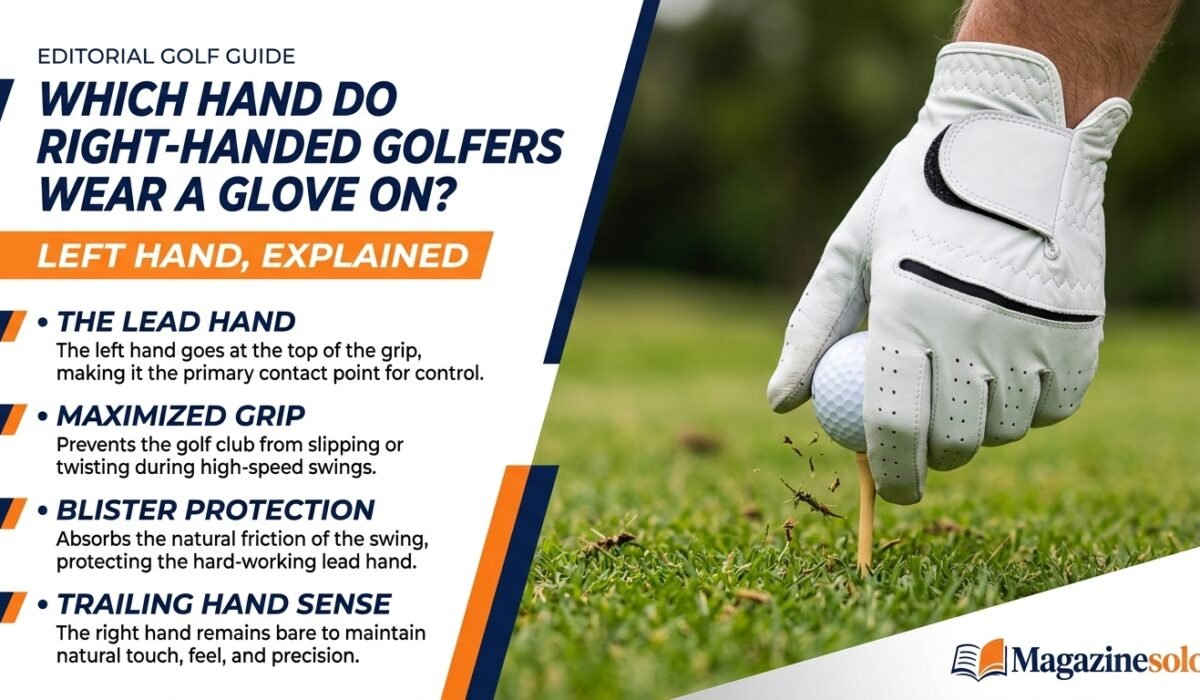
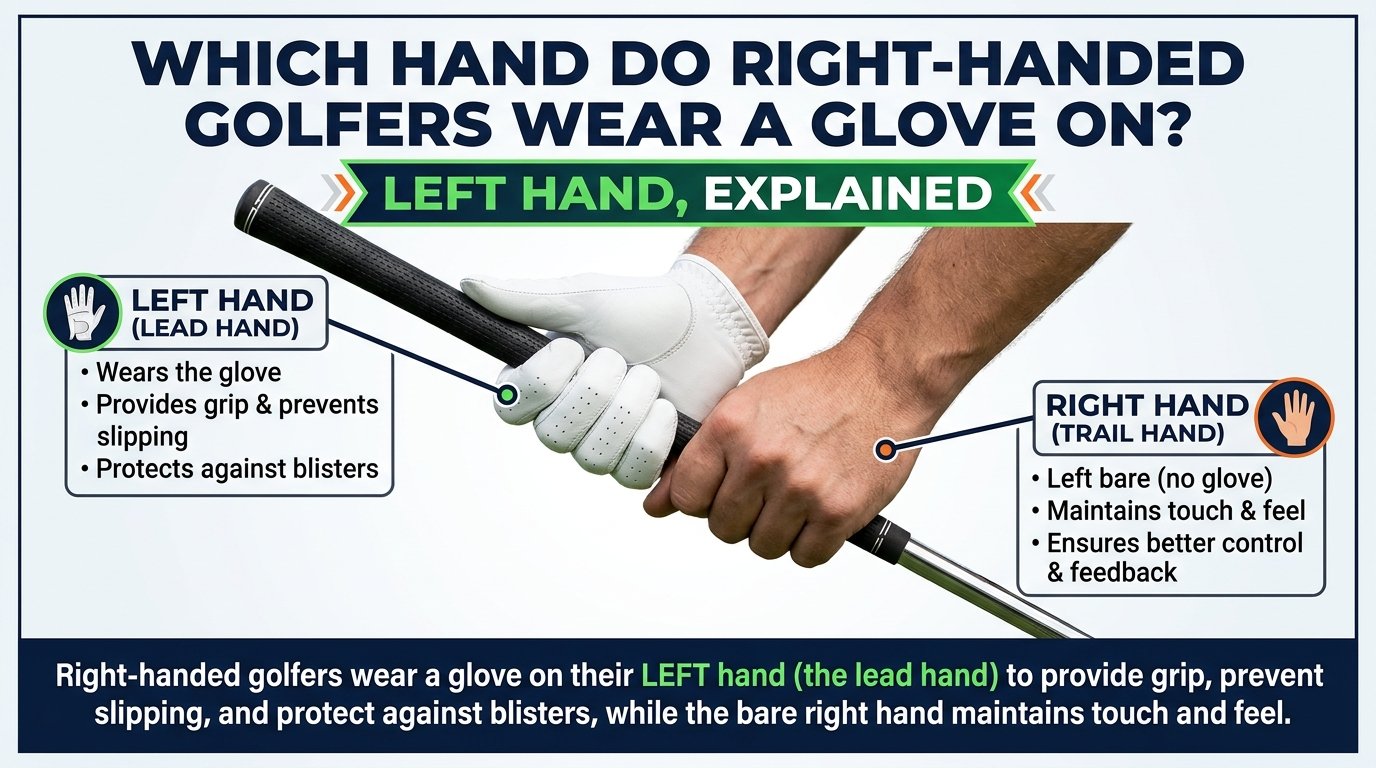
Which Hand Do Right Handed Golfers Wear a Glove ? A right handed golfer wears a golf glove on the left hand. That simple answer solves the question, but it does not solve the shopping problem behind it.
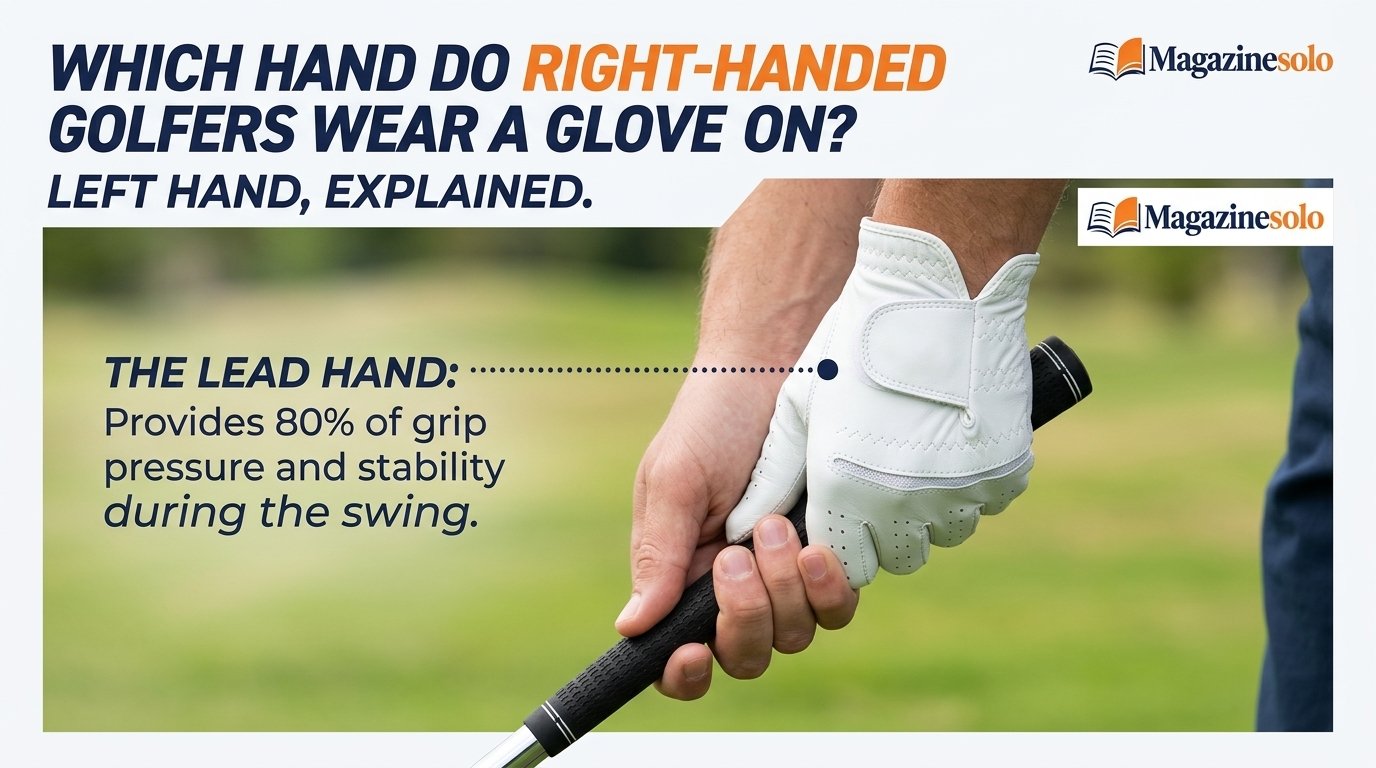
The key idea is the lead hand. For a right handed golfer, the left hand sits at the top of the grip and controls the club. For a left handed golfer, the right hand does the same job.
That is why the question about which hand do right handed golfers wear a glove has a counterintuitive answer. You do not glove your dominant hand. You glove the hand that leads the swing and takes the most friction.
Left Hand for Right Handed Golfers
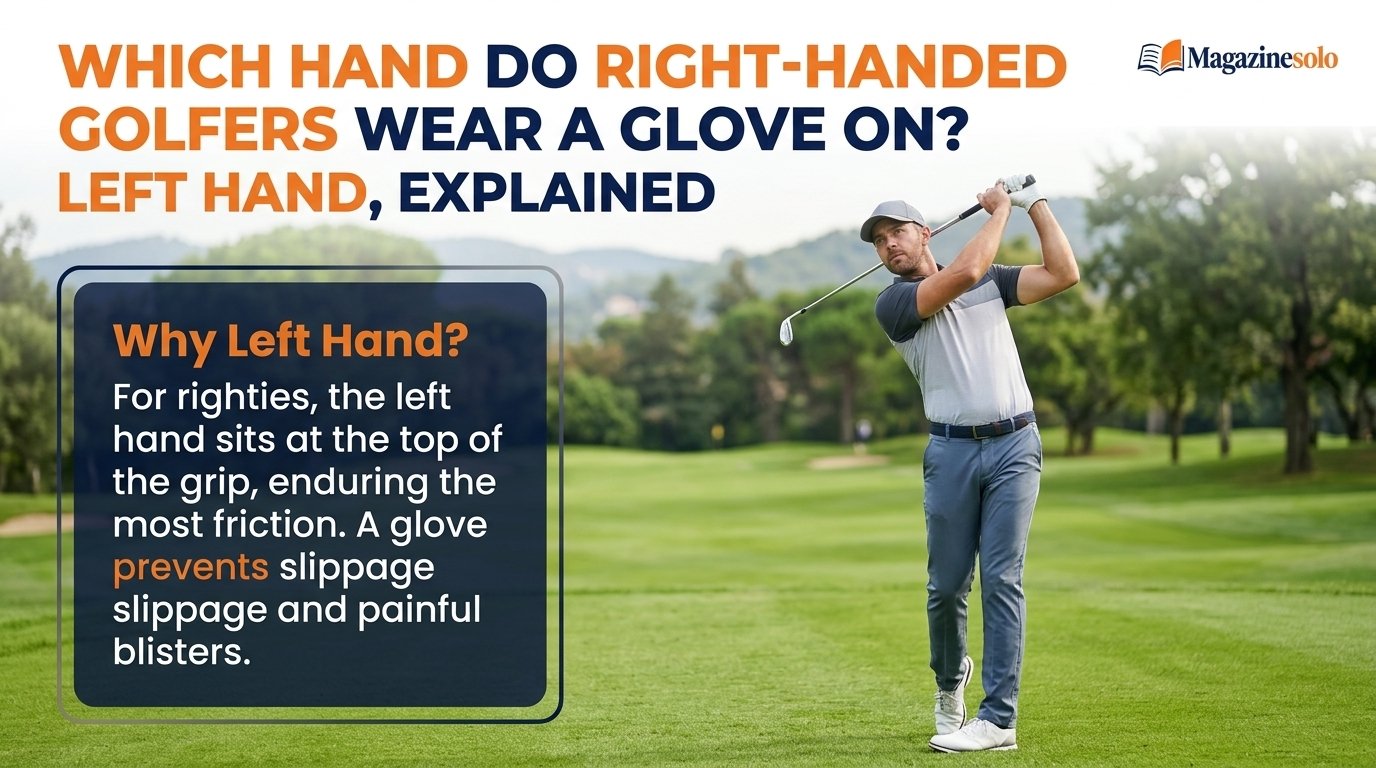
A right handed golfer wears the glove on the left hand. A left handed golfer wears the glove on the right hand. The glove always goes on the lead hand, the hand nearest the top of the grip.
Think of your grip at address. Your left hand goes on first for a right handed swing, high on the handle. Your right hand goes below it, closer to the clubhead.
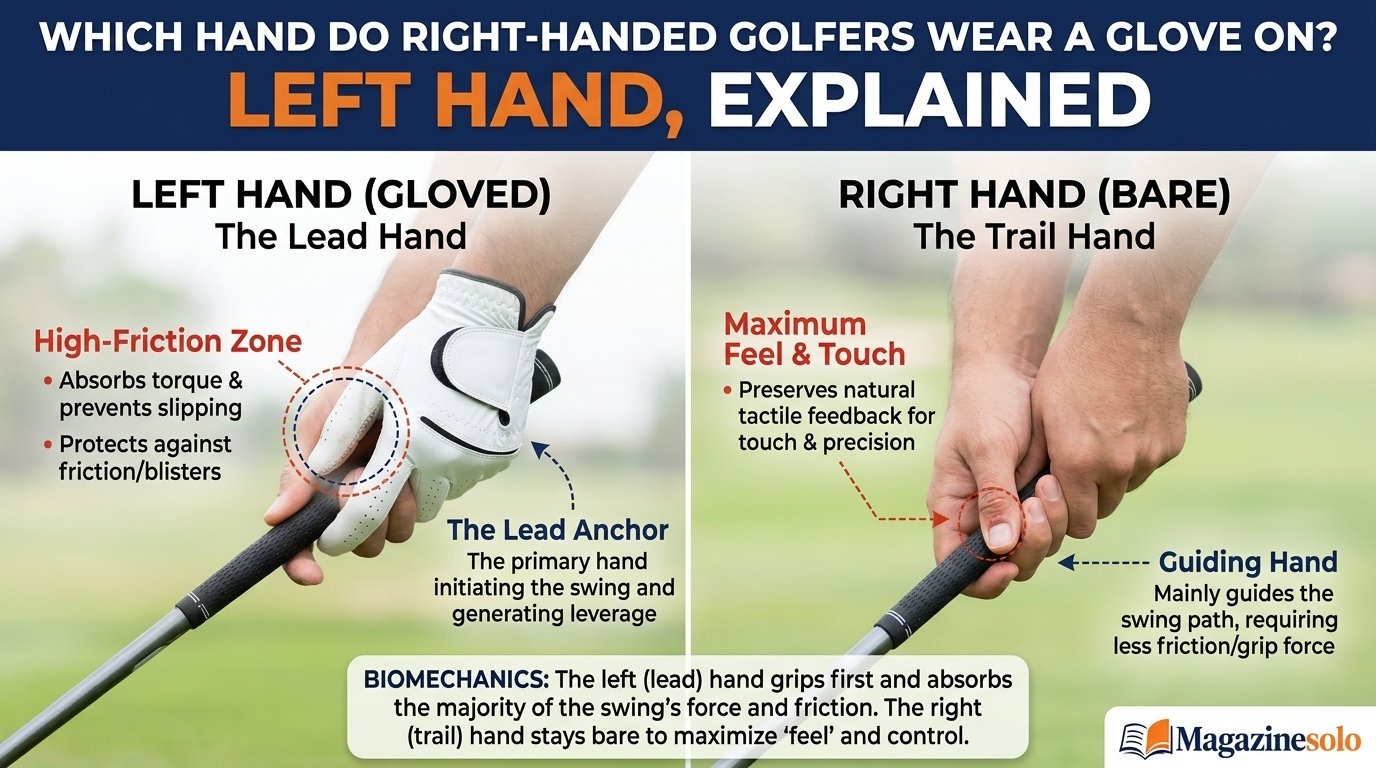
That top hand is the steering hand. It sets the clubface angle, guides the swing path, and holds the club through impact. The lower hand, called the trail hand, adds speed and feel.
| Golfer type | Glove hand | Glove label to look for | Why |
| Right handed | Left hand | Wear on left | Left hand is the lead hand |
| Left handed | Right hand | Wear on right | Right hand is the lead hand |
| Switch hitter | Varies by swing | Match the swing | Lead hand changes with swing side |
The lead hand rule in one sentence
Wear the glove on the hand that sits highest on the grip. That rule works for right handed golfers, left handed golfers, and players learning the game for the first time.
Why beginners get confused
Beginners often assume the glove goes on the dominant hand. That assumption feels logical, because the dominant hand feels stronger and more skilled. Golf reverses that logic, because the lead hand does the holding work.
Another source of confusion is the product label. Some labels say wear on left, which is clear. Other labels only say LH or RH, which can mean different things in different shops.
Quick check before you buy
Hold a club as if you are about to hit a shot. Look at which hand is on top. That hand needs the glove, and that check takes about five seconds.
Why the Lead Hand Gets the Glove
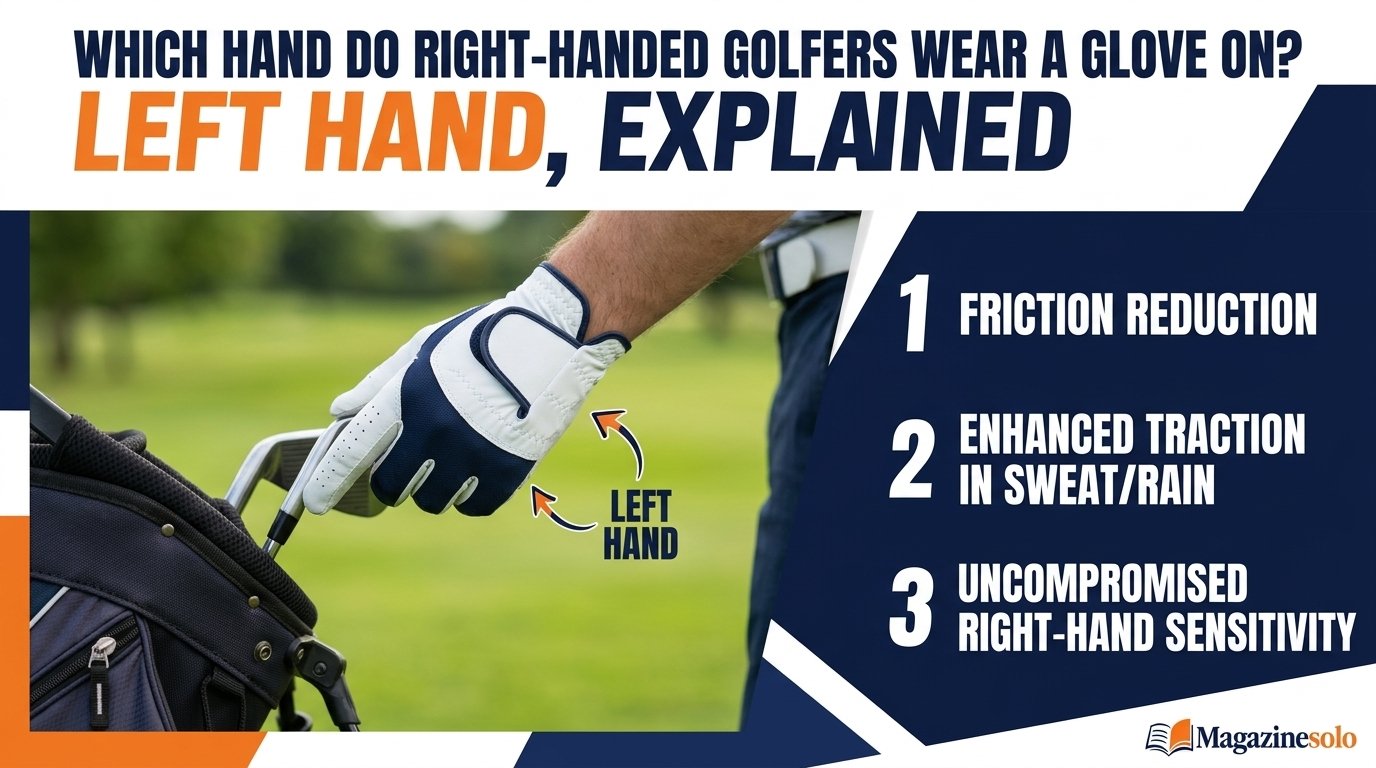
The lead hand holds the club for the whole swing. It does not let go, adjust, or rest during the backswing, downswing, or follow through. That constant contact creates friction, pressure, and wear.
The grip runs diagonally across the lead palm and fingers. That diagonal path is where slipping starts, especially when hands sweat or grips get wet. A glove adds tack and friction exactly where slipping starts.
Grip, friction, and clubface control
A secure lead hand keeps the clubface from twisting at impact. A twisting clubface sends the ball left or right, even when the swing path looks good. Grip security therefore protects direction as much as power.
The glove also spreads pressure across the palm and fingers. Without that spread, pressure concentrates on a few contact points and creates blisters and calluses. With a glove, the same swing feels smoother and more repeatable.
Why the trail hand stays bare
The trail hand has a different job from the lead hand. It rests lighter on the club, adds speed through impact, and reads feel and feedback from the clubhead. Bare skin gives clearer feedback than a layer of leather or synthetic material.
That feedback matters most on wedges, chips, and putts. Those shots need touch, distance control, and a sense of clubhead weight. A second glove can dull that touch for very little extra grip benefit.
Grip pressure and why lighter is better
A good glove lets you hold the club with less pressure. Less pressure means freer wrists, smoother tempo, and often more clubhead speed. A death grip, by contrast, creates tension in the arms and shoulders.
Many beginners squeeze harder when the club feels slippery. That squeeze hurts rhythm and release. A tacky glove breaks that cycle by giving security without force.
What happens without a glove
Playing barehanded is legal and possible, but it has costs. Sweat makes grips slippery, friction builds calluses on the lead hand, and grip pressure tends to rise. Some skilled players accept those costs for maximum feel.
Most beginners should start with one glove. It removes a variable from an already difficult game. You can test no glove later, once your grip and swing feel stable.
The Label Trap: LH, RH, Wear on Left, and Wear on Right
This section prevents the most expensive mistake in this topic. A glove in the wrong hand cannot be fixed by wearing it differently. It must be exchanged or returned, and that wastes time before a round.
Two ways retailers use LH and RH
Some retailers use LH to mean the glove fits the left hand. In that system, a right handed golfer buys LH, because the glove goes on the left hand. Other retailers use LH to mean the glove is for a left handed golfer, which would be a right hand glove.
That second system is the trap. A shopper who reads LH as left hand, but buys from a shop that means left handed golfer, gets the opposite hand. At least one competitor guide in this topic uses confusing wording on this exact point, so do not copy label language blindly.
The words that matter more than the letters
Always look for the words wear on left or wear on right on the package or product page. Those words describe the hand the glove fits, not the golfer. If those words are missing, check the product description for worn on left hand or worn on right hand.
If a listing only says LH or RH with no explanation, contact the seller or try the glove on in a shop. A two minute check beats a return, a missed round, and a glove that sits unused in a bag.
| Label you see | Most common meaning | What to check |
| Wear on left | Fits the left hand, for right handed golfers | Confirm the product title matches |
| Wear on right | Fits the right hand, for left handed golfers | Confirm the product title matches |
| LH | Often fits the left hand, but not always | Look for wear on wording |
| RH | Often fits the right hand, but not always | Look for wear on wording |
| Left hand glove | Fits the left hand | Check size and cadet options too |
| Right hand glove | Fits the right hand | Check size and cadet options too |
What to do if you bought the wrong hand
Do not try to stretch a right hand glove onto a left hand. The thumb, finger shape, and closure will sit in the wrong places. That poor fit will twist during the swing and force a harder grip.
Keep the packaging and receipt if you bought online. Most golf retailers accept wrong hand exchanges, because this mistake is common. Note the correct wording for your next order, so the same error does not happen twice.
Online ordering checklist
Check the hand field separately from size, colour, and material. Many product pages default to a left hand glove, because that is the common right handed golfer option. A left handed golfer must change that field on purpose.
Read the full product title, not just the thumbnail. Titles often include the left hand or right hand in small text. Screenshot the title and hand field before checkout if you are ordering for a gift.
Do You Wear One Glove or Two?
Standard golf is a one glove game. One glove gives grip where it matters and feel where it matters. Two gloves change that balance, and they only help in specific conditions.
Standard play: one glove
One glove on the lead hand is the standard for dry, normal conditions. It protects the hand that takes the most friction. It leaves the trail hand bare for feel, speed, and touch.
Tour players follow this pattern on most shots. Right handed tour players such as Tiger Woods and Jack Nicklaus are seen with a glove on the left hand only. Left handed players such as Phil Mickelson and Bubba Watson reverse it.
Rain: wear a pair
Rain changes the logic completely. Wet grips, wet hands, and wet leather create slip on both hands. Standard cabretta leather can become slick when soaked, which defeats its purpose.
Rain gloves are sold as a pair for this reason. They use synthetic, quick dry material that grips better when wet. In a downpour, wearing a rain glove on both hands is the smart play, not a beginner error.
Cold: wear a pair or use cart mitts
Cold hands lose feel and grip strength. Winter gloves are also sold as a pair, with insulation and grip material built for low temperatures. Some players use cart mitts between shots and a standard glove for the shot itself.
Frozen fingers cannot judge grip pressure well. Warmth therefore becomes a performance issue, not just a comfort issue. If your hands go numb, a pair of winter gloves beats a single thin glove.
Two glove players on tour
Two glove players are rare but real, even at professional level. Tommy Gainey, known as Tommy Two Gloves, famously wears gloves on both hands. His choice shows that two gloves break no rule and can work for a specific player.
Other players wear two gloves because of skin wear, blisters, or grip security on both hands. That choice is personal, not wrong. Test it on the range before a competition round, so the feel change does not surprise you.
No glove players and why they choose it
Fred Couples is the famous no glove example. He has said in interviews that he stopped wearing gloves as a young player because he had no feel with them. He went on to win at the highest level without a glove.
No glove play gives maximum skin contact and feedback. It costs durability, consistency in humidity, and blister protection. It is a valid choice for feel players, but a risky first choice for beginners.
| Choice | Best for | Main downside |
| One glove | Dry, normal play | Trail hand can slip in rain |
| Two gloves | Rain, cold, blister prone hands | Less feel on touch shots |
| No glove | Maximum feel, short game | Slip, blisters, humidity problems |
| Rain pair | Wet rounds | Not ideal for dry feel |
| Winter pair | Cold rounds | Bulk can reduce touch |
Should You Wear a Glove to Putt?
Most golfers remove the glove to putt. That habit is so common on tour that it looks like a rule, but it is not a rule. It is a feel choice with a practical side benefit.
Why most players take it off
Putting needs almost no grip force. The putter will not slip out of your hands on a normal putt. What putting needs is touch, pace control, and feedback from the putter head.
A glove, even a thin cabretta glove, adds a layer between skin and grip. That layer can dull the small signals that tell you how hard you hit the putt. Bare hands give the clearest signal.
When keeping it on makes sense
Keep the glove on if your hands are wet, cold, or blistered. In rain, a rain glove on both hands may give more control than bare wet hands. In cold weather, warmth may matter more than a tiny feel gain.
Some players also keep the glove on because of the yips or nerves. A familiar grip can feel more secure on short putts. If keeping it on helps you commit to the stroke, that confidence matters.
Where to put the glove on the green
Tuck the glove in a back pocket if you remove it for a short time. That keeps it flat, accessible, and off the green surface. Do not drop it on the green or leave it where another player might step.
For longer breaks, hang the glove from a towel ring or carabiner on your bag. Hanging lets air circulate and dries sweat faster. Balling a wet glove into a pocket traps moisture and creates creases.
Chipping and pitching: a middle case
Many players also remove the glove for delicate chips and pitches. Those shots need soft hands and distance control, like putting. Other players keep the glove on for full pitches from the rough, where grip security matters more.
Test both options during practice. Hit ten chips with the glove on, then ten with it off. The better distance control and contact should decide, not habit alone.
How to Size a Golf Glove for the Glove Hand
Measure the hand that wears the glove, not your dominant hand. For a right handed golfer, measure the left hand. For a left handed golfer, measure the right hand.
Sizes vary by brand, so a medium in one brand may not match a medium in another. Always check the brand sizing chart before ordering online. Trying gloves on in a shop remains the most reliable method.
Numbered steps to measure your hand
- Get a soft measuring tape. A tailor tape works best, because it bends around the hand. A ruler can work for finger length, but not for circumference.
- Measure palm circumference. Wrap the tape around the widest part of your hand, just below the knuckles, excluding the thumb. Keep the tape snug but not tight.
- Measure middle finger length. Measure from the crease where the middle finger meets the palm to the tip of that finger. Write this number down in inches or centimetres, matching the brand chart.
- Compare both numbers to the brand chart. Do not use only one number. Palm size and finger length together decide regular versus cadet fit.
- Try the glove on and grip a club. The glove should feel snug across the palm, with no loose material at the fingertips. Grip a club and check for wrinkles, twisting, or pinching.
The second skin test
A correct glove feels like a second skin. It should hug the palm, fingers, and back of the hand without gaps. It should not feel like a loose work glove or a tight compression sleeve.
Leather gloves stretch slightly with use. A new cabretta glove should start snug, with a little room to break in. A synthetic glove stretches less, so its first fit should be closer to final fit.
Between sizes: what to do
If you fall between sizes, the safer choice depends on material. Leather often stretches, so many fitters suggest the smaller size for leather. Synthetic material holds its shape, so the exact size often works better.
When in doubt, try both sizes in a shop. Grip a club, wiggle your fingers, and check the Velcro tab position. That live test beats a chart alone.
Regular vs Cadet: The Fit Problem Most Players Miss
Cadet sizing solves a specific hand shape problem. It is not a smaller size, and it is not a junior size. It is a different proportion for the same palm size.
What cadet means
A cadet glove has a wider palm and shorter fingers than a regular glove in the same size. It suits players whose palm measurement points to one size, but whose finger length points to a smaller size. Regular gloves leave loose material at the fingertips for those players.
That loose material bunches during the swing. Bunching reduces feel, creates wrinkles, and can cause the glove to twist. Cadet fit removes that excess without making the palm tight.
How to know if you need cadet
Try a regular glove in your palm size first. Check the fingertips carefully. If you can pinch a quarter inch of loose material at the index or middle finger, try the same size in cadet.
Another sign is palm tightness combined with finger slack. If sizing up fixes the palm but makes the fingers worse, you are solving the wrong problem. Cadet sizing fixes proportion, not overall size.
Cadet availability warning
Cadet options vary by brand and hand. Some brands offer cadets mainly for the left hand, which helps right handed golfers most. Left handed golfers with short fingers may find fewer cadet choices for the right hand.
Check availability before you fall in love with a model. A great glove in regular fit does not help if you need cadet and that model does not offer it. The Titleist Players glove page shows Regular Left, Cadet Left, and Regular Right options, which illustrates how hand and cadet choices appear on a product page.
| Fit type | Palm | Fingers | Best for |
| Regular | Standard width | Standard length | Proportional hands |
| Cadet | Wider | Shorter | Wide palm, short fingers |
| Junior | Smaller overall | Shorter overall | Young players |
| Womens | Narrower, contoured | Proportioned | Many women players |
Which Material Should You Choose?
Material decides feel, durability, weather performance, and price. No material wins on every measure. Your climate, practice volume, and budget should decide.
Cabretta leather
Cabretta leather is thin sheepskin leather used on most tour style gloves. It gives the softest feel, the best grip when new, and the closest connection to the club. Low handicappers and regular players notice that thin feel most on touch shots.
Cabretta wears faster than synthetic material. It can stiffen once it gets wet and dries badly. It also costs more, which matters if you practice often and replace gloves frequently.
Synthetic material
Synthetic gloves use microfiber and stretch panels instead of full leather. They last longer, handle washing better, and usually cost less. They give slightly less feel than cabretta, but that gap matters less for beginners still working on contact.
Synthetic gloves suit heavy practice, humid weather, and budget conscious players. They also suit players who want a glove they can replace without worrying about cost.
Hybrid gloves
Hybrid gloves put leather in the palm and fingers for grip, with synthetic or mesh panels on the back for stretch and airflow. That mix gives a middle ground between feel and durability. Many regular players choose hybrid as a daily glove.
Hybrid gloves also breathe better than full leather in heat. Mesh panels help sweat escape, which keeps the glove lighter during a long round. That airflow can extend comfort on hot days.
Material comparison table
| Material | Feel | Durability | Weather | Price trend | Best for |
| Cabretta leather | Softest, best touch | Lower | Dry to moderate | Higher | Low handicappers, feel players |
| Synthetic | Good, less soft | Higher | Wet, humid, practice | Lower | Beginners, heavy practice |
| Hybrid | Very good | Medium to high | Mixed, hot | Medium | Regular players, daily play |
| Rain synthetic | Grippy when wet | Medium | Rain only | Medium | Wet rounds, pair use |
| Winter insulated | Warm, less touch | Medium | Cold only | Medium | Winter rounds, pair use |
Pros and cons: cabretta vs synthetic
Cabretta pros: softest feel, best grip when new, tour standard, breaks in to your hand. Cabretta cons: wears faster, stiffens if dried badly, higher price, poor in heavy rain.
Synthetic pros: durable, easier to wash, cheaper, better in wet practice. Synthetic cons: less soft feel, can feel less connected on delicate shots, some models run warm.
Weather Guide: Sweat, Rain, and Cold
Weather changes glove choice more than any other factor after hand and size. A glove that works in dry spring weather may fail in summer humidity or winter cold.
Hot and humid weather
Sweat is the main enemy in heat. A wet glove slips, stretches, and smells if left damp in a bag. Rotation is the best defence, and it is a habit tour players use.
Start a hot round with two identical gloves. Swap after a few holes, hang the used glove to dry, and alternate through the round. Each glove gets time to dry, so neither becomes fully sweat logged by the 18th hole.
Rain weather
Standard leather becomes slick in heavy rain, and a single glove cannot fix a wet trail hand. Rain gloves solve both hands at once, because they are sold as a pair. Their synthetic palm grips better when wet, which is the opposite of leather behaviour.
Keep rain gloves in a dry pocket or bag compartment until needed. Putting them on early, before rain starts, wastes their best grip window. Change grips and towels as well, because a dry towel helps more than a new glove alone.
Cold weather
Cold reduces grip strength and feel at the same time. Insulated winter gloves trade a little touch for warmth and control. That trade is worth it when fingers go numb, because numb fingers cannot judge pressure.
Cart mitts offer another option between shots. Wear mitts while walking or riding, then switch to a glove for the shot. That routine keeps hands warm without forcing a thick glove through the whole swing.
Is a Golf Glove Legal? USGA Rule 4.3 in Plain Language
Yes, a normal golf glove is legal, and wearing one, two, or none is legal. The rule does not require a glove, and it does not limit you to one glove. It limits what a glove can do for you.
The USGA equipment rules for gloves state that gloves may be worn to assist gripping the club, provided they are plain. That word plain carries specific meaning in the rules.
What a plain glove means
A plain glove must have a separate sheath or opening for each finger and thumb. It must be made of smooth material on the full palm and gripping surface. Those two points describe almost every normal golf glove sold today.
A plain glove must not add padding on the gripping surface or inside the glove. Padding, under the USGA definition, means material more than 0.025 inches (0.635 mm) thicker than adjacent glove areas without that material. That verified figure is the key number to remember.
What a plain glove must not do
A legal glove must not use straps to prevent the club from slipping or to attach the hand to the club. It must not bind digits together, and it must not use material that adheres to the grip.
It must not include features, other than visual aids, designed to place your hands in a consistent or specific position. It must not add weight to assist a stroke, restrict a joint, or otherwise assist play beyond grip help.
Tape, padding, and baseball gloves
Tape on a glove can break the padding rule if it adds thickness beyond the 0.025 inch limit. Golf Digest explains this tape issue under Rule 4.3, and the same logic applies to added padding inside a glove.
Baseball batting gloves often fail for a different reason. Many are padded well past the limit, and many use straps designed to lock the hand for a bat swing. A glove does not need a golf label to be legal, but it must pass the plain glove test.
Two gloves and no glove: both legal
Wearing gloves on both hands is legal in casual and competitive play, provided each glove is plain. Playing with no glove is also legal. Rules care about artificial advantage, not about how many gloves you wear.
If you play in competition, use a standard plain glove from a golf brand. That choice avoids any doubt about padding, straps, or adhesion. Keep a spare plain glove in your bag for rain or wear.
How Long Does a Golf Glove Last, and When to Replace It?
Glove lifespan depends on practice volume, weather, material, and care. A weekend player and a daily range player will wear gloves at very different rates. Watch the glove, not the calendar alone.
Replacement signals table
| Signal | What it means | Action |
| Smooth or thin palm | Grip material worn away | Replace soon |
| Hole or tear in palm | Friction damage | Replace now |
| Stretched fingers | Glove no longer second skin | Replace or try cadet |
| Velcro covers full pad | Glove stretched, no adjustment left | Replace |
| Slippage during swing | Grip security lost | Replace, check size |
| Stiffness after drying | Leather dried badly | Replace, improve drying |
| Persistent odor | Sweat and bacteria build up | Replace, rotate next time |
Competitor reported lifespan: handle with care
One left handed golf guide reports 15 to 20 rounds for a glove played once a week, with rotation extending life. Treat that figure as competitor reported, not as a verified standard. Your rounds, practice balls, and weather will change the number.
A better rule is to inspect the palm and fingers after every few rounds. By the time you notice slippage during a swing, the glove is already overdue. Replace early, before a worn glove costs you a good shot.
Care: drying, storage, and rotation
Take the glove off between shots when you can. Let your hand and the glove breathe, especially on hot days. Hanging the glove from a towel ring or carabiner beats balling it into a pocket.
Never leave a damp glove in a closed bag overnight. That habit causes stiffness, odor, and shorter life. Air dry at room temperature, away from direct heat and strong sunlight.
Rotate two gloves on hot or humid days. Rotation gives each glove a full drying cycle. That simple habit can make both gloves feel fresher and last longer.
Buying Checklist for Right Handed, Left Handed, Junior, and Senior Golfers
Buying a glove should take minutes, not a return trip. Use a checklist that matches your swing side, hand shape, and playing conditions.
Numbered buying checklist for right handed golfers
- Confirm hand first. Choose wear on left for a right handed golfer, before you choose size or colour.
- Measure the left hand. Record palm circumference and middle finger length from the steps above.
- Check regular versus cadet. If the palm fits but fingers are long, try cadet in the same size.
- Choose material for your climate. Pick cabretta for feel, synthetic for practice and humidity, hybrid for daily mixed play.
- Check the Velcro test. The tab should cover about 75 percent of the landing pad, leaving room for stretch.
- Grip a club before you leave the shop. Check for wrinkles, twisting, and fingertip slack while gripping.
Left handed golfer ordering checklist
Left handed golfers need a right hand glove, labelled wear on right. That option is stocked in fewer colours and sizes in many shops. Order early if you need a specific model, size, or cadet fit.
Check the hand field twice online. Product pages often default to left hand, because most buyers are right handed. A left handed buyer who skips that field will receive the wrong hand by default.
Junior, womens, and senior fit notes
Junior gloves use smaller overall proportions, not just smaller adult sizes. A junior who grows fast may need a new size each season. Check fit at the start of each season, not just at purchase.
Womens gloves often use a narrower, contoured fit. That shape helps many women players, but hand shape varies more than gender labels suggest. Measure the glove hand and try both womens and mens options if fit feels off.
Senior players with reduced grip strength may benefit from a tackier glove and a lighter grip. A glove that helps you hold lightly can reduce hand fatigue over 18 holes. Check for easy closure and soft material that does not require force to close.
Brands, Prices, and Fit Differences
Brand fit varies, so loyalty to one brand can help. Once you know your size in a brand, reordering becomes easier. Switching brands means rechecking size, even if the label looks the same.
Brand notes
FootJoy is known for a wide size range, including cadet options and a clear two measurement system. Its StaSof line is a common premium leather choice. Titleist Players gloves use premium cabretta leather with a thin feel and precise sewing.
Callaway Tour Authentic gloves offer another premium leather option with a tour style fit. TaylorMade, Mizuno, Cobra, and Ping also offer gloves, but size charts still vary. Always compare the chart for the brand you buy, not a generic chart.
Prices: competitor reported, verify before buying
Independent Golf Review’s best gloves testing lists, in its 2026 testing summary, the FootJoy StaSof at $29, the Titleist Players at $31, and the FootJoy WeatherSof 2-pack at $23. Treat those prices as competitors reported at the time of that testing, not as current US prices.
Verify the current US price at the retailer before you buy. Prices change by season, retailer, and model year. A price from a review, a UK site in pounds, or a New Zealand site in dollars should never be presented as a US price without checking.
Retailer guides worth reading
Retailer guides from Red Rooster Golf and B&C Golf give clear hand tables and lead hand explanations. Use them to confirm the hand rule, then use manufacturer sizing charts to confirm your size.
Tour Habits, Grip Styles, and Real World Examples
Tour habits show why the lead hand rule matters in practice. Professionals do not follow the rule because of tradition alone. They follow it because grip, friction, and feel decide shots under pressure.
Grip styles and the lead hand
Three main grips change how hands sit, but not which hand leads. Overlap grip places the trail pinky over the lead index finger. Interlock grip locks those fingers together. Ten finger grip keeps all ten fingers on the club.
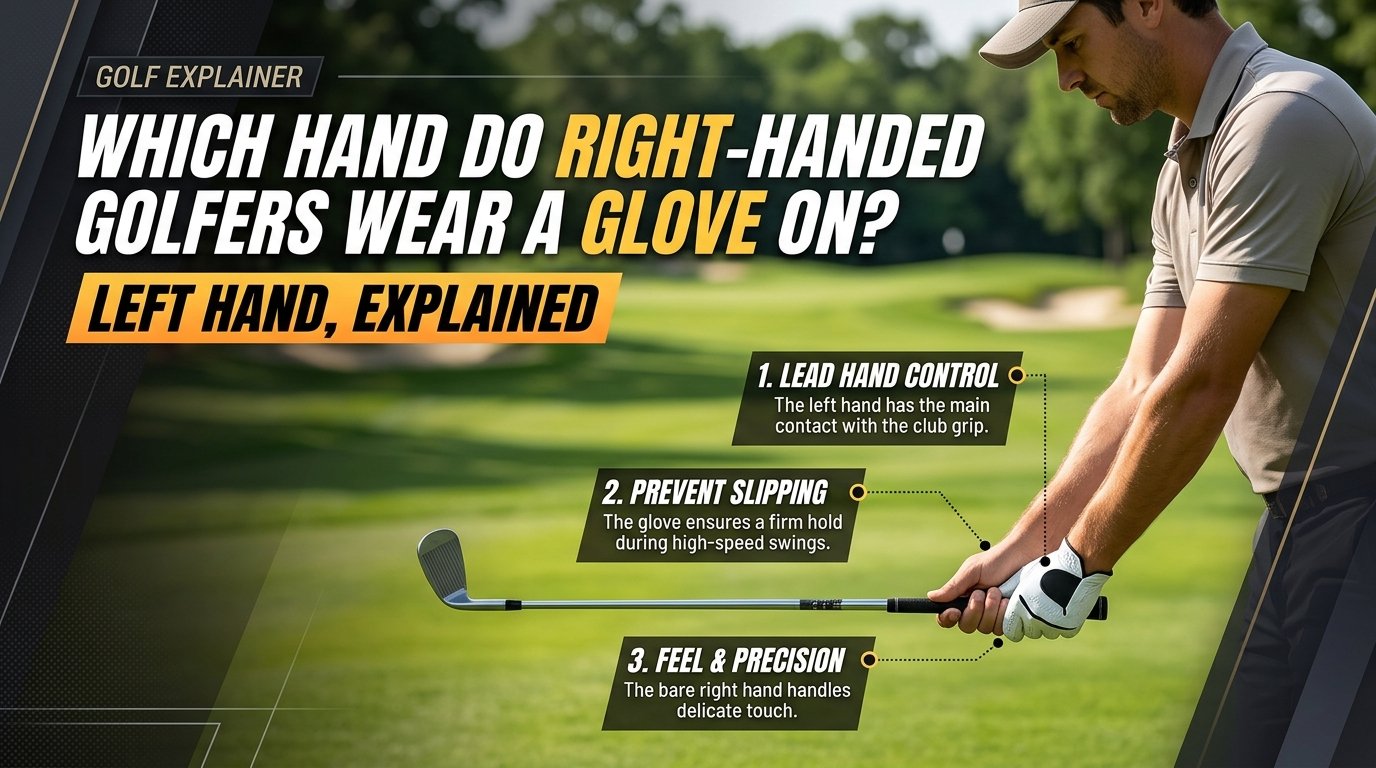
In every grip, the lead hand stays on top and sets the clubface. Glove fit matters most for that top hand, because its position rarely changes during the swing. A loose glove on the lead hand will twist in any grip style.
Driving range practice
Practice creates more wear than a normal round. Hitting many balls in a row builds heat, sweat, and friction on the lead palm. Some players wear a second glove for range practice to protect the trail hand from blisters.
That practice habit does not mean you must wear two gloves on the course. Use a practice glove for volume, then switch to your normal one glove setup for play. Keep the practice glove separate, so your playing glove stays fresh.
Common mistakes to avoid
- Wearing the glove on the wrong hand: Check wear on left or right before checkout.
- Choosing the wrong size: A loose glove twists, a tight glove restricts grip. Fit should feel like a second skin.
- Ignoring wear: Replace a glove when the palm smooths or thins, not when it tears completely.
- Leaving a wet glove in a bag: Air dry after every round to prevent stiffness and odor.
- Wearing one glove for all weather: Use rain gloves for rain and winter gloves for cold.
- Keeping the glove on for every putt: Try bare hands for putting, unless rain or cold changes the choice.
- Copying a tour player blindly: Fred Couples plays without a glove, but that choice suits his feel and history, not every beginner.
Numbered expert tips
- Measure the glove hand, not the dominant hand. That single step prevents most sizing errors.
- Try cadet if fingers bunch. Proportion matters more than overall size.
- Rotate two gloves on hot days. Dry gloves grip better than damp gloves.
- Take the glove off between shots. Air flow extends leather life.
- Hang the glove, do not ball it. Hanging prevents creases and moisture trapping.
- Test putting barehanded. Compare pace control with and without the glove.
- Keep a rain pair in the bag. Rain can arrive after a dry start.
- Check Velcro coverage. About 75 percent coverage leaves room for stretch.
- Grip a club in the shop. A glove that feels fine flat may twist when gripping.
- Replace on palm wear, not on age. Inspect palm, fingers, and closure after a few rounds.
FAQs
Which hand do right handed golfers wear a glove on?
Right handed golfers wear a golf glove on the left hand. That hand is the lead hand at the top of the grip, and it controls the club through the swing.
What hand do you wear a golf glove on if you are left handed?
Left handed golfers wear a golf glove on the right hand. That hand is the lead hand for a left handed swing, so the rule reverses cleanly.
Why do golfers wear a glove on only one hand?
Golfers wear one glove because the lead hand needs grip and protection, while the trail hand needs feel. One glove gives both benefits without dulling touch on the lower hand.
What is the lead hand in golf?
The lead hand is the hand highest on the grip at address. For right handed golfers it is the left hand, and for left handed golfers it is the right hand.
What is the trail hand in golf?
The trail hand is the lower hand on the grip, below the lead hand. It adds speed, support, and feel, which is why most players leave it bare in dry conditions.
What does LH mean on a golf glove?
LH often means the glove fits the left hand, but some retailers use it to mean a glove for a left handed golfer. Always check for wear on left wording before you buy.
What does RH mean on a golf glove?
RH often means the glove fits the right hand, but some retailers use it to mean a glove for a right handed golfer. Always check for wear on right wording before you buy.
What does wear on left mean?
Wear on left means the glove is built to fit the left hand. For most buyers, that is the glove for a right handed golfer.
How do I know if I bought the wrong hand golf glove?
A wrong hand glove will feel twisted, with the thumb and closure in the wrong places. It will not sit flat on your hand, and gripping a club will feel awkward and unstable.
Is it legal to wear two golf gloves?
Yes, wearing two golf gloves is legal, provided each glove is plain under USGA Rule 4.3. Rain gloves and winter gloves are commonly worn as a pair.
Why do golfers wear two gloves in the rain?
Rain gloves are worn as a pair because wet grips slip on both hands. Their synthetic material grips better when wet, unlike standard leather which can become slick.
Do golfers wear a glove to putt?
Most golfers remove the glove to putt, because putting needs feel and pace control rather than grip force. Keeping it on in rain or cold can still make sense.
Why do golfers take their glove off to putt?
Golfers remove the glove to get direct skin contact with the putter grip. That contact gives clearer feedback for small, delicate strokes on the green.
Who plays golf without a glove?
Fred Couples is the famous no glove player, and he has won at the highest level without one. No glove play gives maximum feel, but it costs blister protection and humidity consistency.
Who wears two golf gloves on tour?
Tommy Gainey, known as Tommy Two Gloves, wears gloves on both hands. His choice proves two gloves are legal and workable, even if they are uncommon.
How do I measure my hand for a golf glove?
Measure palm circumference below the knuckles, excluding the thumb, then measure middle finger length from palm crease to tip. Compare both numbers to the brand chart for your glove hand.
What is a cadet golf glove?
A cadet golf glove has a wider palm and shorter fingers than a regular glove in the same size. It suits players whose palm size is larger than their finger length.
How do I know if I need a cadet glove?
Try regular fit first, then check fingertips. If you can pinch loose material at the index or middle finger while the palm fits, try cadet in the same size.
What material is best for a golf glove?
Cabretta leather gives the best feel, synthetic gives the best durability and value, and hybrid gives a balance of both. Choose by climate, practice volume, and budget.
When should I replace my golf glove?
Replace a glove when the palm smooths, thins, tears, or slips during the swing. Also replace it when Velcro covers the full pad or the glove stays stiff and smelly after drying.
Can you use a baseball glove for golf?
A baseball glove is not automatically legal for golf. Many batting gloves add padding beyond 0.025 inches or use straps that fail the plain glove test under USGA Rule 4.3.
Conclusion: Which Hand Do Right Handed Golfers Wear a Glove On, Answered for Good
The answer to which hand do right handed golfers wear a glove is the left hand, because that hand leads the swing. That lead hand sits at the top of the grip, controls the clubface, and takes the most friction from every full shot.
Remember the label check before you order, measure the glove hand rather than the dominant hand, and test regular versus cadet fit if your fingers bunch. Use one glove for normal play, a rain pair for wet rounds, and a winter pair for cold rounds, and take the glove off to putt when feel matters most.
Check your glove hand, confirm wear on left on the product page, and measure your palm and finger length before your next purchase. That three step check will save you a return, protect your grip, and give you a cleaner, lighter hold on every shot.

Dilawar Mughal is an SEO expert with 8 years of hands-on experience helping websites grow their organic traffic, rankings, and revenue. He specializes in content-driven SEO, local SEO, and Pinterest SEO, and builds practical, results-focused strategies for businesses and publishers.