Challenge or Challange: Which Is Actually Right? (Updated 2026)
If you’ve ever paused mid-sentence wondering whether it’s “challenge” or “challange,” you’re not alone. This is one of the most commonly searched spelling questions in English, and the confusion makes total sense once you understand why it happens.
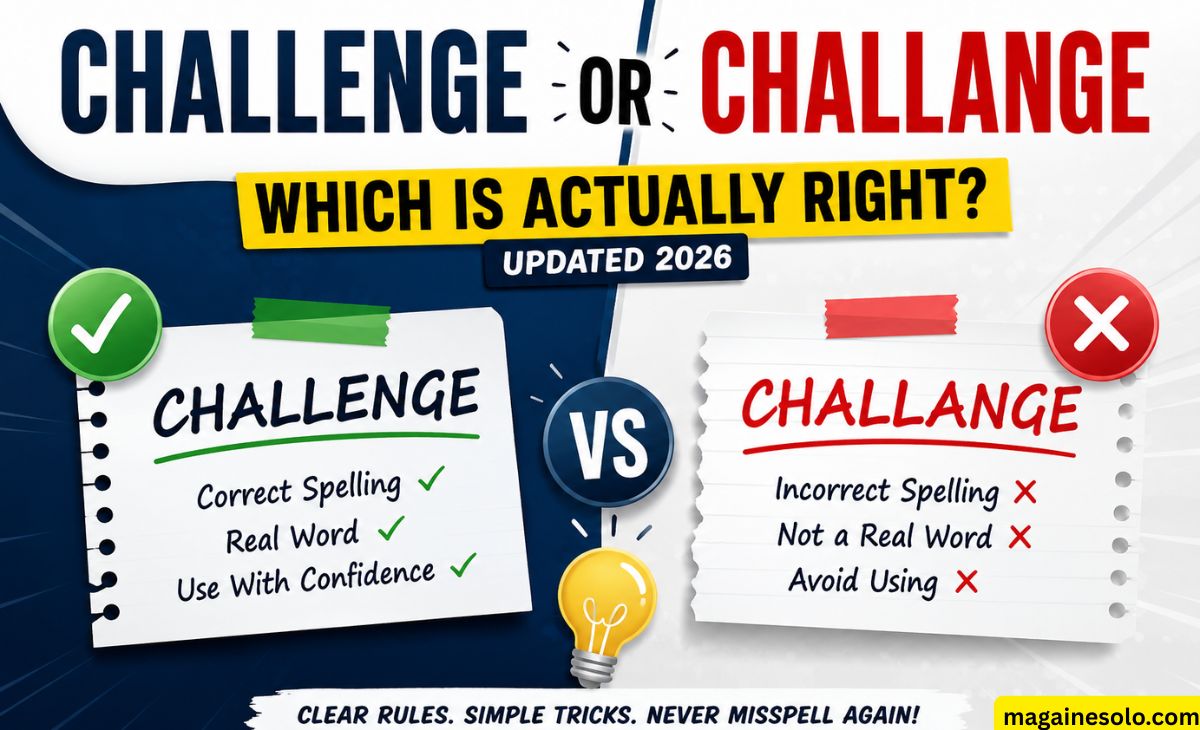
Let’s settle it right away: “challenge” is the correct spelling, and “challange” is simply a misspelling. There’s no alternate version, no British vs. American difference, and no exception. Just one correct word.
But knowing the right answer is only half the story. In this guide, we’ll break down what “challenge” actually means, why so many people accidentally write “challange,” how to use the word correctly in everyday writing, and simple tricks to make sure you never mix it up again.
What Does “Challenge” Mean? (With Real-World Context)
The word “challenge” is both a noun and a verb, and its meaning shifts slightly depending on how it’s used.
As a noun, a challenge refers to something that tests your abilities, skills, or determination. It’s a task, situation, or problem that requires effort, strategy, or courage to overcome.
Examples:
- Learning a new language can be a major challenge for adults.
- The biggest challenge of remote work is staying focused.
As a verb, “to challenge” means to question something, dispute it, or invite someone to compete or prove themselves.
Examples:
- She decided to challenge the referee’s decision.
- He challenged his friend to a chess match.
In short, “challenge” always carries the idea of difficulty, competition, or a test of ability, whether that’s mental, physical, emotional, or professional.
How “Challenge” Is Used in Modern English
The word “challenge” has become incredibly versatile in today’s language, especially with the rise of social media, fitness culture, and personal development trends.
Here are some common ways “challenge” shows up in everyday English:
- Fitness and lifestyle: “30-day workout challenge,” “no sugar challenge”
- Workplace language: “We’re facing budget challenges this quarter.”
- Education: “Math word problems are a real challenge for many students.”
- Social media trends: “TikTok dance challenge,” “viral challenge videos”
- Personal growth: “Stepping outside your comfort zone is always a challenge.”
Because it’s used so often, even small spelling slips can stand out, especially in resumes, emails, blog posts, or captions where credibility matters.
Why “Challange” Is Incorrect
“Challange” is not a recognized word in any English dictionary, whether American, British, Canadian, or Australian. It doesn’t appear in Merriam-Webster, Oxford, Cambridge, or Collins.
The mistake usually comes down to one simple thing: vowel confusion. People accidentally swap the “e” in the second syllable for an “a,” likely because of how the word sounds when spoken quickly.
Here’s the breakdown:
| Element | Correct Form |
| Spelling | challenge |
| Pronunciation | CHAL-uhnj |
| Part of speech | Noun / Verb |
| Word origin | Old French “chalenge” |
| Misspelling | challange (incorrect) |
Even though “challange” might look harmless, using it in professional writing, resumes, or online content can come across as careless and may even hurt your credibility, especially in a world where typos travel fast.
Why People Commonly Misspell “Challenge”
Understanding why this mistake happens so often can actually help you avoid it. Here are the main reasons:
- Sound-based spelling (phonetic confusion): When spoken fast, “challenge” can sound like it has an “a” sound in the middle.
- Autocorrect habits: Some users type quickly and rely on autocorrect, which doesn’t always catch the error if “challange” resembles a real word pattern.
- Influence from similar-sounding words: Words like “change,” “arrange,” or “manage” end in “-ange,” which can make people assume “challenge” follows the same pattern.
- Non-native English speakers: For many learners, English vowel sounds don’t match their native language’s spelling rules, leading to “a” and “e” mix-ups.
- Lack of visual memory: People who read less tend to rely more on sound than sight, making spelling errors more common for tricky words.
The good news? Once you understand the pattern, the correct spelling becomes much easier to remember permanently.
Common Misspellings Related to “Challenge”
“Challange” isn’t the only variation people accidentally type. Here are other common misspellings and their correct forms:
| Incorrect Spelling | Correct Spelling |
| Challange | Challenge |
| Chalenge | Challenge |
| Challege | Challenge |
| Challengeing | Challenging |
| Challanged | Challenged |
| Challanging | Challenging |
If you notice any of these in your writing, a quick spell-check or proofread can save you from publishing an error that might confuse readers or look unprofessional.
Side-by-Side Comparison: Challenge vs. Challange
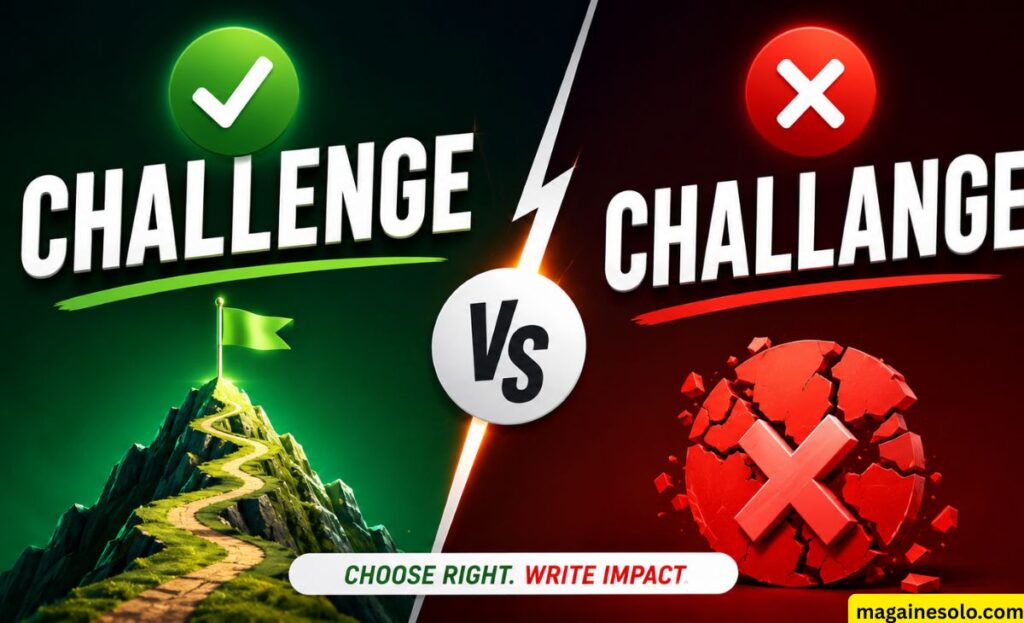
To make things crystal clear, here’s a simple side-by-side breakdown:
| Feature | Challenge | Challange |
| Found in dictionaries | Yes | No |
| Grammatically correct | Yes | No |
| Used in professional writing | Yes | Never |
| Common in casual texting (by mistake) | Sometimes | Yes |
| Recognized by spell-checkers | Yes | Flagged as error |
This comparison makes it obvious: “challenge” is the only version that should ever appear in your writing, whether it’s a school assignment, a business email, or a social media post.
Everyday Usage of “Challenge” in Real Life
The word “challenge” pops up in almost every area of life. Here’s how it’s commonly used in different contexts:
- At work: “The biggest challenge for new managers is delegating tasks.”
- In sports: “Winning the championship was the toughest challenge of his career.”
- In relationships: “Communication can be a challenge in long-distance relationships.”
- In education: “Online classes presented a challenge for many students during the pandemic.”
- In personal goals: “Saving money consistently is a challenge for most people.”
Because the word is so widely used, getting the spelling right helps you sound polished, confident, and credible, whether you’re writing a blog post, a cover letter, or a simple text message.
How to Remember the Correct Spelling (Memory Tricks That Work)
If “challange” keeps slipping into your writing, try these simple memory tricks:
- Break it into syllables: CHAL-LEN-GE, focus on the “len” sound in the middle.
- Connect it to similar words: Think of “length” or “lend,” which also use “len.”
- Use a visual cue: Picture the word “ENGE” at the end, like “engine” without the “in.”
- Practice writing it out: Repetition builds muscle memory faster than just reading.
- Use mnemonic sentences: “Every Challenge Needs Great Energy”, notice how each letter in “ENGE” matches the first letters of the last four words.
With a little practice, your brain will automatically default to the correct spelling, even when you’re typing quickly.
Why Correct Spelling of “Challenge” Matters
Spelling might seem like a small detail, but it has a real impact on how your writing is perceived. Here’s why getting “challenge” right matters:
- Professional credibility: Resumes, emails, and reports with spelling errors can make a negative first impression.
- SEO and content quality: Search engines and readers both favor well-written, error-free content.
- Clear communication: Misspellings can sometimes cause confusion, especially in formal or academic writing.
- Trust and authority: Readers are more likely to trust content that looks polished and carefully written.
In short, correct spelling isn’t just about grammar rules, it’s about making sure your message is taken seriously.
Mini Case Studies: How One Letter Changed Perception
Sometimes a single misspelled word can shift how a message is received. Here are a few realistic scenarios:
Case 1: The Job Application A candidate wrote, “I’m excited to take on new challanges in this role.” Despite strong qualifications, the hiring manager noticed the typo and wondered about attention to detail.
Case 2: The Marketing Caption A brand posted “Join our 7-Day Fitness Challange!” on social media. While the offer was great, several comments pointed out the spelling mistake, slightly undermining the brand’s polished image.
Case 3: The Blog Post A blogger published an article repeatedly using “challange” instead of “challenge.” Readers still understood the content, but a few mentioned in comments that it felt less trustworthy or rushed.
These examples show that while one letter might seem minor, it can subtly affect how professional, credible, or careful your writing appears.
Useful Forms of the Word “Challenge”
“Challenge” can change form depending on tense and usage. Here are the most common variations:
| Form | Example Sentence |
| Challenge (noun) | “This project is a huge challenge.” |
| Challenge (verb) | “I challenge you to finish this in one day.” |
| Challenged | “She challenged her own assumptions.” |
| Challenging | “It was a challenging exam.” |
| Challenger | “He became the top challenger in the competition.” |
| Challenges (plural noun) | “Every job comes with its own challenges.” |
Knowing these forms helps you use the word correctly in different sentence structures, whether you’re writing formally or casually.
Quotes That Capture the Spirit of “Challenge”
Throughout history, many thinkers and leaders have spoken about challenges as opportunities for growth. Here are a few popular sentiments often shared in motivational contexts:
- Challenges are often described as opportunities in disguise, helping people discover strengths they didn’t know they had.
- Many success stories highlight that the biggest challenges often lead to the most meaningful personal growth.
- A common theme in leadership advice is that facing challenges head-on builds confidence and resilience over time.
While exact wording varies across sources, the underlying message remains the same: challenges, when spelled correctly and faced bravely, are stepping stones, not roadblocks.
Practical Checklist: Never Misspell Challenge Again
Before you hit publish, send, or submit, run through this quick checklist:
- Did you write “challenge” with “e” in the middle, not “a”?
- Does your spell-checker flag any red underlines?
- Did you double-check forms like “challenging” or “challenged”?
- Did you read the sentence out loud to catch awkward phrasing?
- Did you compare your spelling to a trusted dictionary if unsure?
Following this simple checklist takes less than 10 seconds but can save you from embarrassing typos in emails, resumes, social posts, or blog content.
FAQ’s
Is “challange” ever an acceptable spelling?
No, “challange” is not recognized in any standard English dictionary and is always considered a spelling error.
What is the correct spelling: challenge or challange?
The correct spelling is “challenge,” spelled with an “e” in the second syllable, not an “a.”
Why do people often misspell “challenge” as “challange”?
Most people misspell it due to how the word sounds when spoken quickly and confusion with similar words like “change” or “arrange.”
Is “challenge” a noun or a verb?
“Challenge” can be both a noun (a difficult task) and a verb (to question or invite competition).
What is the plural form of “challenge”?
The plural form is “challenges,” used when referring to multiple difficult situations or tasks.
How can I quickly remember the correct spelling of “challenge”?
Breaking the word into syllables (CHAL-LEN-GE) and focusing on the “len” sound helps reinforce the correct spelling.
Conclusion
When it comes to challenge or challange, there is only one correct choice: challenge.
The spelling challange is a common mistake caused by pronunciation confusion, typing habits, and similarity to other English words. Whether you’re writing a blog post, email, academic paper, business proposal, or social media content, using the correct spelling helps maintain professionalism, credibility, and trust.
Remember this simple rule:
Challenge = Correct
Challange = Incorrect
Mastering this small spelling difference will improve your writing accuracy and help you communicate with confidence every time.

Shoaib Ahmad is a language-focused content writer and researcher at magazinesolo.com, where he explains the meaning of words, phrases, and text in a clear and reader-friendly way. His work focuses on simplifying language, uncovering context, and helping readers understand text with confidence and clarity.