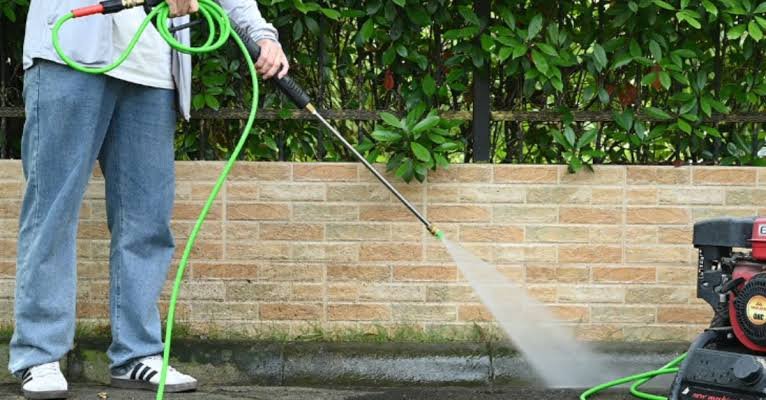
A pressure washer can loosen stubborn dirt, remove surface grime, and restore the appearance of outdoor surfaces, but effective cleaning depends on more than water pressure alone. The amount of water flowing through the machine plays an equally important role, particularly when rinsing away detergent, suspended dirt, and loosened debris. Understanding this relationship helps homeowners and professionals choose equipment that matches their cleaning requirements.
When comparing pressure washers, it is useful to consider gallons per minute (GPM) alongside pounds per square inch (PSI). These measurements describe different aspects of cleaning performance. Pressure helps dislodge contaminants, while water flow helps carry them away. The balance between the two often determines how quickly a surface can be cleaned and rinsed without unnecessary effort.
1. What Pressure Washer Flow Rate Actually Measures
Flow rate measures the volume of water a pressure washer delivers over a specific period, usually expressed in gallons per minute. A machine rated at 1.5 GPM, for example, delivers approximately 1.5 gallons of water each minute under its rated operating conditions.
This measurement matters because cleaning involves two distinct tasks: breaking the bond between dirt and a surface, then transporting that loosened material away. A strong, concentrated stream can help with the first task, but sufficient water volume is needed for effective rinsing.
Flow rate should not be confused with water pressure. PSI measures the force associated with the water stream, whereas GPM describes its volume. Both contribute to overall cleaning capability, but they are not interchangeable.
2. Why Higher GPM Can Make Rinsing Faster and More Thorough
Once dirt has been loosened, water flow becomes especially important. A greater volume of water can cover more surface area, move suspended debris, and help flush detergent from textured or uneven materials.
Consider rinsing a patio after applying a suitable cleaning solution. A lower-flow machine may remove the visible foam but require repeated passes to clear residue from grout lines and small depressions. A machine delivering more water may clear the same area more efficiently, provided its pressure and nozzle configuration are appropriate.
Higher flow can offer several practical benefits:
- Faster coverage: More water reaches the surface during each pass.
- Improved debris removal: Loosened soil and detergent can be carried away more effectively.
- Fewer repeat passes: Adequate flow may reduce the need to revisit already-cleaned areas.
- More consistent rinsing: Water can help clear residue from surface irregularities.
However, these benefits depend on the material being cleaned, the type of contamination, and the available water supply. Greater GPM does not automatically guarantee better results in every situation.
3. How PSI and GPM Work Together to Determine Cleaning Performance
PSI and GPM should be evaluated as complementary specifications rather than competing features. Pressure helps overcome the bond between contaminants and the surface, while flow helps remove the loosened material.
A useful comparison is cleaning a muddy concrete walkway versus rinsing soap from a vehicle. The walkway may need enough pressure to dislodge compacted dirt, followed by sufficient flow to move the resulting slurry. A vehicle generally requires a more controlled approach, with an appropriate nozzle, safe working distance, and suitable pressure to protect paint and trim.
Cleaning units sometimes use a calculated cleaning-unit figure based on PSI multiplied by GPM. Although this can help compare theoretical output, it is not a complete measure of real-world performance. Nozzle design, spray pattern, water temperature, detergent, and operator technique also influence results.
The practical lesson is straightforward: evaluate the complete operating profile instead of choosing a machine based on its highest advertised PSI rating.
4. Matching Flow Rate to Common Outdoor Cleaning Tasks
Different surfaces have different rinsing demands. Selecting equipment based on the most frequent task helps avoid paying for unnecessary capacity or struggling with a machine that delivers too little water.
Cleaning Concrete, Pavers, and Driveways
Concrete can hold fine dust, muddy residue, and organic debris in pores and joints. Adequate flow helps transport this material away after the surface has been cleaned. For larger driveways, water delivery and cleaning-path width can have a substantial effect on total working time.
Washing Vehicles and Outdoor Furniture
Cars, patio furniture, and painted surfaces generally benefit from controlled pressure and careful rinsing. High flow may help clear detergent, but it should be paired with an appropriate spray pattern and a safe technique. Avoid directing concentrated jets at seals, electrical connections, or vulnerable finishes.
Rinsing Decks, Fences, and Siding
Wood, composite decking, and exterior siding require additional care. Excessive pressure can damage fibers, force water behind cladding, or strip protective finishes. Choose the lowest effective pressure and a suitable nozzle, using water flow to assist rinsing rather than relying on aggressive force.
5. How to Choose a Pressure Washer Based on GPM and Cleaning Needs
A practical selection process begins with the surfaces you clean most often, the amount of accumulated dirt, and the time available for each job.
Use these steps to compare equipment:
- Identify your primary applications. Occasional furniture cleaning and frequent driveway maintenance place different demands on a machine.
- Compare both PSI and GPM. Review rated operating specifications rather than relying exclusively on maximum-pressure claims.
- Check the water supply. The tap, hose diameter, and hose length must provide enough water to support the machine’s requirements.
- Consider nozzle options. Spray angle and nozzle design influence both cleaning intensity and coverage.
- Evaluate practical convenience. Hose reach, portability, power source, and storage requirements can matter as much as raw output.
For a small patio or occasional household cleaning, a compact machine may be sufficient. For extensive hardscaping or frequent rinsing, a higher-flow model may help reduce the number of passes. The best choice is the machine that delivers adequate cleaning performance without compromising the surface or exceeding the available water supply.
6. Water Supply, Nozzle Selection, and Other Factors That Affect Flow
A pressure washer can only perform as intended when its water supply is adequate. A partially closed faucet, kinked hose, clogged inlet filter, or undersized supply line may restrict incoming water and interfere with operation.
Before troubleshooting poor rinsing performance, check the following:
- Open the water supply fully and inspect the hose for kinks.
- Clean the inlet filter according to the manufacturer’s instructions.
- Inspect the nozzle for blockage or wear.
- Use the nozzle recommended for the surface and cleaning task.
- Confirm that the machine is receiving the water volume specified in its manual.
Nozzle selection also changes the character of the water stream. A narrow spray concentrates cleaning force into a smaller area, while a wider fan distributes water over a broader path. A wider pattern is often useful for rinsing, although the correct choice depends on the material and the manufacturer’s recommendations.
For additional guidance on water conservation and efficient water use, the U.S. Environmental Protection Agency’s WaterSense program provides useful information about managing water consumption.
7. Common Flow-Rate Mistakes That Can Reduce Rinsing Efficiency
Several misconceptions can lead to disappointing results, even when a pressure washer has suitable specifications.
Assuming higher PSI always means faster cleaning: Pressure can remove stubborn contamination, but insufficient flow may leave loosened debris and detergent behind.
Ignoring the water source: Restricted supply can prevent a machine from operating correctly. Check the inlet, hose, and faucet before assuming the washer itself is underpowered.
Using an aggressive nozzle for every surface: A narrow, forceful spray may damage wood, paint, or softer materials. Match the nozzle to the cleaning task.
Applying too much detergent: Excess product can increase rinsing time and leave residue. Follow the detergent label and the equipment manufacturer’s instructions.
Rinsing without a consistent pattern: Random passes can leave streaks and untreated patches. Work in overlapping sections, moving from the top downward when cleaning suitable vertical surfaces.
8. Frequently Asked Questions About Pressure Washer Flow Rate
Is GPM or PSI more important for rinsing?
GPM is particularly relevant to rinsing because it measures the volume of water available to carry away dirt and detergent. PSI remains important for loosening contamination. Effective performance depends on the combination.
Does a higher flow rate always mean faster cleaning?
No. Higher flow can improve coverage and debris removal, but surface sensitivity, nozzle choice, contamination type, and pressure also matter. Excessive force can damage some materials.
Can a garden hose reduce pressure washer performance?
Yes. A restricted hose or insufficient faucet supply can limit incoming water and cause operating problems. Follow the manufacturer’s requirements for water pressure, flow, and hose connections.
How can I improve rinsing without buying a new machine?
Check the water supply, clean the inlet filter and nozzle, use the correct spray pattern, and apply detergent sparingly. A systematic rinsing pattern can also reduce repeated passes.
9. Why Understanding Flow Rate Leads to Better Cleaning Decisions
Rinsing efficiency depends on how effectively a pressure washer combines water volume, pressure, nozzle design, and technique. PSI helps loosen contamination, while GPM helps transport it away. Neither specification tells the entire story in isolation.
By matching equipment to the surface, verifying the water supply, and using appropriate cleaning methods, homeowners can improve results without unnecessarily increasing pressure or water consumption. Understanding flow rate makes it easier to select a pressure washer that delivers practical performance, protects the surfaces being cleaned, and makes routine outdoor maintenance more efficient.