
Walk onto any golf course and you will notice something odd. Nearly every right-handed golfer has a glove on just one hand, and it is not the hand you would expect. It is the left.
That detail confuses beginners and even some experienced players who buy the wrong glove at the pro shop. It also raises fair questions. What Hand Do Right Handed Golfers Wear a Glove On? Why not the dominant hand? Why only one glove? Do you even need one?
What Hand Do Right Handed Golfers Wear a Glove On?
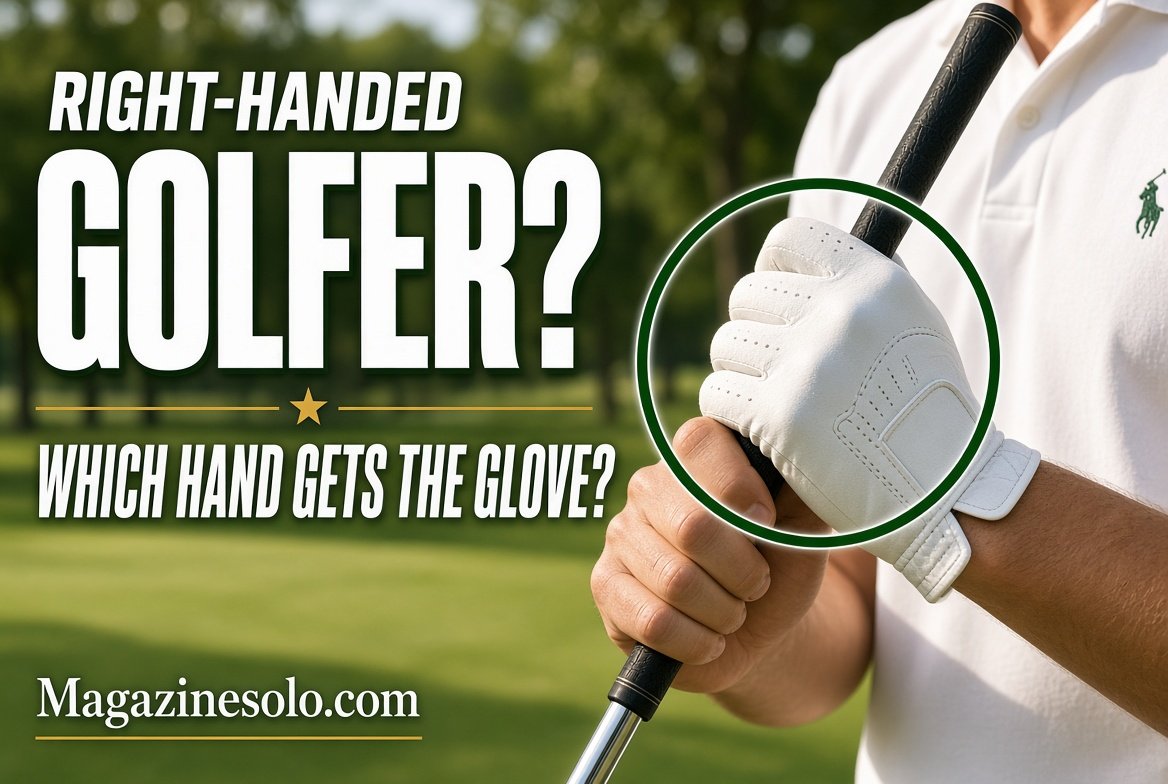
Right-handed golfers wear a golf glove on their left hand. Left-handed golfers wear it on their right hand.
The glove goes on the lead hand, the hand at the top of the club that points toward the target during the swing.
What Is the Lead Hand in Golf?
The lead hand is the hand closest to the target when you set up. For a right-handed golfer, that is the left hand.
It sits at the top of the grip, nearest the end of the club, and guides the club through the swing.
Lead Hand vs Trail Hand
The trail hand sits below the lead hand on the grip. In a right-handed grip, that is the right hand.
One simple way to think about it is that the lead hand guides while the trail hand adds power and feel.
How to Know Which Side You Play
If your left side faces the target at address, you play right-handed. Your left hand is the lead hand, and the glove goes there.
If your right side faces the target, you play left-handed, and the glove goes on your right hand.
Why Do Right Handed Golfers Wear a Glove on the Left Hand?
The reason is practical. The left hand carries the club’s weight at the top of the grip and takes a lot of pressure during the swing.
A glove gives that hand a secure, consistent hold on the club without needing a tight squeeze.
Better Grip and Control
Leather and synthetic materials grip the club better than bare skin, especially when your hands sweat. That helps the club stay stable at the top of the backswing and through impact.
A steady lead hand makes it easier to keep a light, relaxed grip instead of choking the club.
Protection From Blisters and Calluses
The lead hand rubs against the grip on every swing. Over a full round or a range session, that friction can cause blisters.
A glove takes much of that friction, which helps beginners practice longer without sore hands.
Help in Hot, Humid, and Wet Weather
Sweat makes grips slippery. A glove helps the club stay put in warm weather and in light moisture.
That is why many golfers keep an extra glove or two in the bag.
Why Don’t Right Handed Golfers Wear the Glove on the Right Hand?
The right hand is the trail hand for a right-handed golfer. It sits lower on the grip and works with the lead hand, but it plays a different role.
Many golfers leave it bare to keep better feel and feedback, especially on short shots and putts.
Feel vs Grip
A bare trail hand gives you a direct sense of the club’s weight and the clubface. A glove on the lead hand supplies grip security.
Together, they offer a balance of control and sensitivity.
Tradition and Cost
Wearing one glove is also the long-standing tradition. It halves the cost of gloves, which wear out with regular play.
Dominant Hand Confusion: Is the Glove on the Dominant Hand?
This is a common source of mixed messages online. Some pages say the glove goes on the dominant hand, while others say the non-dominant hand.
For a right-handed golfer, the left hand is the non-dominant hand, so the glove goes on the non-dominant hand.
The Safest Rule to Remember
Forget dominant and non-dominant. Remember lead hand instead.
If your left side faces the target, wear a left-hand glove. If your right side faces the target, wear a right-hand glove.
What About Cross-Dominant Players?
Some people write with their right hand but swing a club left-handed, or the reverse. The glove follows the way you swing, not the way you write.
Always match the glove to your lead hand.
What Hand Do Left Handed Golfers Wear a Glove On?
Left-handed golfers wear the glove on their right hand. Their right hand is the lead hand, sitting at the top of the grip.
The same logic applies in reverse. Everything simply flips.
Finding Gloves for Left-Handed Players
Many shops stock far more left-hand gloves than right-hand gloves, because most golfers are right-handed. One retailer notes that its left-hand style accounts for about 95% of what it sells.
Look for packaging labeled “Wear on Right” or “for left-handed players.” Retailers use both descriptions.
What Does “Wear on Left” Mean on a Golf Glove?
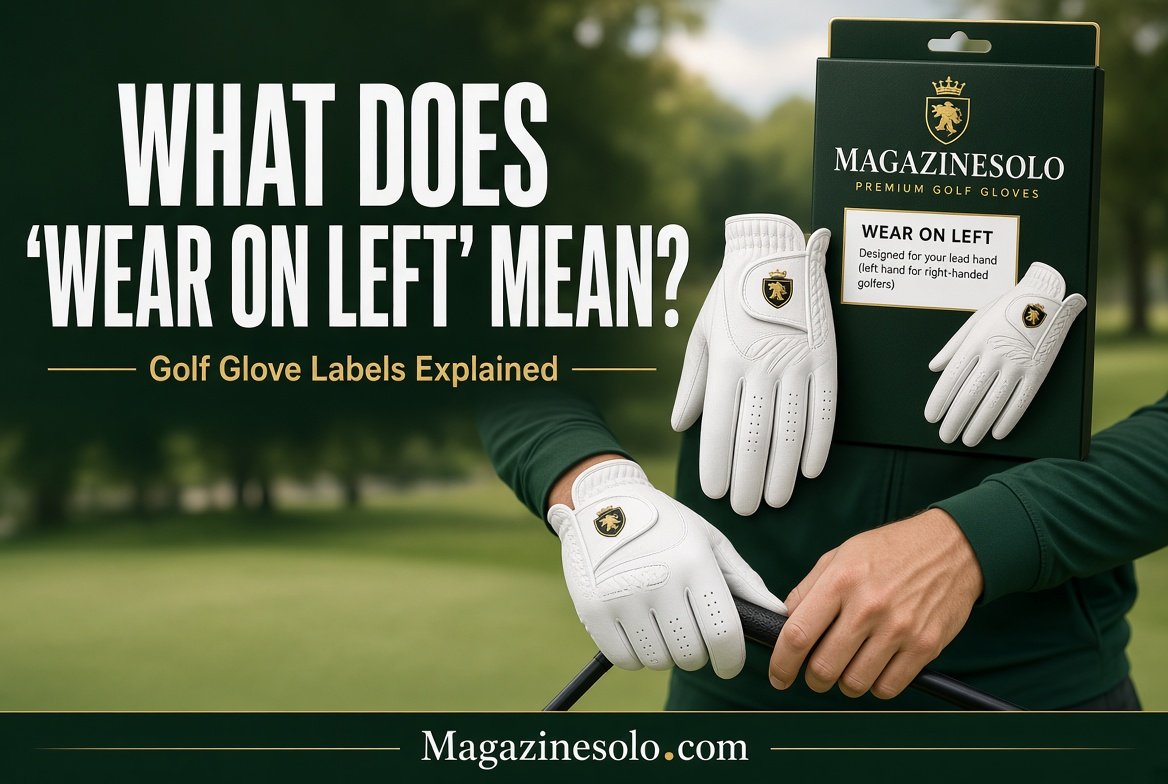
This label causes plenty of confusion. A glove marked “Wear on Left” or “Men’s Left” is made to fit the left hand.
That makes it the standard glove for a right-handed golfer.
| Label on the Package | Worn On | Made For |
|---|---|---|
| Wear on Left / Left Hand / Men’s Left | Left hand | Right-handed golfers |
| Wear on Right / Right Hand | Right hand | Left-handed golfers |
| Pair / Rain gloves | Both hands | Wet or cold weather |
A Common Buying Mistake
Right-handed golfers sometimes assume they need a right-hand glove because they are right-handed. That purchase will not fit your lead hand.
Check the label before you pay, and confirm that the side matches your lead hand.
Why Do Golfers Wear Only One Glove?
Single-glove play is the standard for several reasons. The lead hand benefits most from added grip, while the trail hand benefits from touch.
One glove also costs less and is quicker to put on.
Feel on Chips, Pitches, and Putts
Short game shots reward sensitivity. A bare trail hand gives you more feedback about contact and distance.
Many golfers feel that a second glove dulls that sense.
Do Professionals Wear a Glove?
Most professional golfers wear a glove on the lead hand. A few have preferred to play without one, and former Masters champion Fred Couples is often mentioned as an example.
Preference is personal, and nothing in the Rules of Golf requires a glove.
Can You Wear Gloves on Both Hands?
Yes. Some golfers do, and the Rules of Golf do not prevent it as long as the gloves are plain.
Aaron Rai is a well-known professional who plays with a glove on each hand. He has said the approach gives a more consistent feel between the hands.
Rain Gloves
Rain gloves are typically sold in pairs and are designed to grip better when wet. Many golfers wear them on both hands because wet hands and wet grips slip easily.
Cold Weather Gloves
In cold conditions, golfers sometimes wear warm gloves or mittens between shots and a regular glove for the swing. Hands that stay warm tend to feel more comfortable and responsive.
Should You Try Two Gloves?
If your trail hand slips or blisters, or you play often in wet weather, a second glove can help. Otherwise, one glove is usually enough.
Why Do Some Golfers Take the Glove Off to Putt?
Many players remove the glove or loosen it for putting. The goal is a more sensitive touch for distance control.
It is a matter of preference. Some golfers keep the glove on all round, and others take it off on the green.
How to Decide
Try both on the practice green. Notice which version feels better for lag putts and short putts.
If you take the glove off, tuck it somewhere safe so it does not get lost or wet.
Do You Need a Golf Glove?
You do not need a glove. Some golfers play without one and feel perfectly comfortable.
However, a glove offers real benefits for many players, especially beginners, sweaty-handed golfers, and anyone who plays in warm or damp weather.
| Situation | Glove Helpful? | Why |
|---|---|---|
| Beginner with soft hands | Yes | Reduces blisters and improves grip confidence |
| Hot and humid round | Yes | Helps with sweat |
| Rainy round | Yes, often two | Wet grips are slippery |
| Short game practice | Optional | Some prefer bare-hand feel |
| Putting | Optional | Personal preference |
| Cold morning | Maybe | Warmth can matter more than grip |
How a Golf Glove Should Fit
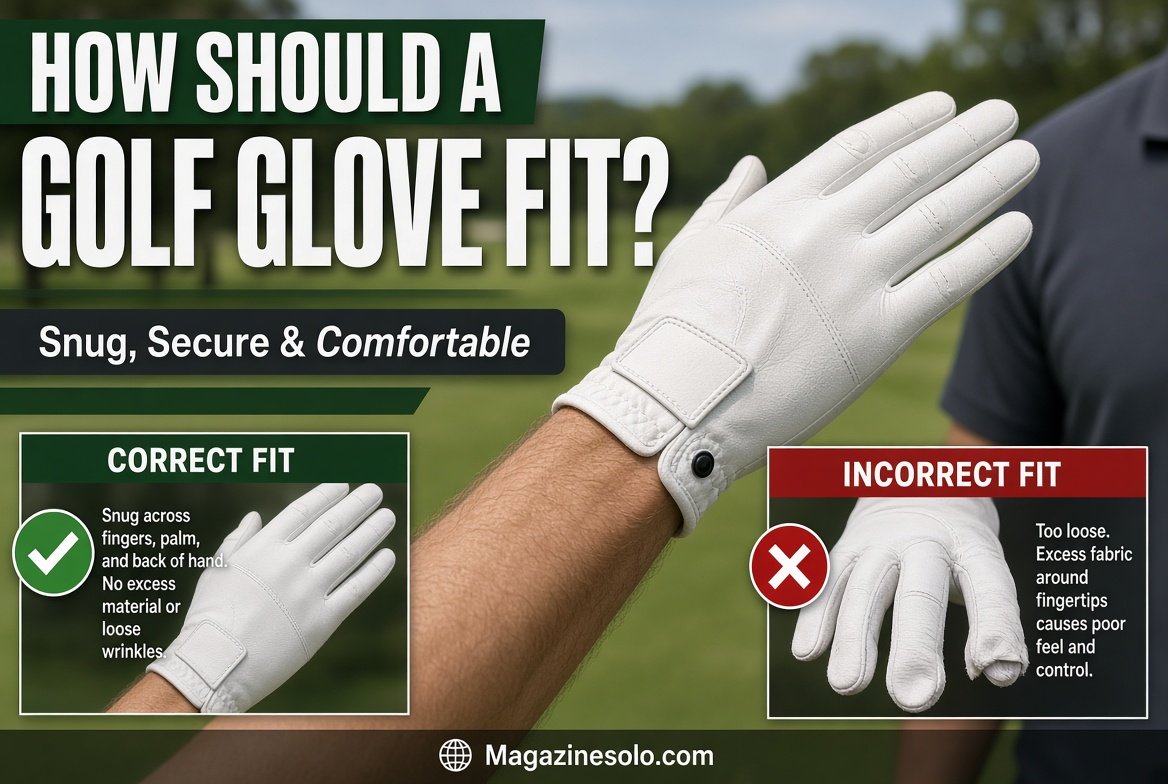
Fit matters more than the hand it goes on. A poor fit can reduce feel and wear out faster.
A glove should feel like a second skin. It should be snug without cutting off circulation.
The Fist Test
Put the glove on and make a fist. You should be able to close your hand without the glove pulling hard or bunching up.
You should also be able to stretch your fingers without the material tightening.
Signs the Glove Is Too Tight
- Fingers feel squeezed or tingly
- The glove pulls at the knuckles when you grip
- The seams dig into your skin
Signs the Glove Is Too Loose
- Wrinkles gather across the palm
- Fingertips have extra material
- The glove shifts during the swing
Different Brands Fit Differently
Sizing varies from brand to brand, so try a few if possible. A medium in one line may feel different from a medium in another.
Golf Glove Materials Explained
Gloves come in several materials. Each balances feel, durability, and price differently.
| Material | General Feel | General Trade-Off |
|---|---|---|
| Premium leather | Soft, tacky, natural feel | Usually costs more and wears faster in wet weather |
| Synthetic | Durable and often moisture resistant | Can feel less soft than leather |
| Hybrid (leather plus synthetic) | Mix of feel and durability | Middle ground in price and wear |
| Rain material | Gripper when wet | Often sold as a pair |
Choosing for Your Climate
Hot, dry climates often suit soft leather. Rainy or humid climates may favor synthetic or rain-specific gloves.
How to Put On a Golf Glove Correctly
Putting a glove on well helps it fit better and last longer. Take your time.
- Hold the glove open and slide your fingers in one at a time.
- Work each fingertip all the way into the glove.
- Pull the glove up over the palm and smooth out any wrinkles.
- Fasten the closure strap snugly but not too tight.
Avoid Tugging
Yanking the glove by the wrist or fingertips can weaken stitching. Ease it on instead.
Do the Rules of Golf Allow Gloves?
Yes, gloves are allowed. Rule 4.3 of the Rules of Golf permits gloves that help with gripping the club, provided they are plain.
The equipment rules from The R&A and USGA spell out what plain means.
What a Plain Glove Must Be
A plain glove must be a fitted covering of the hand with a separate sheath or opening for each finger and thumb. It must also be made of smooth materials on the full palm and gripping surface of the digits.
What a Plain Glove Must Not Include
The rules list several features that are not allowed. These include:
- Padding on the gripping surface or inside the glove, defined as material more than 0.025 inches thicker than the adjacent areas
- Straps that help prevent the club from slipping or attach the hand to the club
- Any means of binding digits together
- Material that adheres to material on the grip
- Features, other than visual aids, that help place the hands in a consistent position on the grip
- Weight that helps a player make a stroke
- Any feature that might restrict the movement of a joint
Can You Put Tape on a Golf Glove?
The rules allow material added for wear resistance, moisture absorption, or other functional purposes, as long as it does not exceed the definition of padding. A Golf Digest rules review notes that applying some athletic tape to extend a glove’s life is generally fine, but you should keep the thickness in mind.
If you play in competitions, ask your committee or check the Rules before taping a glove.
Golf Glove Wear Patterns: What They Tell You
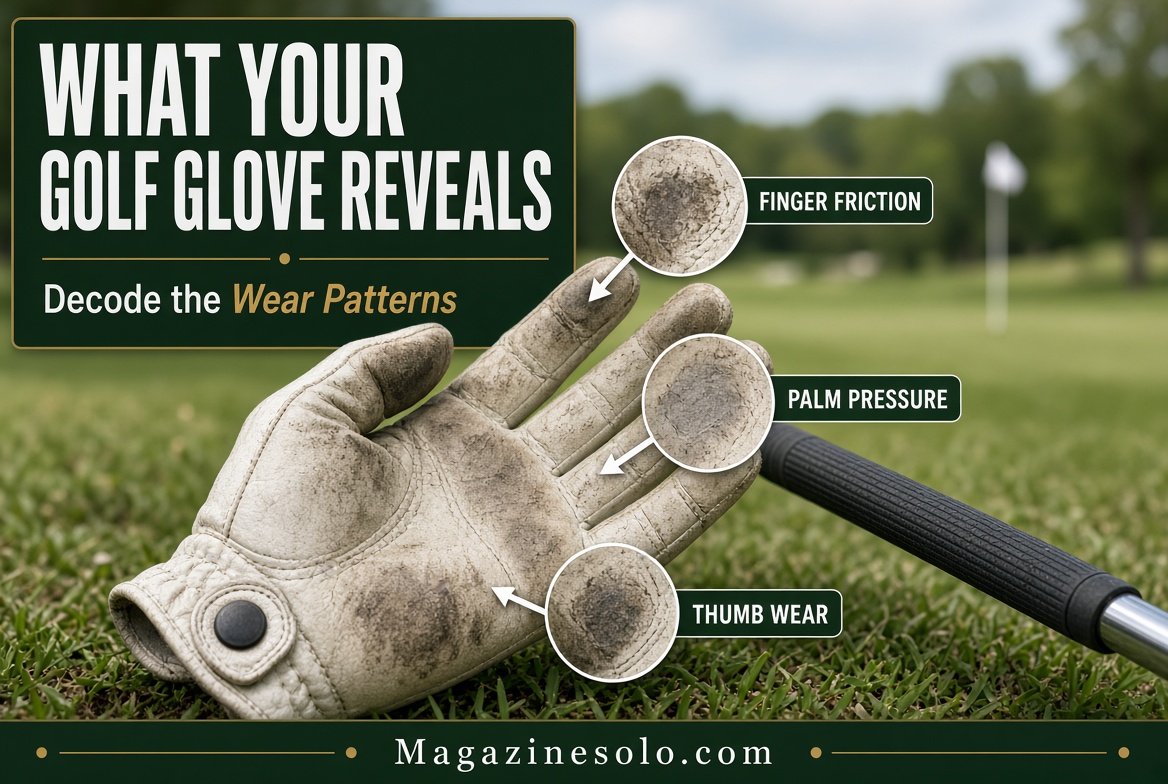
The way a glove wears can reveal how you grip the club. Some instructors look at worn spots for clues about pressure.
A worn patch at the thumb, for example, may suggest where the club presses hardest during the swing.
Reading the Wear Responsibly
Wear patterns are interesting, but they are not a diagnosis. For grip advice, a PGA professional can watch your swing and recommend changes.
Thumb Position Tip
One piece of grip advice suggests angling the lead thumb slightly to the right for a smoother, more comfortable backswing. Ask a coach whether that adjustment suits your swing.
How Often Should You Replace a Golf Glove?
Gloves wear out. Signs include stiffness, holes, thinning leather, and a loss of grip.
A glove that has become slick or stretched will not help you hold the club securely.
Replacement Signals
- Worn spots on the palm or fingertips
- Stretched or loose fit
- Hardened material after getting wet
- Stitching coming apart
Many Golfers Keep Spares
Carry a spare glove, especially for rainy days. Rotating gloves can also help them last longer.
How to Care for Your Golf Glove
A little care extends glove life. Simple habits make a difference.
After the Round
Let the glove air dry flat. Avoid leaving it in a hot car or in direct sun, since heat can stiffen leather.
Storage
Store gloves flat or on a glove holder in your bag pocket so they keep their shape.
Washing
Follow the manufacturer’s instructions. Many leather gloves do better with air drying than machine washing.
Golf Gloves for Women, Juniors, and Different Hand Sizes
Gloves are made in men’s, women’s, and junior sizes. The right size depends on hand length and width.
Women’s gloves often have a slimmer cut. Junior gloves are sized for smaller hands.
Special Fits
Some brands offer cadet sizes for shorter, wider fingers, as well as larger sizes for bigger hands. Try gloves on whenever you can.
Common Golf Glove Mistakes
Avoid these frequent errors.
Buying the Wrong Hand
Check that the label matches your lead hand. Right-handed golfers need a left-hand glove.
Choosing a Glove That Is Too Big
A loose glove wrinkles and slides. It defeats the purpose of improved grip.
Gripping Too Tightly
A glove does not mean you should squeeze harder. A firm but relaxed grip usually promotes a freer swing.
Ignoring Wet-Weather Needs
Using a worn-out leather glove in the rain can lead to slipping. Switch to a rain glove or a fresh pair.
Leaving the Glove in a Wet Bag
Damp storage can make gloves stiff or smelly. Dry them out after each round.
Before You Tee Off: A Simple Glove Checklist
A quick routine saves frustration on the first tee.
- Confirm you have the correct hand glove, left for right-handed golfers.
- Check the fit and fastening.
- Pack a spare glove or rain gloves if the forecast looks wet.
- Plan your arrival time, and use a quick tool such as How Long Until 1:50? if you want to count down to a tee time.
Common Myths About Golf Gloves
Several myths surround golf gloves. Here are the most common.
Myth: Right-Handed Golfers Wear the Glove on the Right Hand
False. Right-handed golfers wear the glove on the left hand, their lead hand.
Myth: You Must Wear a Glove
False. A glove is optional, and some golfers prefer to play without one.
Myth: Two Gloves Are Illegal
False. Two gloves are allowed as long as they are plain gloves that follow the Rules.
Myth: A Glove Fixes a Bad Grip
False. A glove helps with friction and comfort, but it does not correct grip mechanics.
Myth: The Tighter the Glove, the Better
False. Too tight can restrict movement and feel uncomfortable.
Tips for Beginners
New golfers can follow a few simple steps to get started.
- Buy a left-hand glove if you swing right-handed.
- Start with one glove and add a second only if needed.
- Try a few sizes to find a comfortable fit.
- Carry a spare for wet rounds.
- Ask a pro shop employee for help matching your hand size.
Why Starting Right Matters
Good habits form early. Choosing the right glove and learning a relaxed grip help you enjoy golf from day one.
Glove vs No Glove: Pros and Cons
Both choices work. The right one depends on your hands, your climate, and your feel preferences.
| Option | Pros | Cons |
|---|---|---|
| Glove on lead hand | Better grip, blister protection, helps with sweat | Costs money, wears out, may dull feel slightly |
| No glove | Maximum feel, no cost, no fitting needed | More friction, can slip when wet or sweaty |
| Two gloves | Extra grip in rain and cold | Less feel in the trail hand, more cost |
How to Test Both
Spend one range session with a glove and another without. Pay attention to blisters, grip security, and how the club feels on short shots.
Does the Glove Change With Different Grip Styles?
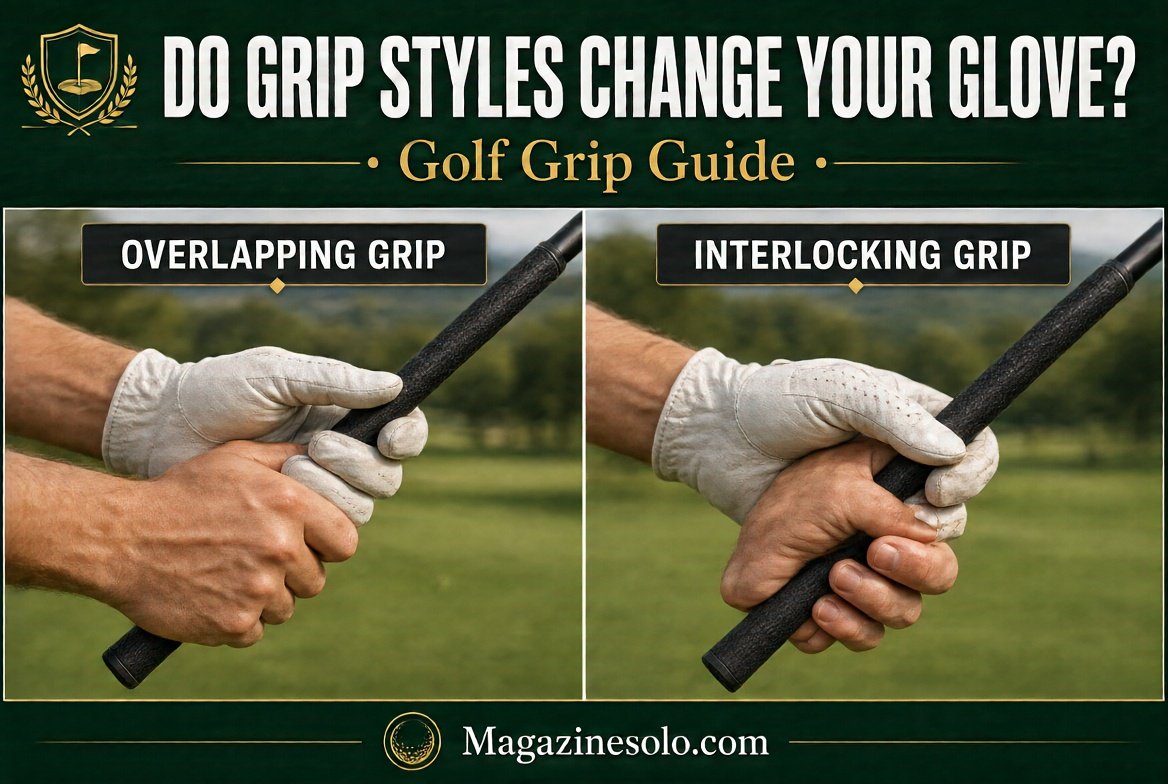
Golfers use several grip styles, including overlapping, interlocking, and ten-finger. In each of them, the glove still goes on the lead hand.
For a right-handed golfer, that means the left hand. The trail hand finishes its position below the lead hand regardless of the style.
Why the Rule Stays the Same
The lead hand is always the top hand on the club. The glove follows the top hand, not the finger pattern.
How to Choose the Right Golf Glove Size
Getting the size right takes a little attention. Brands publish their own size charts, so check the one that matches the glove you want.
Measure Your Hand
Measure around the widest part of your hand across the knuckles, and measure from the base of your palm to the tip of your middle finger. Compare the numbers to the brand’s chart.
Trying Gloves in a Shop
Put the glove on and grip a club. Check that the fingertips fit snugly, the palm is smooth, and the closure fastens without strain.
Consider the Break-In Period
Leather gloves may relax slightly after a few rounds. A very slight snugness at first is normal, but pain is not.
Playing in the Rain With Gloves
Rain changes everything about grip. A wet glove and a wet grip can slip easily.
A few habits help you keep control when the weather turns.
Keep Gloves Dry Between Shots
Store your spare glove in a dry pocket or under the umbrella. Put on a fresh one when the first becomes soaked.
Dry Your Grips
Wipe each grip with a towel before every shot. Dry grips plus a dry glove give the most reliable hold.
Think About Rain Gloves
Rain gloves are made to grip better as they get wet. Many golfers wear a pair, one on each hand, in steady rain.
A Simple Guide to Grip Pressure With a Glove
A glove can tempt you to squeeze harder, but tension hurts your swing. Aim for a firm, relaxed hold.
Many instructors describe grip pressure on a scale from one to ten and suggest staying well below the extremes. Ask your coach for a target that matches your swing.
Signs You Are Gripping Too Tight
- Your forearms feel tense at address
- Your knuckles look pale
- Your swing feels stiff or short
How the Glove Helps You Relax
Because the glove increases friction, you can hold the club with less force. That helps the club release freely through impact.
What to Do With Your Glove During a Round
Etiquette is simple. Keep the glove neat and out of the way.
Between Shots
Many golfers tuck the glove into a back pocket or a glove clip. Avoid leaving it on the ground, where it can be lost.
On the Green
If you remove the glove to putt, place it in a pocket instead of on the green. This also keeps it from picking up moisture.
After the Round
Pull the glove out of your bag and let it dry flat. A damp glove left in a closed bag can stiffen and smell.
Key Takeaways
- Right-handed golfers wear a glove on the left hand.
- Left-handed golfers wear a glove on the right hand.
- The glove goes on the lead hand at the top of the grip.
- One glove is standard, but two gloves are allowed.
- Gloves must be plain under the Rules of Golf.
- Fit and care matter as much as the hand you choose.
Also Read:
- How Long Until 1:50? The Complete Time Countdown Guide
- How Long Until 10:15? Complete Time Calculator & Countdown Guide
- How Long Until 5 PM? Quick Time Calculator & Countdown Guide
- How Long Until 8 PM? Instant Countdown, Calculation Tricks & Time Zone Guide
- Which One Is You vs Which One Are You, The Complete Guide to Choosing Correctly
- Thats or That’s: Which Is Correct?
- Thank You Everyone or Thank You All: Which Is Correct
- Separate vs. Seperate: The Complete Guide to the Correct Spelling
- Per Say or Per Se? Which Is Correct?
- Stent vs Stint: What’s the Difference?
- Gluing or Glueing: The Correct Spelling
- Loot vs Lute: The Complete Guide to These Confusing Homophones
- What Do You Call Someone Who Loves Music? 10+ Simple Terms
- QuoteBless.com USA: Discover Heartfelt Quotes & Blessings 2026
- Riley Green Singer Height, Weight, Age, Family, Bio, & Net Worth
- Morgan Wallen Singer Height, Weight, Age, Family, Bio, & Net Worth
- Benson Boone Singer Height, Weight, Age, Family, Bio, & Net Worth
- D4vd Singer Height, Weight, Age, Family, Bio, and Net Worth
- Ella Langley Singer Height, Weight, Age, Family, Bio, & Net worth
- David Zaslav and Conor McGregor: Careers, Influence, and Their Connection
- Peter Orszag Bald Biography 2026: Is He Bald? Facts Revealed
- Bianca Nobilo Net Worth 2026: How Rich Is She Now?
- Layla Jenner Biography 2026: Age, Height, Net Worth & Family
- Brooke Daniells: Life, Career and Relationship Story 2026
Frequently Asked Questions (FAQs)
What hand do right handed golfers wear a glove on?
Right-handed golfers wear the glove on the left hand. That is the lead hand at the top of the grip.
What hand do left handed golfers wear a glove on?
Left-handed golfers wear the glove on their right hand, which is their lead hand.
Why do right handed golfers wear a glove on the left hand?
The left hand sits at the top of the grip and guides the swing. A glove improves grip, control, and blister protection on that hand.
Is the golf glove worn on the dominant hand?
For most golfers, no. A right-handed golfer wears it on the left, which is the non-dominant hand.
What is the lead hand in golf?
The lead hand is the hand at the top of the grip, closest to the target at address. For right-handed golfers, it is the left hand.
What does “Wear on Left” mean on a golf glove?
It means the glove is made to fit the left hand. That makes it the standard glove for right-handed golfers.
Should a right-handed golfer buy a left-hand glove?
Yes. A left-hand glove fits the left hand, which is the lead hand for a right-handed golfer.
Can a right-handed golfer wear a glove on the right hand?
You can wear it wherever you like, but it is unconventional. The standard choice is the lead hand.
Why do golfers wear only one glove?
One glove gives grip on the lead hand while leaving the trail hand bare for feel. It is also traditional and costs less.
Can you wear two golf gloves?
Yes. Some golfers, including Aaron Rai, wear gloves on both hands, and rain gloves are often worn in pairs.
Do professional golfers wear a glove?
Most do, on the lead hand. A few, such as Fred Couples, have preferred to play without one.
Why do some golfers take their glove off to putt?
They want more sensitivity for distance control. It is a personal preference.
Do you have to wear a golf glove?
No. A glove is optional, though many golfers find it helpful for grip and blister protection.
Are golf gloves allowed by the Rules of Golf?
Yes. Rule 4.3 allows gloves as long as they are plain.
What makes a glove “plain” under the rules?
It must be a fitted hand covering with a separate opening for each digit and smooth materials on the palm and gripping surface. It cannot include padding, straps, or features that assist the stroke.
Can I put tape on my golf glove?
Material added for wear resistance or other functional purposes can be fine if it does not count as padding. Keep it thin and check the Rules for competitions.
How should a golf glove fit?
It should feel like a second skin, snug but not restrictive. You should be able to make a fist without it pulling hard.
How tight should a golf glove be?
Snug enough to prevent wrinkles and movement, but loose enough that blood flow and finger movement feel normal.
What are golf gloves made of?
Common materials include leather, synthetic fabrics, and hybrids. Rain gloves use materials designed to grip better when wet.
What are rain gloves for golf?
They are gloves designed for wet conditions and are often sold in pairs. Many golfers wear them on both hands.
How often should I replace my golf glove?
Replace it when it becomes stiff, stretched, worn through, or loses grip. Frequency depends on how often you play and the weather.
How do I care for a golf glove?
Let it air dry after use, keep it away from heat, and store it flat. Follow the manufacturer’s care instructions.
Do women and juniors use different gloves?
Yes. Women’s and junior gloves are sized for different hand shapes and lengths.
Does a golf glove fix a bad grip?
No. It helps with friction and comfort, but proper grip technique still matters.
Conclusion
The answer to what hand do right handed golfers wear a glove on is simple: the left hand. That is the lead hand at the top of the club, where grip security and blister protection matter most. Left-handed golfers do the opposite and wear the glove on their right hand.
Remember the lead-hand rule, check the label on the package, and focus on fit. Wear one glove for most rounds, add a second in wet or cold weather if it helps, and make sure any glove you use is plain under the Rules of Golf.
With the right glove on the right hand, you can focus on what matters most: a relaxed grip and a confident swing.