Definitely or Definately: Which Is Correct?

Definitely or definately: which is correct? Definitely, and the proof takes one line. Definately is not recognized as a standard spelling in any English dictionary, while definitely is spelled D-E-F-I-N-I-T-E-L-Y.
The answer is one word, and the proof is its parts. Definitely is the adjective definite plus the suffix -ly, with the word finite hidden inside. Once you see the parts, the wrong spelling has nowhere to hide.
One nearby word is a genuine trap. Defiantly is a real word with a different meaning, and it is the one error a spell checker cannot catch. The verdict comes first here, then the proof, then the trap.
The Verdict in One Glance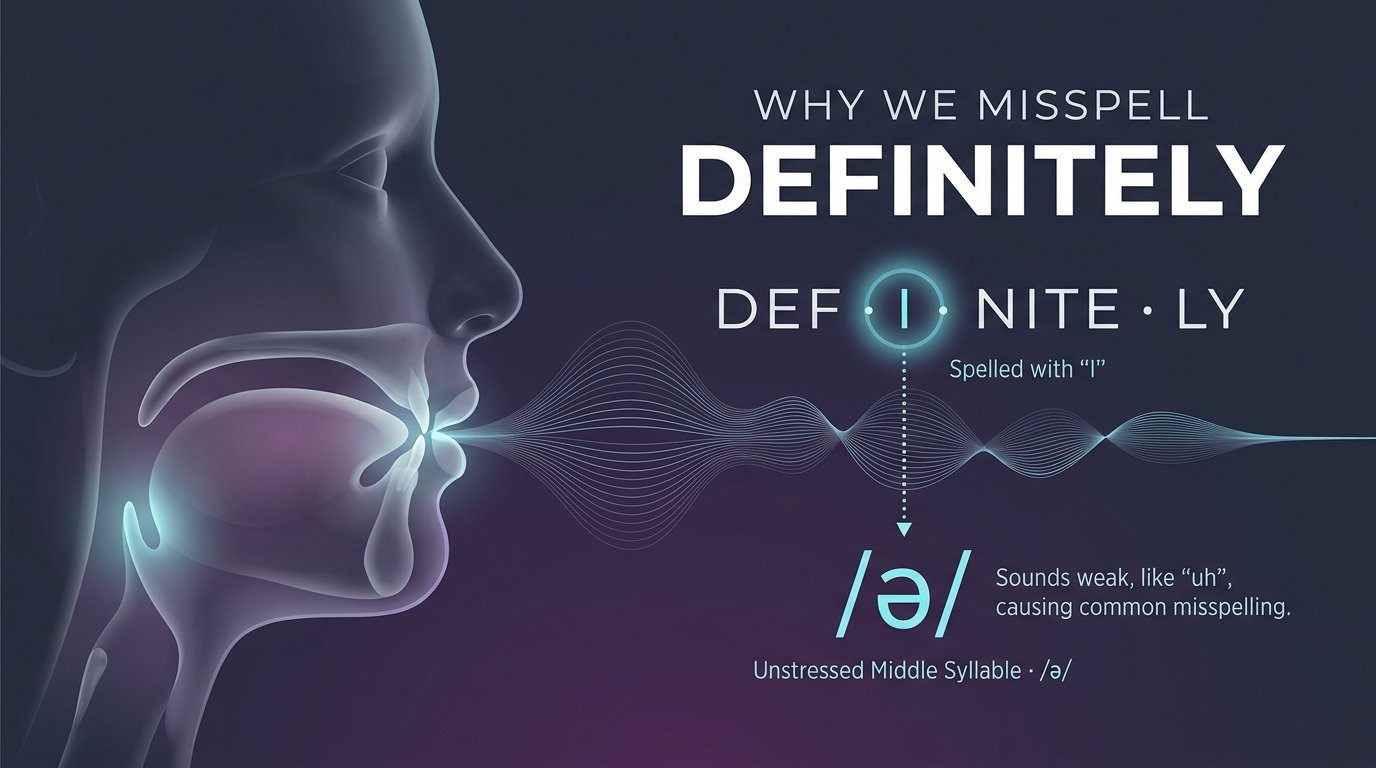
Definitely is correct. Definately is not a word in any standard dictionary. Definitely is spelled D-E-F-I-N-I-T-E-L-Y: the adjective definite plus -ly, with nothing changed. That is the whole verdict; everything below is the proof and the traps.
Four reference works agree: the Merriam-Webster entry for definitely, the Cambridge Dictionary US entry for definitely, the Oxford Advanced Learner’s Dictionary entry for definitely and the Dictionary.com entry for definitely all carry definitely. None of them carries definately, in any form.
Use the verdict the moment it lands. If you came here mid sentence, type definitely and move on. The sections below exist for the reader who wants to stop needing the check at all.
The Two Spellings Side by Side
|
Spelling |
Status |
Why |
|---|---|---|
|
definitely |
Correct |
definite + -ly, with finite intact inside |
|
definately |
Not a word |
swaps an a for the second i; no dictionary entry exists |
The table is the whole argument in miniature. One form is built from a real base word. The other is built from a base, definate, that does not exist anywhere in the dictionary record.
The One-Line Proof: Definite + Ly, Nothing Changes
Adding -ly to definite changes nothing. The base ends in e, the e stays, and no letter swaps, drops or doubles. Definite plus ly can only ever spell definitely, never definately.
The correct spelling of definitely is therefore a construction, not a memory feat. If you can spell definite, you already own every letter of the adverb. The suffix is the only addition the word ever makes.
Why Definately Happens: The Vowel Your Ear Cannot Hear
The Schwa in the Middle
Say the word at normal speed and the middle vowel disappears. Definitely sounds like def-uh-nut-lee, because the vowel after n is unstressed and reduces toward the schwa, the weakest sound in English.
A reduced vowel can be spelled with almost any vowel letter. That is why the ear cannot arbitrate this spelling. Writers guessing from sound have to pick a letter, and the pick is where the error enters.
Spelling by ear works only where sound and spelling agree. On stressed syllables they usually do. On unstressed ones, English spelling keeps the letter the word’s history gave it, and the sound keeps no record of it.
The -ately Pull: Immediately, Accurately, Approximately
English is full of adverbs that genuinely end in -ately. Immediately, accurately and approximately all end that way because their bases end in -ate: immediate, accurate, approximate. The pattern is real, frequent and easy to borrow.
The borrowing fails at the base word. Definite ends in -ite, not -ate, so its adverb ends in -itely. Strip -ly from definately and the implied base, definate, is not in any dictionary.
Why the Wrong Form Looks Right
Definately looks plausible because its error is one letter deep. The word’s shape, length and ending all match the real word. Only the middle vowel is wrong, and it is the vowel the ear cannot hear.
Familiarity finishes the job. A writer who has typed definately for years has seen it thousands of times, and seen often starts to read as spelled right. The construction check below breaks that false familiarity.
The Proof From the Word’s Own Parts
De + Finite + Ly
Split the word and it spells itself: de, finite, ly. The prefix de- carries the Latin sense of completely. The root finite means bound or limited, from Latin finitus and finis, an end or limit.
The suffix -ly is the ordinary adverb maker. It attaches to definite without touching a single letter. Three parts, each spelled plainly, and the assembled word is definitely.
Finite: The Hidden Word That Settles It
Finite is the hidden word inside definite, and it carries the verdict. It is spelled f-i-n-i-t-e: two i letters, and never an a. Any spelling with an a in the middle cannot contain finite.
That makes the check mechanical. Before sending anything important, look inside your spelling for finite. If finite is whole, the word is right; if an a has replaced an i, finite is broken and so is the word.
The Dictionary Test: Definite Is In, Definately Is Not
The dictionary test is the fastest external check. the Merriam-Webster entry for definitely gives the etymology as definite + -ly and dates the first known use to 1574, while the Dictionary.com entry for definitely records the word first in 1575 to 1585; the two histories print separately.
The Learner’s entry adds the working gloss: the Oxford Advanced Learner’s Dictionary entry for definitely defines the word as a way of emphasizing that something is true and that there is no doubt about it. That is the agreement force the spoken “Definitely!” carries.
No dictionary consulted returned an entry for definately. That absence is itself the finding: there is no variant-spelling defense of definately to appeal to. The word is an error, full stop.
Every Wrong Way to Spell It: The Variant Table
Definately is only the most famous member of a family. Every variant below is attested in a fetched source, including Wikipedia’s documented list of commonly misspelled English words and LanguageTool’s spelling guide, which lists defenetly, difinetly and defenitely among the common mistakes it corrects.
Only attested variants print here. Plausible typos that no source in the research record documents are left out of the table. A variant earns its row by being found in the wild, not by being imaginable.
|
Variant |
The error it makes |
|---|---|
|
definately |
an a swapped for the second i |
|
definatly |
an a swapped in, and the e before -ly dropped |
|
definitaly |
an a swapped for the e before -ly |
|
definantly |
an a in the middle and an extra n |
|
definitly |
the second i dropped |
|
definetly |
an e swapped for the second i |
|
definetely |
an e swapped for the second i, full length kept |
|
definitley |
the e and l at the end transposed |
|
defenetly |
both i vowels replaced by e |
|
definently |
an e swapped in and an extra n |
|
defenitely |
the first i replaced by e |
|
difinetly |
the opening vowels transposed, the e dropped |
|
definate |
the base word itself misspelled; not a word |
The A-in-the-Middle Family
The a family is the largest, and definately leads it. Definatly, definitaly and definantly share its cause: the schwa invites a vowel guess, and the -ately words supply the a. The finite check kills the whole family at once.
The Dropped-Letter Family
Fast typing drops letters the ear barely hears. Definitly loses the second i, and exam markers see it often enough that a verdict page exists for it alone. The ten-letter count catches every member of this family.
The Transposed-Letter Family
Transpositions scramble letters that are all present. Definitley holds every letter of the word with the ending in the wrong order. Chunking the word as de-fin-ite-ly, four beats, keeps the sequence straight.
Two deeper pages stand behind this verdict, one for each direction. our definitely spelling guide rebuilds the whole spelling system around the word. our correct spelling of definitely guide maps every error to the rule it breaks.
The Dangerous One: Defiantly Is a Real Word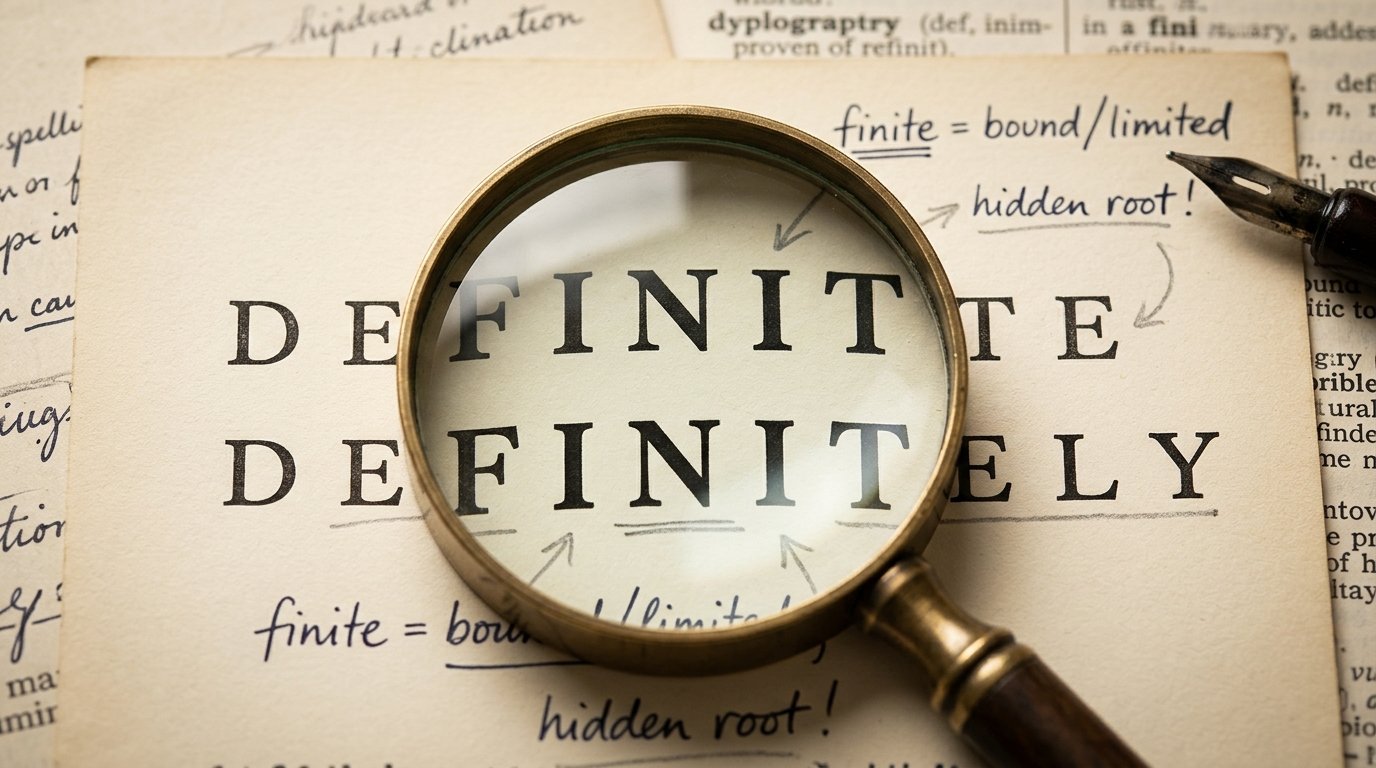
What Defiantly Actually Means
Defiantly means in a defiant manner. Merriam-Webster defines it as showing a disposition to challenge, resist or fight, and the Dictionary.com entry for defiantly glosses it as daring or bold resistance to authority. It has nothing to do with certainty.
Swap it into a sentence and the meaning reverses. “She definitely agreed” promises certainty. “She defiantly agreed” describes rebellion. The two sentences look alike on the page and make opposite claims about the person in them.
Used correctly, defiantly is a strong and useful word. A protester who defiantly refuses, a child who defiantly folds her arms: the word earns its place wherever resistance is the point. The error is only ever the swap.
Why Spell Check Will Not Save You Here
A spell checker flags non-words, and defiantly is a word. It is spelled correctly, so no red line appears. Wiktionary-derived sources even record defiantly as a common spellchecker-generated misspelling of definitely, put there by the checker itself.
Autocorrect is the usual delivery route. A mistyped definitely sits one suggestion away from defiantly, and a tapped suggestion survives every later automated check. Only reading the sentence catches it.
Definitely, Definitively, Definite: Three Real Words, Three Jobs
Definite is the adjective: a definite answer, a definite date. Definitely is its adverb, meaning without doubt. Definitively is a different adverb again, meaning conclusively or finally, the distinction the Language Portal of Canada draws in its usage tip.
One sentence shows all three jobs. The date is definite. She definitely confirmed it. The ruling settled the matter definitively. Adjective, certainty adverb, finality adverb: three words, three separate tasks.
The spelling verdict touches only the first pair. Definite plus -ly is definitely, and definitively is never a spelling variant of it. When something settles a question for good, definitively is the word doing that job.
Same Spelling Everywhere: US, UK, Canadian and Australian English
This is not a British or American variant question. The spelling is identical in all four major varieties, and definately is wrong in every one of them. Only the pronunciation moves slightly between varieties.
|
Variety |
Correct |
Wrong |
|---|---|---|
|
American English |
definitely |
definately |
|
British English |
definitely |
definately |
|
Canadian English |
definitely |
definately |
|
Australian English |
definitely |
definately |
Pronunciation is the only thing that changes across varieties. Both forms sit side by side in the Cambridge Dictionary US entry for definitely.
The US form carries a reduced middle vowel; the UK form keeps a slightly fuller one. The vowel is unstressed in both, which is the whole reason the error exists.
Is Definitely One of the Most Misspelled Words in English?
The claim is common, and here it travels with its sources attached. The Oxford English Corpus common misspellings list includes definitely, gives definately as its common misspelling, and advises “-ite- not -ate-“. The original page survives through mirrors, so the list is cited, not linked.
A second list gives the error a rank. Inc.com’s top 10 of commonly misspelled words, which it attributes to the Oxford Dictionary, places “Definately?” at number 3. Its fix is the same one this page teaches: an i in the middle, not an a.
Memory Tricks, Ranked by the Error They Fix
Each trick below is aimed at one error family. Match the trick to the mistake you actually make, and one rehearsal usually retires it. Tricks aimed at errors you never make are decoration.
- For the a swap: find finite. If finite is visible inside your spelling, with both i letters, the a never got in.
- For dropped letters: count to ten. Definitely has ten letters, so a nine-letter draft has lost one somewhere.
- For the whole word: chant the chunks. De-fin-ite-ly, four beats, with the stress on the first beat.
- For the base error: write definite first. Add -ly only after the base stands complete on the page.
One rehearsal is the method, not the dose. Run your matched trick the next three times the word comes up in real writing. After that, the construction tends to fire on its own and the trick can retire.
Test Yourself: Start From Your Own Mistake
Write the word once, from memory, then grade it. Three questions: can you see finite inside it, is there any a in it, and does it end in -itely? Yes, no, yes means the spelling is right.
Then test the trap, not just the target. Write “she definitely refused” and “she defiantly refused” side by side and say what each one claims. If the difference is instant, the dangerous error is retired too.
Grade against your own history, not a stranger’s list. The error you actually make is the only one that can hurt your writing. Find it in an old email or draft, name its family in the table above, and rehearse its trick.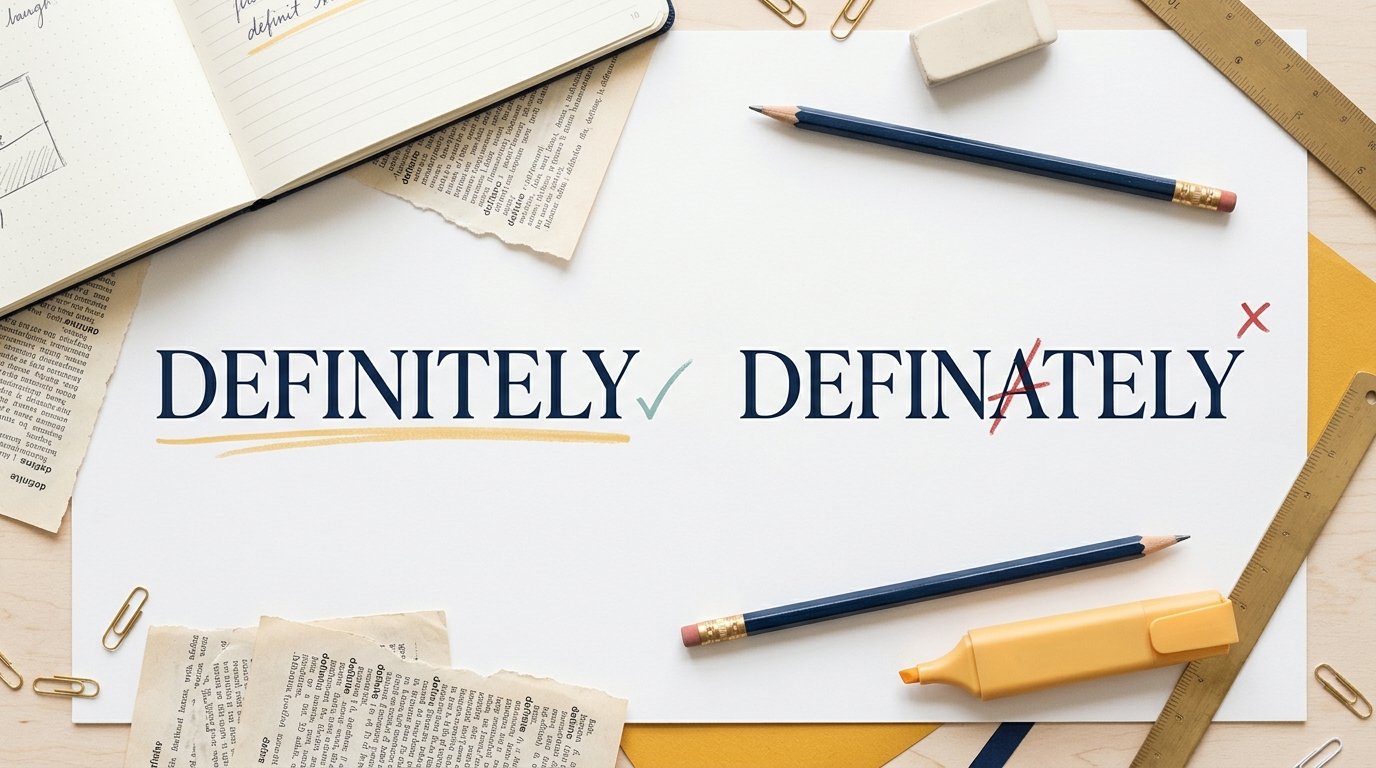
Frequently Asked Questions
1. Is it definitely or definately?
Definitely. Definately is not recognized as a standard spelling in any English dictionary. The correct word is spelled D-E-F-I-N-I-T-E-L-Y: the adjective definite plus the suffix -ly, with nothing changed.
2. Is definately a word?
No. Definately is a common error, not a variant spelling. Grammorax states it is not accepted as the standard spelling in English, and no dictionary consulted in this research carries an entry for it.
3. Is definately in any dictionary?
No. Merriam-Webster, Cambridge, Oxford Advanced Learner’s and Dictionary.com were all checked for this page. Each carries an entry for definitely, and none returned an entry for definately. That absence is itself the finding.
4. Why do so many people spell it definately?
Two forces combine. The middle vowel is unstressed and sounds like “uh,” so the ear gives no clue which letter belongs there. Writers then borrow the a from -ately words like immediately and accurately.
5. How do you spell definitely?
D-E-F-I-N-I-T-E-L-Y, ten letters. Build it rather than memorize it: write the adjective definite, then add -ly. Nothing in the base word changes, so the spelling assembles itself.
6. How can I remember how to spell definitely?
Find the word finite inside it. Finite is spelled with two i letters and never an a, so a spelling with an a cannot contain it. Write definite, check finite is visible, then add -ly.
7. What is the definite + ly rule?
Definitely is definite plus -ly, with nothing changed. Merriam-Webster gives the etymology as “definite + -ly.” Because the base ends in -ite, the adverb can only end -itely, never -ately.
8. Why does definitely have two i’s?
Both come from finite. The hidden word inside definite is spelled f-i-n-i-t-e, with two i letters and no a. A draft showing one i, or an a, has broken finite.
9. Is there an a in definitely?
No. There is no letter a anywhere in definitely. The a is an intrusion borrowed by analogy with -ately words like immediately; nothing inside the word itself produces it.
10. What does definitely mean?
It means without any doubt. Merriam-Webster defines it as “in a definite way: in a way free of all ambiguity, uncertainty, or obscurity.” In speech it also gives forceful agreement: “Definitely!”
11. Is definitely an adverb?
Yes. Definitely is an adverb, formed from the adjective definite with the suffix -ly. Dictionary.com also records an interjection use expressing complete agreement, which is the standalone “Definitely!” reply.
12. How many letters are in definitely?
Ten: d, e, f, i, n, i, t, e, l, y. The count is a quick self-check. A nine-letter version has dropped a letter somewhere, and a version with an a has imported one.
13. How do you pronounce definitely?
Cambridge gives the US pronunciation as /def-uh-nut-lee/ and the UK form with a fuller second vowel. The middle vowel is unstressed in both varieties, which is why pronunciation alone cannot settle the spelling.
14. Why does the middle of definitely sound like “uh”?
That vowel is unstressed, and unstressed vowels reduce toward the schwa. A reduced vowel can be spelled with almost any vowel letter in English, so the sound is evidence of nothing. The construction is the evidence.
15. What is the -ately trap?
It is the pull of adverbs that genuinely end in -ately: immediately, accurately, approximately. Strip -ly from those words and their bases are real. Strip it here and “definate” is not in the dictionary.
16. Which words pull writers toward definately?
Immediately, accurately and approximately. Each ends in -ately because its base adjective ends in -ate. Definite ends in -ite, so its adverb ends in -itely; the analogy fails at the base word.
17. Is defiantly the same as definitely?
No, they are different words. Definitely means without doubt. Defiantly means in a defiant manner, showing a disposition to challenge, resist or fight. Swapping them reverses a sentence, and a spell checker will not flag it.
18. What does defiantly mean?
In a defiant manner. Merriam-Webster: showing a disposition to challenge, resist, or fight. Dictionary.com: “with daring or bold resistance to authority.” It is a real word, which is exactly why it is the dangerous error.
19. Will a spell checker catch defiantly?
No, and that is the trap. Defiantly is a correctly spelled real word, so a checker has nothing to flag. Wiktionary-derived sources even record it as a common spellchecker-generated misspelling of definitely. Only reading the sentence catches it.
20. Will a spell checker catch definately?
Yes, on the verdict sources’ observation. TwoMinEnglish and Grammorax both note that spell checkers flag definately as an error, because it is not a standard spelling in any dictionary. That is their observation, not a tested result here.
21. Is definitely spelled the same in British English?
Yes, identical. Definitely is correct and definately is incorrect in British, American, Canadian and Australian English alike. Only the pronunciation shifts slightly between the UK and US forms.
22. Is the spelling different in Canadian English?
No. Canadian English gives the same verdict as every other variety: definitely correct, definately incorrect. The word follows the same definite + ly construction, so there is no Canadian variant to learn.
23. Is the spelling different in Australian English?
No. The Australian verdict matches the British, American and Canadian rows: definitely is the spelling and definately is an error. One spelling serves all four varieties of English.
24. Is definitely one of the most misspelled words in English?
Named lists say so, and the claim travels with its attribution. The Oxford English Corpus misspellings list includes definitely, advising “-ite- not -ate-.” Inc.com’s top 10 list, attributed to the Oxford Dictionary, places “Definately?” at number 3.
25. What are the most common misspellings of definitely?
The attested family is wide. Definately, definatly, definitly, definetly, definetely, definitley, defenetly, definitaly, definantly, definently, defenitely and difinetly, plus definate as the base-word error. Every one breaks definite plus -ly.
26. Is definitly correct?
No. Definitly drops the second i from definite, leaving nine letters against the correct ten. It is a documented misspelling in the Wikipedia list and the LanguageTool guide, and a known exam-room error.
27. Is definate a word?
No. “You won’t find definate in the dictionary” is the shortest verdict on it. Wikipedia’s documented list records definate as a misspelling of definite, which is why definite + ly can never produce a spelling with an a.
28. What is the difference between definite and definitely?
Part of speech. Definite is the adjective: a definite answer. Definitely is the adverb formed from it by adding -ly with no other change: he definitely agreed. The adverb inherits the adjective’s letters exactly.
29. What is the difference between definitely and definitively?
Meaning, not spelling difficulty. Definitely means without doubt. Definitively means conclusively or finally, the Language Portal of Canada’s distinction. Use definitively when something settles a question for good; definitely when there is simply no doubt.
30. Can definitely stand alone as a complete answer?
Yes. Merriam-Webster records definitely as used in speech as a forceful way of expressing agreement, and Dictionary.com records it as an interjection expressing complete agreement. The standalone “Definitely!” is standard usage, not a fragment error.
31. What does “definitely not” mean?
Forceful disagreement. Merriam-Webster records “definitely not” as the phrase used for saying no with emphasis. It is the negative counterpart of the standalone “Definitely!”, and its spelling follows the same definite + ly build.
32. Is “most definitely” correct?
Yes. “Most definitely” is a standard emphatic use of the same word, alongside “definitely not” and “yes, definitely.” The intensifier changes the force, not the spelling: still definite + ly, still no a anywhere.
33. Is deffo an acceptable short form of definitely?
In informal speech, yes; in writing, no. Deffo is attested as an informal shortening, and Oxford Advanced Learner’s carries a “def” entry meaning definitely. Neither belongs in formal writing, an exam answer or a job application.
34. Where does the word definitely come from?
From its own parts. The adjective definite plus the suffix -ly, per Merriam-Webster’s etymology. Merriam-Webster dates the first known use to 1574; Dictionary.com records the word first in 1575 to 1585. The two records print separately.
35. What word is hidden inside definitely?
Finite, meaning bound or limited. It sits in the middle of definite: de-finite. Finite carries both i letters and no a, so a spelling that keeps finite intact cannot drift into definately.
36. Why is there an e before the -ly in definitely?
Because the e belongs to the base word. Definite ends in e, and adding -ly changes nothing in the base, so the e survives into the adverb: definit-e-ly. Dropping it breaks the construction like the a-substitution does.
37. Does definitely have a silent letter?
No. Every letter belongs to a chunk of the construction: de, finite, ly. The middle vowel is heard weakly because it is unstressed and reduced toward a schwa, but the letter i is fully present in the spelling.
38. Is definately ever acceptable, even informally?
No. No dictionary consulted lists definately as a variant spelling, standard or informal, and Grammorax states it is not accepted as the standard spelling in English. Readers still read it as a mistake, and the correct spelling costs nothing extra.
39. How do I stop writing definately?
Retrain the construction, not the whole word. Write definite first, confirm finite is visible inside it with both i letters, then add -ly. Follow with a read-back check aimed at the middle vowel in important documents, until the check runs itself.
40. What is a quick self-test for my own misspelling of definitely?
Ask three questions of your own spelling. Can I see finite inside it? Is there any a in it? Does it end in -itely? A yes, a no and a yes mean the spelling is right.
41. Do any dictionaries list definately as a variant spelling?
None consulted does. Merriam-Webster, Cambridge, Oxford Advanced Learner’s and Dictionary.com were all checked for this page; each carries definitely, and none lists definately in any form, variant or otherwise. There is no variant-spelling defense of definately.
42. What is the difference between definitely and certainly?
They overlap, and use splits them. LanguageTool’s guide groups certainly with the agreement sense, alongside absolutely and surely. Definitely covers that agreement use and the clear, unambiguous manner use as well, so it is the wider of the two words.
Conclusion
Definitely or definately, the verdict does not move: definitely is correct, and definately is not a word. The proof is the word’s own parts, definite plus -ly with finite inside, and no dictionary on record disagrees.
The same one-glance method settles the rest of the rail. Try our separate vs seperate verdict, our precede vs proceed guide and our desert vs dessert guide, or the single-word verdict at our atleast or at least verdict.
Pairs that differ by a letter or a space get the full treatment elsewhere. our a lot vs allot difference guide and our adapt vs adopt difference guide each take one pair apart, letter by letter.
Two more pairs reward the same slow reading. our all ready vs already difference guide and our adverse vs averse difference guide separate words that sound nearly identical and differ by a single letter.
Meaning questions have their own rail. our what does literally mean guide and our what does irony mean guide answer the two most misread words in English, and the MagazineSolo home page collects every verdict in one place.

Dilawar is a content writer at MagazineSolo, covering travel, home improvement, interior design, and everyday lifestyle topics. He enjoys researching practical solutions, exploring travel destinations, and sharing helpful guides that make daily life easier. His writing focuses on clear information, useful advice, and engaging stories for a wide audience.